
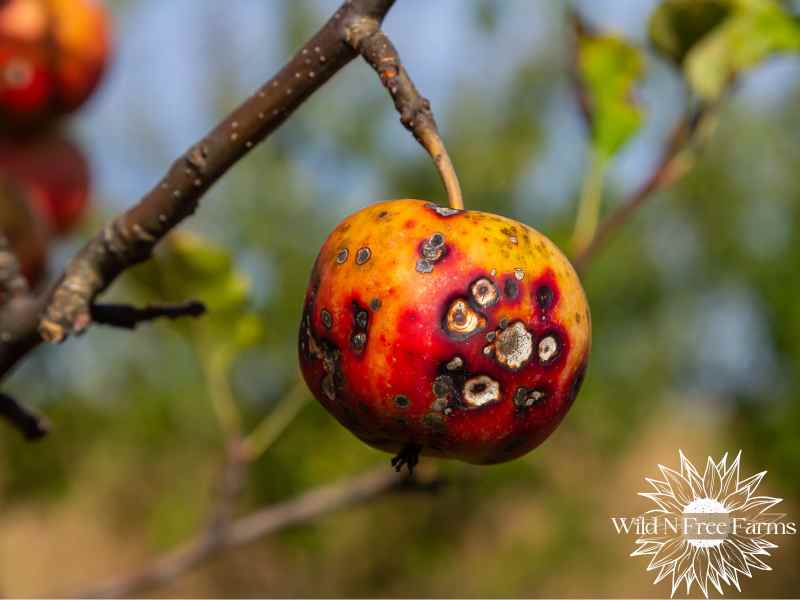
How to Identify, Treat, and Prevent Apple Scab Organically
Apple scab is one of the most common and destructive diseases of apple trees, especially in humid or rainy climates. Left unchecked, it can weaken trees, reduce fruit quality, and significantly impact your harvest. The good news is that with proper management and organic practices, you can keep apple scab under control and enjoy healthy, productive apple trees year after year.

Disclaimer
This post contains affiliate links. This means we may earn a commission should you chose to sign up for a program or make a purchase using these links. There is no added cost to you but your purchase through these links helps support our content! Not to worry- I truly believe in and/or use everything I promote!
We also utilize advertisements on many of our articles. This is simply a way to help support all the work we do here at Wild N Free Farms, without adding any extra cost to our readers. Check out our disclaimer and disclosure page for more details.
What Is Apple Scab?
Apple scab is a fungal disease caused by Venturia inaequalis. It thrives in cool, wet spring weather when spores overwintering on fallen leaves and fruit begin to spread. The fungus attacks leaves, fruit, and sometimes young shoots, creating unsightly lesions that reduce vigor and fruit quality.

How to Identify Apple Scab
On Leaves
- Olive-green to brown velvety spots appear, usually on the undersides first.
- Over time, leaves may become distorted, yellowed, and prematurely drop.
On Fruit
- Small, rough black or brown spots develop early in the season.
- As fruit grows, lesions enlarge, causing cracking and making apples unsightly or prone to rot.
On Shoots
- Young green twigs may develop dark, scabby lesions, which weaken tree growth.
How to Prevent Apple Scab
Prevention is always more effective than treatment. A few key steps can dramatically reduce apple scab pressure:
- Choose resistant varieties – Some apple cultivars (like Liberty, Enterprise, and Freedom) are naturally resistant to scab.
- Prune for airflow – Good air circulation reduces humidity, making it harder for fungal spores to thrive.
- Remove infected debris – Rake and destroy fallen leaves and fruit in autumn to prevent overwintering spores.
- Avoid overhead watering – Wet leaves encourage fungal spread. Use drip irrigation instead.

Organic Methods for Apple Scab Management
Organic growers rely on cultural practices combined with approved fungicides. Here are the most effective options:
- Best applied during the dormant season or at green tip stage.
- Helps knock back overwintering spores.
- Used throughout the growing season as a preventative spray.
- Apply every 7–10 days during rainy or humid periods.
- Offers some antifungal properties while also deterring pests.
- Works best when applied early, before heavy infection sets in.
Compost Teas or Biological Sprays
- Some organic orchardists use aerated compost tea or beneficial microbes (like Bacillus subtilis) to reduce scab pressure.
How to Treat Apple Scab Once It Appears
If scab has already infected your trees, don’t panic—you can still manage it.
- Remove and destroy infected leaves and fruit immediately to reduce spread.
- Apply sulfur or neem oil regularly to protect new growth.
- For severe infections, a spring copper application next year can help reset disease pressure.
- Improve tree vigor with balanced fertilization and mulching to help trees outgrow the damage.

Extra Tips for Managing Apple Scab Organically
- Monitor weather conditions. Apple scab spreads most aggressively after 9+ hours of leaf wetness at 55–75°F. Extra sprays may be needed during extended wet periods.
- Don’t overapply fungicides. Even organic sprays can harm foliage or beneficial organisms if overused. Stick to label directions.
- Combine strategies. The most successful organic scab control comes from using resistant varieties, sanitation, and sprays together.
Apple scab may be one of the most persistent challenges for apple growers, but with prevention, organic fungicide use, and good orchard hygiene, it doesn’t have to ruin your harvest. By staying ahead of the disease—rather than waiting until it takes hold—you can enjoy healthier trees, higher-quality apples, and a more abundant harvest year after year.


