

10 Best Living Mulches to Grow Under Elderberry Plants
When it comes to growing healthy, productive elderberries, the secret isn’t just in pruning or watering—it’s in what you plant beneath them. Living mulch is one of the best ways to improve soil health, suppress weeds, retain moisture, and attract beneficial insects—all while creating a thriving ecosystem around your elderberry patch.

Disclaimer
This post contains affiliate links. This means we may earn a commission should you chose to sign up for a program or make a purchase using these links. There is no added cost to you but your purchase through these links helps support our content! Not to worry- I truly believe in and/or use everything I promote!
We also utilize advertisements on many of our articles. This is simply a way to help support all the work we do here at Wild N Free Farms, without adding any extra cost to our readers. Check out our disclaimer and disclosure page for more details.
Instead of bare soil or synthetic mulch, living mulches add life, texture, and biodiversity. Let’s look at the 10 best living mulch options to grow under elderberry plants and why they make such powerful companions.

1. White Clover (Trifolium repens)
White clover is one of the top choices for living mulch under elderberries. It’s a low-growing nitrogen fixer, which means it helps feed your elderberries naturally by pulling nitrogen from the air into the soil. Clover also forms a dense mat that suppresses weeds and holds soil moisture beautifully.
Why it works:
- Improves soil fertility
- Attracts pollinators and beneficial insects
- Handles foot traffic and mowing well
How to plant:
Broadcast seed around the base of the elderberries in spring or early fall and lightly rake it in.

2. Creeping Thyme (Thymus serpyllum)
Creeping thyme is a tough, aromatic herb that forms a fragrant carpet under shrubs. It thrives in full sun, helps repel pests, and provides nectar for bees long after elderberries have finished blooming.
Why it works:
- Deters pests like ants and aphids
- Drought tolerant once established
- Adds a lovely scent to the garden
How to plant:
Plant plugs or starts about 6–8 inches apart under the canopy edge of your elderberries.

3. Yarrow (Achillea millefolium)
Yarrow is a dynamic accumulator, meaning it pulls up nutrients from deep in the soil and makes them available to surrounding plants as it decomposes. It’s also a magnet for beneficial predatory insects like ladybugs and lacewings.
Why it works:
- Improves soil structure
- Supports pollinators and beneficial insects
- Drought tolerant and hardy
How to plant:
Plant small clusters around elderberry bases, trimming back if it spreads too aggressively.

4. Comfrey (Symphytum officinale)
Comfrey is a powerhouse companion. Its deep roots mine minerals from the subsoil, and when its leaves are chopped and dropped, they act as a nutrient-rich fertilizer for elderberries.
Why it works:
- Excellent natural fertilizer
- Adds organic matter to the soil
- Attracts pollinators
How to plant:
Space plants 1–2 feet away from elderberry trunks to avoid crowding. Harvest leaves several times a season for mulch.

Borage (Borago officinalis)
Borage is another nutrient accumulator and pollinator favorite. Its bright blue flowers attract bees that also help pollinate your elderberries. Once established, it readily self-seeds, providing a continuous living mulch.
Why it works:
- Attracts pollinators
- Adds trace minerals to the soil
- Provides edible flowers and leaves
How to plant:
Sow seeds in early spring directly under or near elderberries. Thin plants to about 12 inches apart.

6. Chickweed (Stellaria media)
Though often considered a weed, chickweed is an excellent living mulch for shaded or cool-season elderberry beds. It covers the soil quickly and can even be used as a nutritious edible green for you and your chickens.
Why it works:
- Excellent ground cover
- Easy to pull if it spreads too far
- Improves soil aeration
How to plant:
Scatter seed in the fall for natural winter and spring coverage.

7. Oregano (Origanum vulgare)
Oregano makes a hardy, aromatic ground cover that helps deter pests while providing culinary benefits. It tolerates light shade and helps create a healthy microclimate around your elderberries.
Why it works:
- Natural pest deterrent
- Long-lived perennial
- Drought tolerant
How to plant:
Plant 12–18 inches apart, allowing it to spread naturally beneath your elderberries.

8. Sorrel (Rumex acetosa)
Sorrel is another nutrient accumulator with edible, tangy leaves. Its broad foliage helps shade the soil, preventing evaporation and weed growth.
Why it works:
- Deep roots improve soil health
- Edible and attractive foliage
- Perennial and hardy
How to plant:
Plant clumps 1–2 feet apart around elderberry bases.

9. Vetch (Vicia sativa or Vicia villosa)
Vetch is a vigorous nitrogen-fixing cover crop that pairs well with elderberries in large patches or hedgerows. It grows quickly, enriches the soil, and suppresses weeds.
Why it works:
- Fixes nitrogen naturally
- Improves soil structure
- Provides habitat for beneficial insects
How to plant:
Broadcast seed in early spring or fall and mow back before it goes to seed to control spread.

10. Strawberries (Fragaria × ananassa)
If you want your living mulch to be both functional and delicious, strawberries are a perfect fit. They form dense mats that protect soil and produce fruit, making them a beautiful and practical ground cover under elderberries.
Why it works:
- Prevents erosion and retains moisture
- Produces food for you and pollinators
- Looks attractive under taller shrubs
How to plant:
Space plants 10–12 inches apart and mulch lightly until established.
Introducing
From Soil To Syrup
Your ultimate guide to everything elderberries!
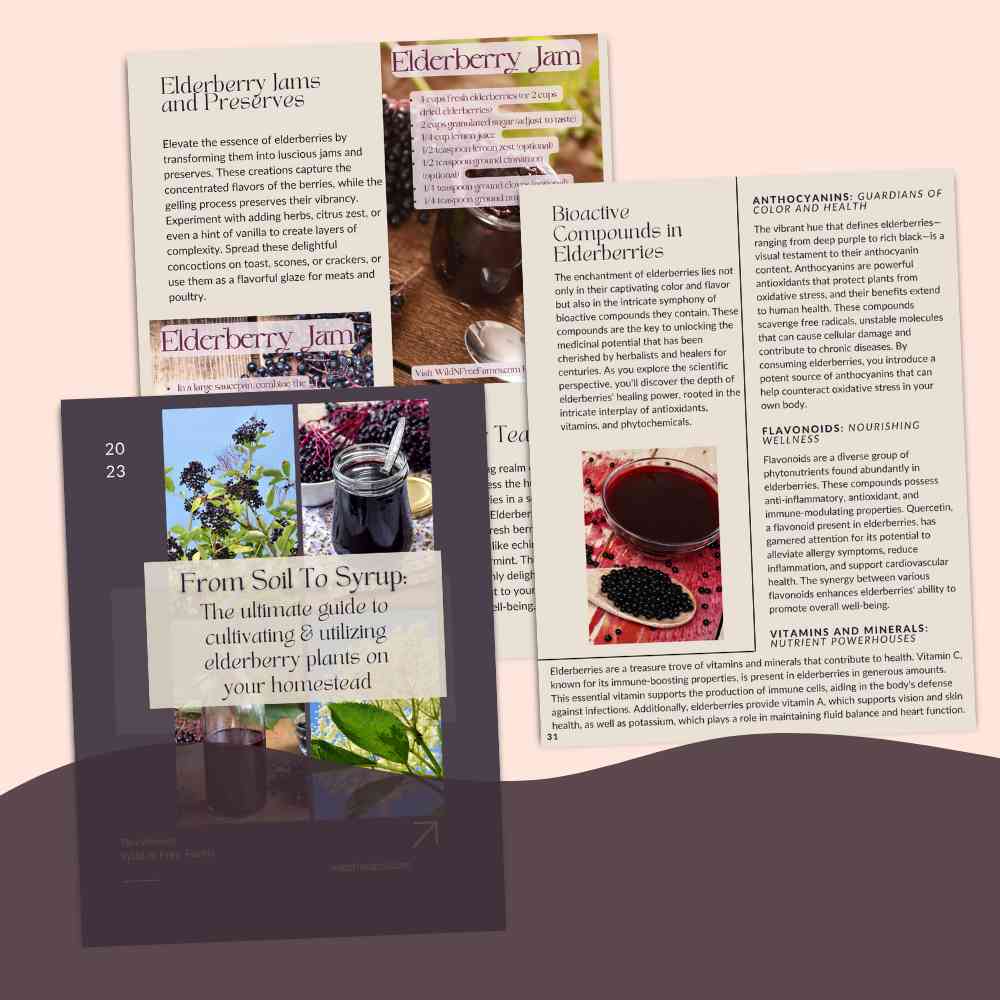
From cultivation to culinary delights, medicinal uses, and even safe animal consumption, this book has it all!
Learn how to efficiently and cost-effectively grow your elderberry patch, saving you money on unnecessary purchases and failed attempts.
Whether you dream of crafting homemade syrups for your family or expanding your garden with purpose, this book is your partner in creating a thriving elderberry homestead.
Tips for Planting Living Mulch Under Elderberries
- Choose low-growing plants that won’t compete with elderberries for sunlight.
- Keep the area near the trunk clear (about 6–12 inches) to prevent rot.
- Mix and match species for year-round coverage and biodiversity.
- Water deeply during establishment until the plants fill in.
Planting living mulch under elderberries turns a simple berry patch into a thriving ecosystem. By mimicking nature—layering plants that feed the soil, attract pollinators, and protect the roots—you’re setting up your elderberries for long-term success.
Whether you go for the nutrient-rich benefits of comfrey and clover, or the fragrant beauty of thyme and oregano, these living mulches will help your elderberries grow stronger, healthier, and more abundant year after year.


