
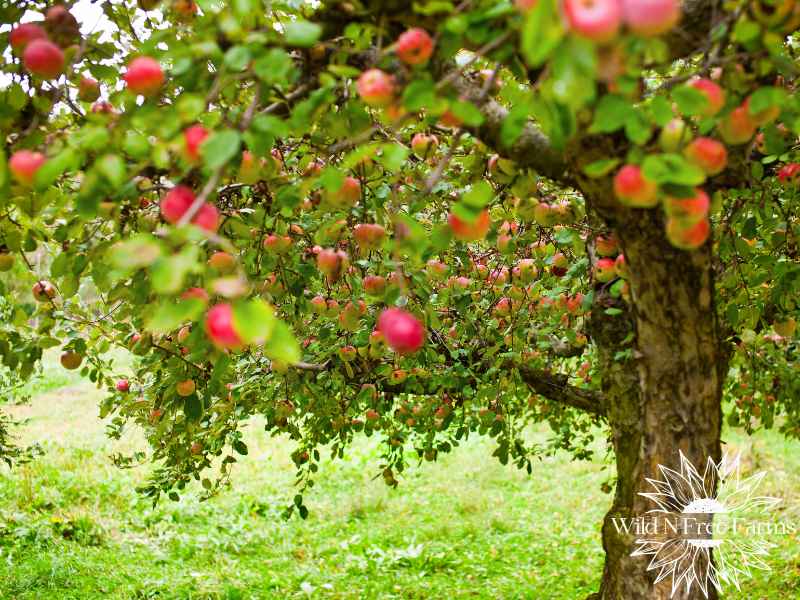
Annual Apple Tree Maintenance for an Organic Apple Orchard
When it comes to growing apples, consistency is everything. A healthy apple orchard isn’t the result of one big task but rather a series of seasonal practices that keep trees strong, disease-resistant, and productive year after year. For organic apple growers, maintenance is especially important since you can’t fall back on synthetic fertilizers or chemical sprays. Instead, you’ll rely on pruning, soil health, natural pest control, and preventative care.

Disclaimer
This post contains affiliate links. This means we may earn a commission should you chose to sign up for a program or make a purchase using these links. There is no added cost to you but your purchase through these links helps support our content! Not to worry- I truly believe in and/or use everything I promote!
We also utilize advertisements on many of our articles. This is simply a way to help support all the work we do here at Wild N Free Farms, without adding any extra cost to our readers. Check out our disclaimer and disclosure page for more details.
Here’s a month-by-month breakdown of annual apple tree maintenance to keep your orchard thriving the organic way.

Winter: Dormant Season Care
Winter is the quietest time in the orchard, but it’s when some of the most important maintenance takes place.
- Dormant Pruning – Remove dead, diseased, or crossing branches to open up airflow and light penetration. Aim for a strong central leader or open-center shape depending on your training system.
- Pest & Disease Prevention – Scrape away loose bark where insects like to overwinter. Apply organic dormant oils to smother overwintering pests such as mites and scale.
- Soil Health Check – Winter is a great time to send soil samples to the lab and amend as needed before spring growth. Organic matter like compost, aged manure, and mulch can be worked in as soon as the ground is workable.

Spring: Wake-Up and Bloom
As the orchard comes alive, trees are at their most vulnerable to pests and fungal infections.
- Bud Break Sprays – Use approved organic fungicides like copper or sulfur to help protect against apple scab, powdery mildew, and rust.
- Frost Protection – Have row covers, sprinklers, or wind machines ready in case of late frosts during bloom.
- Pollinator Support – Encourage bees and beneficial insects by planting clover, wildflowers, and herbs along orchard edges. Avoid spraying anything during bloom to protect pollinators.
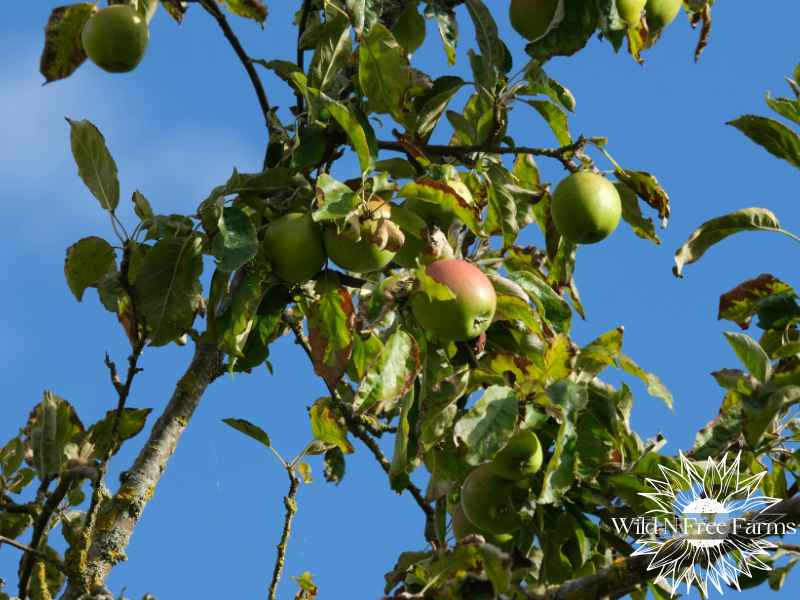
Summer: Growth and Pest Management
During the summer months, apple trees focus on fruit development and canopy growth.
- Thinning Fruit – Hand-thin apples when they’re marble-sized to prevent limb breakage, reduce pest pressure, and allow remaining apples to size up properly.
- Irrigation – Keep soil evenly moist but not waterlogged. Drip irrigation or soaker hoses are best for organic orchards since they conserve water and reduce leaf wetness that encourages disease.
- Organic Pest Control – Monitor for codling moths, apple maggots, and aphids. Use pheromone traps, kaolin clay sprays, or beneficial insects like ladybugs and lacewings to keep pests under control.
- Summer Pruning – Lightly trim vigorous water sprouts or suckers that drain energy from the tree.

Fall: Harvest and Preparation for Dormancy
Fall is the most rewarding season, but it’s also when preparation for the next year begins.
- Harvesting – Pick apples at peak ripeness for best flavor and storage life. Handle gently to avoid bruising.
- Post-Harvest Sanitation – Remove fallen fruit (known as “drops”) to reduce pest and disease carryover. Compost only if the fruit is free of pests and rot.
- Fertilization – Add compost or organic fertilizer after harvest to restore nutrients spent during fruit production. Mulching around the base helps conserve moisture and protect roots during winter.
- Tree Protection – Install guards around young trees to prevent damage from rodents or deer during the colder months.
Year-Round Best Practices for Organic Orchards
While the seasonal breakdown is helpful, there are a few year-round practices that make the biggest difference in maintaining a healthy organic orchard:
- Mulching – Maintain a 3–4 inch layer of organic mulch around the base of trees to suppress weeds, regulate soil temperature, and feed soil life.
- Soil Health Focus – Healthy soil is the foundation of organic growing. Incorporate cover crops, compost teas, or biochar to build fertility and resilience.
- Regular Monitoring – Walk your orchard weekly. Early detection of pests or disease makes organic management much easier.
- Balanced Nutrition – Foliar sprays of seaweed or fish emulsion can provide trace minerals and boost tree health naturally.
Maintaining an organic apple orchard is about balance — balancing growth and fruit load, soil fertility and tree health, pests and beneficial insects. By following this annual apple tree maintenance calendar, you’ll not only produce healthier trees and better apples, but you’ll also create an ecosystem that sustains itself for years to come.
An organic orchard takes dedication, but the reward is sweet: apples that are more flavorful, more nutritious, and completely free of synthetic chemicals.


