
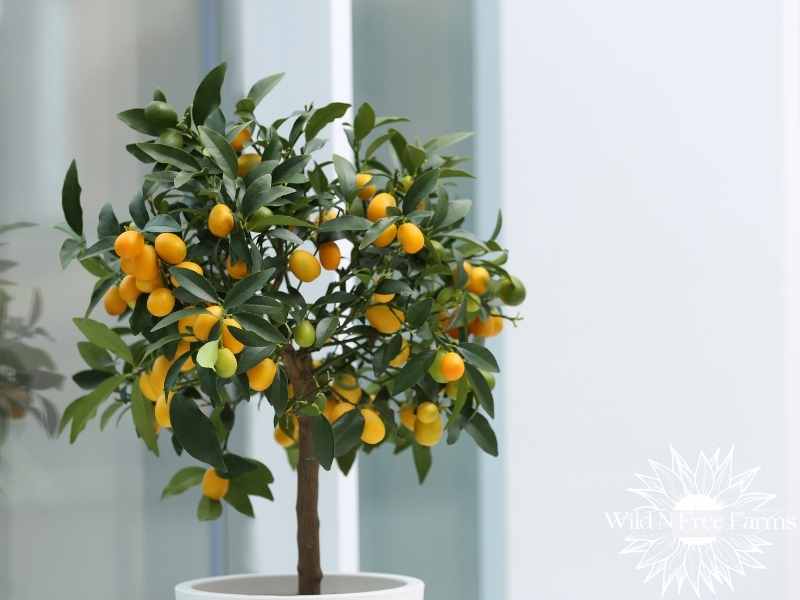
How to Grow Fruit Trees Outside Your Growing Zone
One of the biggest misconceptions in gardening is that you’re limited to growing only what survives in your USDA hardiness zone.
While it’s true that certain trees won’t survive year-round outdoors in colder climates, that doesn’t mean you can’t enjoy fresh lemons, limes, figs, olives, or other warm-climate favorites. In fact, container gardening has made it possible for gardeners far outside the South to harvest citrus and other specialty fruits right from their patios.

Disclaimer
This post contains affiliate links. This means we may earn a commission should you chose to sign up for a program or make a purchase using these links. There is no added cost to you but your purchase through these links helps support our content! Not to worry- I truly believe in and/or use everything I promote!
We also utilize advertisements on many of our articles. This is simply a way to help support all the work we do here at Wild N Free Farms, without adding any extra cost to our readers. Check out our disclaimer and disclosure page for more details.
As someone who believes in practical self-reliance, I love finding ways to expand what we can grow without needing a greenhouse or perfect conditions. Sometimes, a little creativity and mobility are all you need.
Why Growing Zones Aren’t Always the Final Answer
Hardiness zones simply tell us the average minimum winter temperature for an area. They don’t necessarily determine what you can grow—they determine what can survive outdoors year-round.
That’s an important distinction.
Many tropical and subtropical trees grow beautifully during the summer in Zones 5, 6, and 7. The challenge comes when freezing temperatures arrive.
That’s where containers become a game changer.
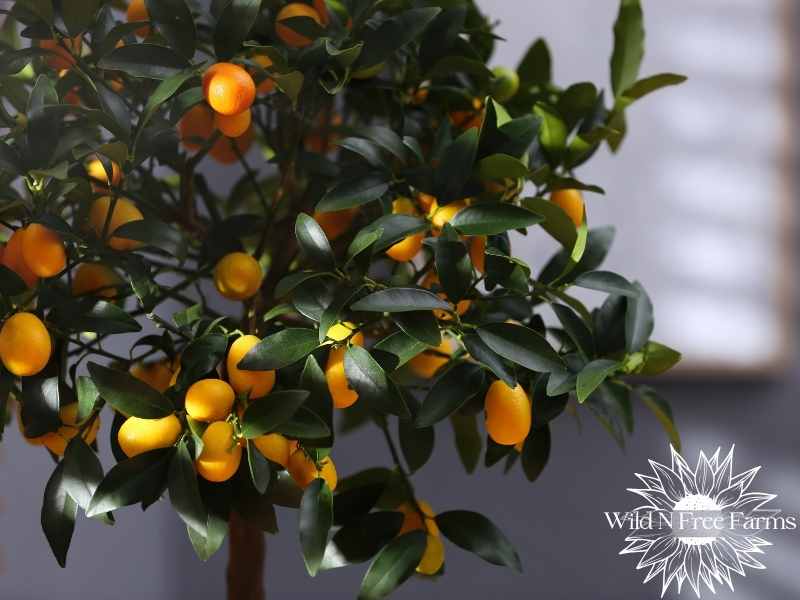
Fruit Trees You Can Grow Outside Their Normal Zone
Many popular fruit trees thrive in containers and can simply be moved indoors when temperatures drop.
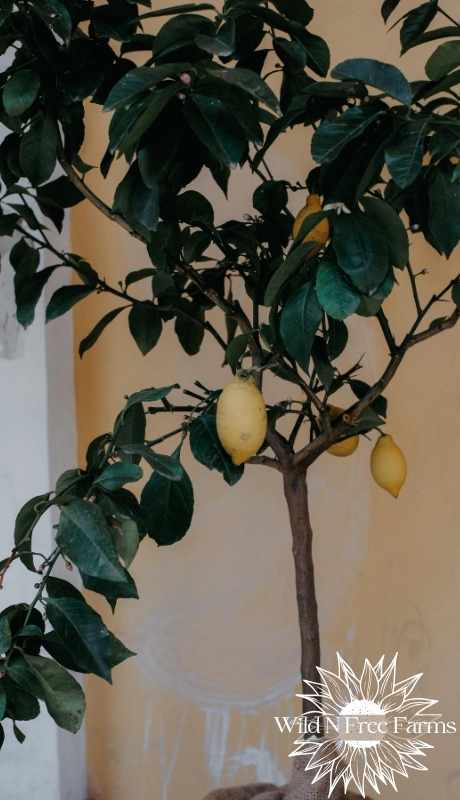
Some favorites include:
- Meyer lemons
- Key limes
- Calamondin oranges
- Satsuma mandarins
- Figs
- Olive trees
- Avocados
- Pomegranates
- Bay laurels
With proper care, gardeners across much of the country can enjoy these trees—even if they live far outside their recommended hardiness range.
The Biggest Problem: Moving Heavy Trees
Anyone who has grown citrus knows the struggle.
A small lemon tree is easy to move.
A mature tree planted in a large container?
Not so much.
Many gardeners end up leaving trees outside too long simply because moving them is difficult. Others hurt their backs wrestling with oversized pots every fall and spring.
Eventually, the hassle causes some people to give up altogether.
Why Rolling Planters Change Everything
One reason I like the Vego Self-Watering Rolling Planter is because it solves one of the biggest problems container fruit growers face: mobility.
The heavy-duty locking wheels allow mature trees to be moved with ease.
Instead of dragging heavy pots or searching for a hand truck every season, you can simply roll trees:
- Indoors before freezes
- Into the garage during cold snaps
- Onto the patio for maximum sun
- Under cover during severe storms
That flexibility opens the door to growing plants that would otherwise be impossible in your climate.
vego
Raised Garden Planter
Self-watering ~ On wheels
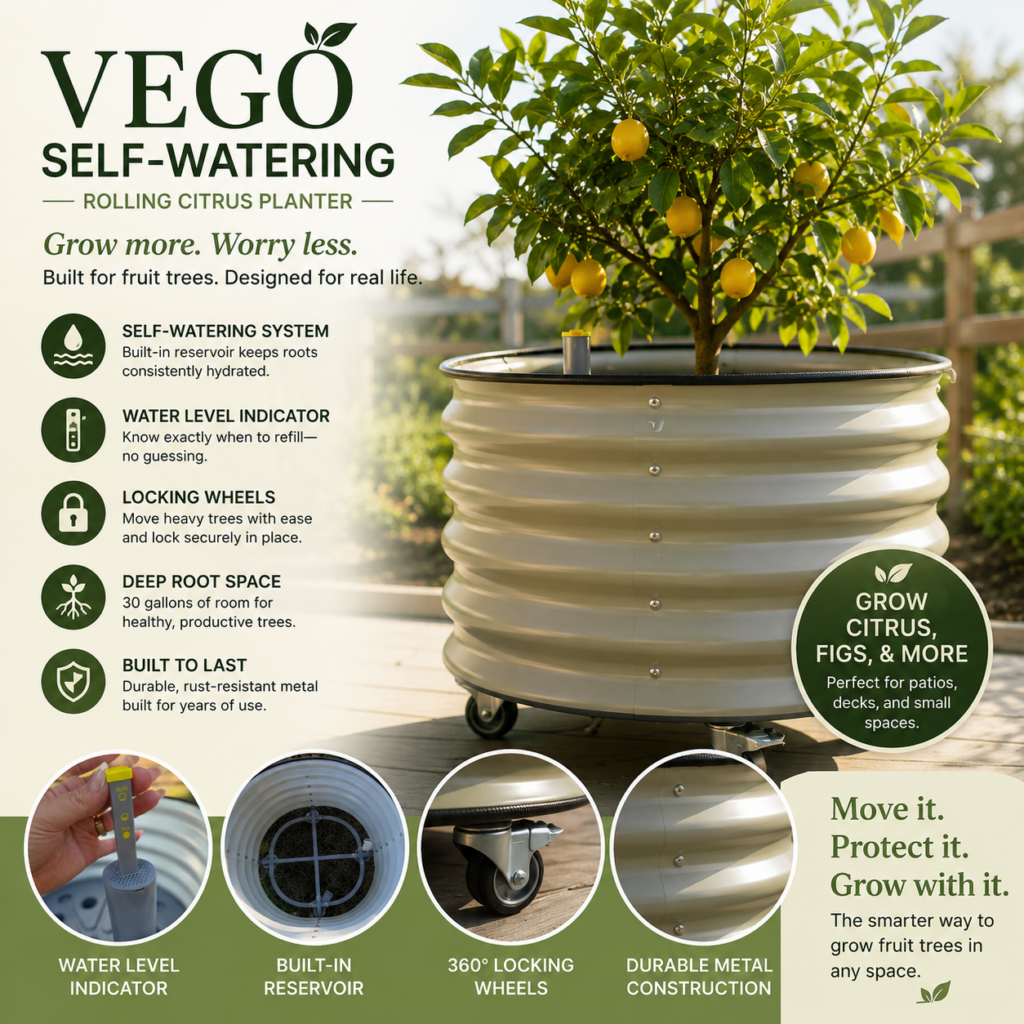
Minimize your to-do list with a wicking system that hydrates roots from below, keeping trees healthy even if you forget.
Skip the heavy lifting. Locking wheels let you
roll your planter in and out with ease, whether
chasing sun or avoiding frost.
Galvanized steel frame and stainless steel
bolts keep your planter rust-free, sturdy, and
beautiful through all seasons
Self-Watering Helps During Hot Summers
Another challenge with container trees is watering.
Unlike trees planted in the ground, containers dry out quickly, especially during July and August.
Busy families don’t always have time to water twice a day.
The self-watering reservoir in the Vego planter helps maintain more consistent moisture levels, reducing stress on trees and helping roots stay healthier during extreme heat.
It’s not a substitute for observation, but it does provide some peace of mind during busy seasons.
Best Trees for Beginners
If you’re just getting started, I recommend beginning with:
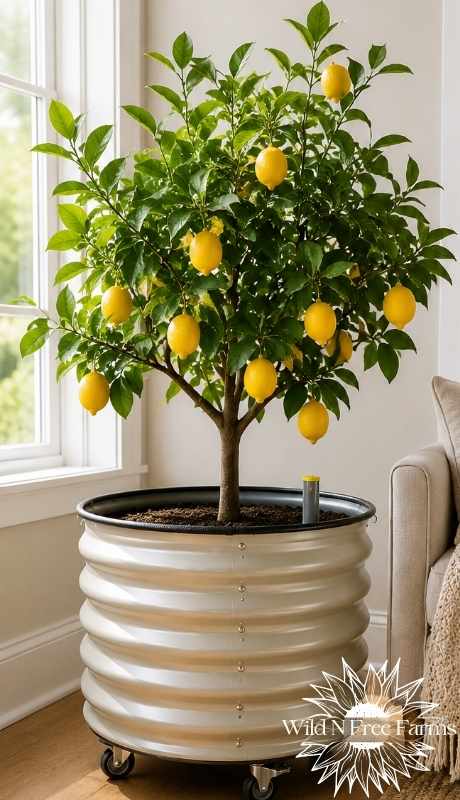
Meyer Lemon
Meyer lemons are productive, fragrant, and surprisingly forgiving. They’re one of the easiest citrus trees for beginners.
Fig Trees
Figs adapt beautifully to containers and tolerate pruning well. They also require less humidity than citrus.
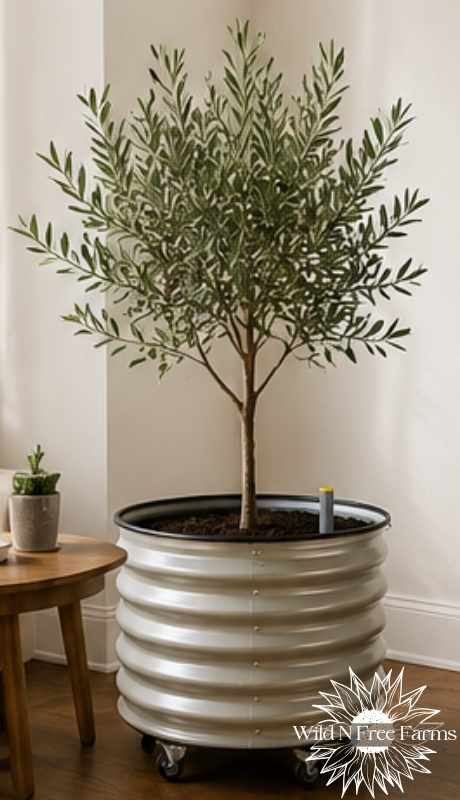
Olive Trees
Olives are attractive and drought tolerant, making them excellent patio trees.
Calamondin Orange
These compact trees produce heavily and are perfect for containers.
Winter Care Tips
Growing outside your zone does require some planning.
When temperatures approach freezing:
- Move trees indoors or into a garage.
- Place them near bright windows if possible.
- Reduce watering during dormancy.
- Watch for spider mites and scale insects.
- Avoid heavy fertilizing until spring.
The goal isn’t to force active growth all winter—it’s simply to help the tree survive until warm weather returns.
Is It Worth Growing Trees Outside Your Zone?
Absolutely.
Part of practical self-reliance is learning to work with what we have rather than accepting unnecessary limitations.
Growing fruit trees in containers allows families to harvest foods that may not traditionally grow where they live. And with thoughtful tools like rolling self-watering planters, maintaining those trees becomes much more manageable.
You don’t need to live in Florida to pick fresh lemons.
Sometimes, resilience looks as simple as putting wheels under your fruit tree and bringing summer indoors when winter arrives.
Don’t let your growing zone discourage you from experimenting.
With containers, mobility, and a little seasonal planning, you can grow far more than you might think possible. Whether it’s a Meyer lemon, a fig tree, or a patio olive, every harvest represents another step toward practical self-reliance—and another reminder that abundance often comes from learning to adapt rather than accepting limits.


