How to Identify, Treat, and Prevent Fire Blight Organically
Few diseases strike fear into the heart of an apple grower like fire blight. This fast-spreading bacterial infection—caused by Erwinia amylovora—can turn healthy branches black and lifeless almost overnight. Named for its “burned” appearance, fire blight can destroy blossoms, fruit, and even entire trees if left unchecked. But with careful pruning, smart cultural practices, and organic treatments, you can control fire blight naturally and protect your orchard for years to come.

Disclaimer
This post contains affiliate links. This means we may earn a commission should you chose to sign up for a program or make a purchase using these links. There is no added cost to you but your purchase through these links helps support our content! Not to worry- I truly believe in and/or use everything I promote!
We also utilize advertisements on many of our articles. This is simply a way to help support all the work we do here at Wild N Free Farms, without adding any extra cost to our readers. Check out our disclaimer and disclosure page for more details.
How to Identify Fire Blight
Fire blight symptoms often show up just after bloom in spring and can progress quickly in warm, wet conditions. Here’s what to look for:
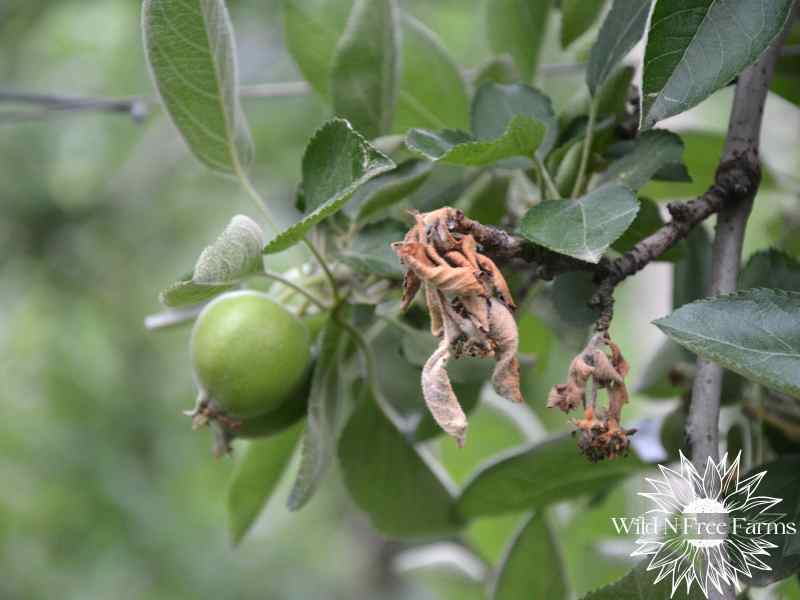
- Blossoms and young shoots wilt, shrivel, and turn brown or black, as though scorched by fire
- The tips of infected branches curl downward, forming a distinct “shepherd’s crook” shape
- Cankers (sunken, discolored areas) appear on branches and twigs
- In humid weather, you might see amber-colored ooze—a telltale sign of bacterial activity
- Leaves remain attached to dead twigs, giving the tree a “burned” look
Fire blight spreads through rain, insects, pruning tools, and even wind, making early detection and removal critical.
Organic Fire Blight Treatment
While fire blight can’t be cured once inside the tree, you can control its spread organically with a few proactive steps:
1. Prune Out Infected Wood Immediately
- Cut 12–18 inches below the last visible infection.
- Sterilize pruning tools between every cut using a 10% bleach solution or 70% alcohol.
- Burn or dispose of infected branches—never compost them.
🔪 Tip: Prune on dry, sunny days to reduce bacterial spread.
2. Use Copper or Biological Sprays
In early spring, before blossoms open, apply liquid copper or a biological bactericide.
- Avoid heavy copper applications after bloom, as it can cause fruit russeting.
- Reapply biologicals every 7–10 days during wet, warm periods.
3. Apply a Probiotic Boost
After pruning, feed your tree’s microbiome with aerated compost tea or effective microorganisms (EM-1) to outcompete harmful bacteria and strengthen natural defenses.

How to Prevent Fire Blight Naturally
Fire blight prevention starts long before you ever see the first ooze. Build resistance with these organic strategies:
1. Avoid High-Nitrogen Fertilizers
Excess nitrogen encourages tender new growth, which is highly susceptible to infection. Instead, use slow-release compost or organic fertilizers balanced in NPK.
2. Prune for Airflow and Sunlight
An open canopy allows better airflow and faster drying after rain—conditions that fire blight bacteria hate.
3. Choose Resistant Apple Varieties
Plant resistant cultivars whenever possible, including:
- ‘Liberty’
- ‘Enterprise’
- ‘Freedom’
4. Keep Insects in Check
Bees, aphids, and other pollinators can spread the bacteria from flower to flower. Use neem oil or insecticidal soap early in the season if pests are active (but avoid spraying when trees are in full bloom).
5. Sanitize Tools and Equipment
Always clean pruning shears, saws, and ladders after use—fire blight can linger on surfaces and spread from one tree to another.

Fire blight might sound intimidating, but staying alert and acting fast can save your trees. By pruning carefully, encouraging strong soil biology, and using organic-approved sprays, you can manage fire blight naturally—and keep your orchard thriving season after season.