
How to Identify, Treat, and Prevent Cedar Apple Rust Organically (Apple Tree Disease Guide)
If your apple leaves suddenly show bright orange spots or your nearby cedar trees sprout strange, jelly-like growths, you’re likely dealing with cedar apple rust — a fungal disease that requires both apple and cedar (or juniper) trees to complete its life cycle. Caused by the fungus Gymnosporangium juniperi-virginianae, this disease can be alarming, but it’s very manageable with organic methods. With good orchard hygiene, smart spacing, and a few natural sprays, you can stop cedar apple rust in its tracks and keep your apple harvest beautiful and healthy.

Disclaimer
This post contains affiliate links. This means we may earn a commission should you chose to sign up for a program or make a purchase using these links. There is no added cost to you but your purchase through these links helps support our content! Not to worry- I truly believe in and/or use everything I promote!
We also utilize advertisements on many of our articles. This is simply a way to help support all the work we do here at Wild N Free Farms, without adding any extra cost to our readers. Check out our disclaimer and disclosure page for more details.
How to Identify Cedar Apple Rust
Cedar apple rust has a two-part life cycle, alternating between cedar/juniper trees and apple or crabapple trees. Recognizing it early is key.
On Cedar or Juniper Trees:

- Small, brown galls (about the size of a marble or golf ball) form on twigs and branches.
- In spring, during wet weather, these galls sprout bright orange, jelly-like horns (called telial horns) that release fungal spores.
On Apple Trees:
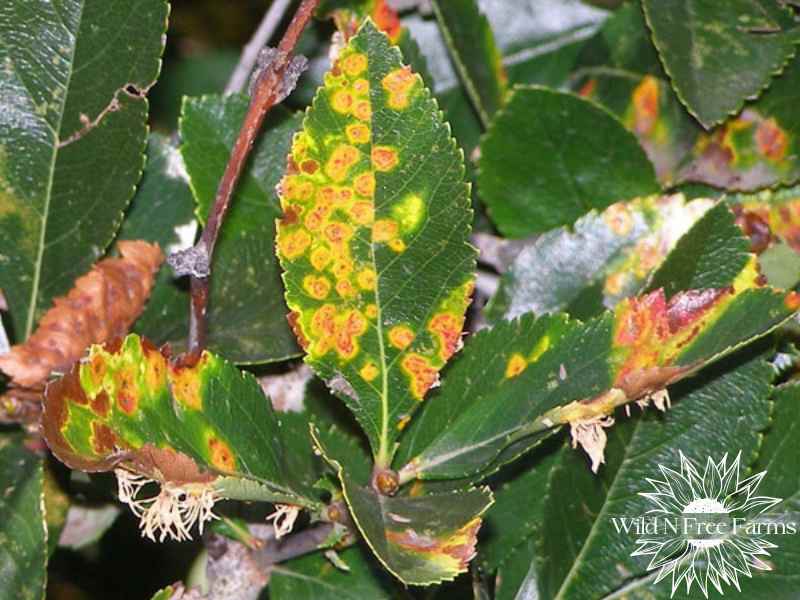
- Small yellow or orange spots appear on the upper side of leaves in spring.
- As the disease progresses, the spots enlarge and turn reddish-orange with a darker border.
- The underside of infected leaves may develop spiky, tube-like structures that produce more spores.
- Severe infections can cause leaf drop, deformed fruit, and reduced yield.
If both cedar and apple trees are nearby (within about 2 miles), spores can easily travel between them by wind or rain.

Organic Cedar Apple Rust Treatment
While you can’t reverse the leaf damage, you can manage and prevent further spread with organic practices:
1. Remove Cedar Galls
Inspect nearby cedar or juniper trees in late winter or early spring and prune out all visible galls before they produce orange horns. Dispose of them—don’t compost.
✂️ Tip: The galls are easiest to spot before new cedar growth begins.
2. Apply Sulfur or Copper Sprays
When apple buds begin to open (the pink bud stage) and again after petal fall, apply an organic-approved sulfur spray or liquid copper fungicide.
- These sprays prevent spores from infecting leaves and fruit.
- Reapply every 7–10 days during wet weather.
3. Biological Fungicides
Use products containing Bacillus subtilis or Bacillus amyloliquefaciens to colonize the leaf surface and suppress fungal spores naturally.
4. Prune and Sanitize
- Remove and destroy infected leaves and fruit during the growing season.
- In fall, rake up fallen leaves around apple trees to reduce overwintering fungal spores.

How to Prevent Cedar Apple Rust Naturally
Prevention is the best long-term approach for organic growers.
1. Create Distance Between Hosts
If possible, plant apple trees at least 300–500 feet away from cedar or juniper trees. If that’s not practical, keep those trees regularly pruned and gall-free.
2. Improve Airflow and Sunlight
Prune apple trees annually to open up the canopy. Faster drying leaves mean fewer fungal problems.
3. Choose Resistant Varieties
Planting rust-resistant apple cultivars greatly reduces problems:
- ‘Liberty’
- ‘Enterprise’
- ‘Freedom’
- ‘Pristine’
4. Feed Your Soil
A balanced, living soil system helps apple trees naturally resist disease. Use compost, worm castings, and mulch to support a thriving soil microbiome.
Cedar apple rust might look dramatic, but with vigilant observation and a few organic habits, you can easily keep it in check. Removing cedar galls, maintaining airflow, and applying natural sprays at the right time are all it takes to protect your orchard. Healthy soil and smart spacing are your best long-term allies for rust-free apple trees.


