
How to Identify, Treat, and Prevent Powdery Mildew on Apple Trees Organically
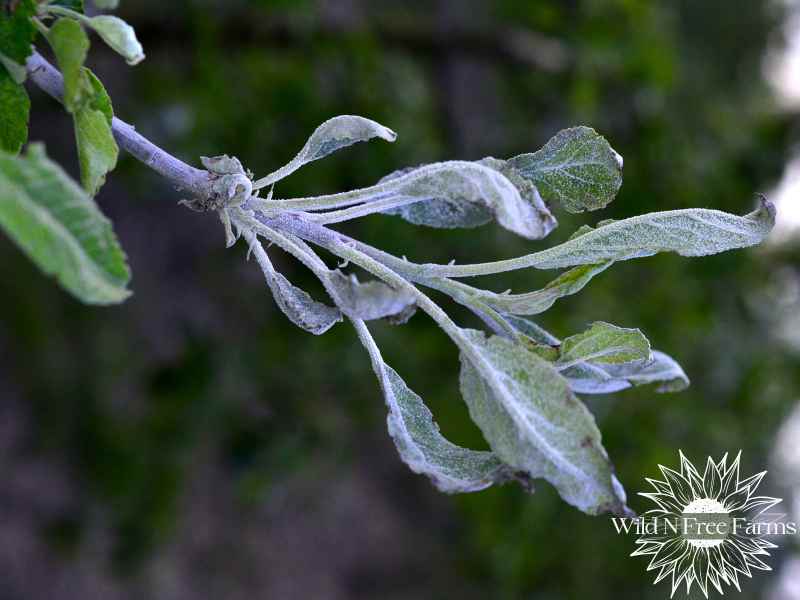
Few things are as disheartening as seeing your apple tree’s new leaves and shoots covered in a white, powdery film. That’s powdery mildew, a fungal disease caused by Podosphaera leucotricha, and it’s one of the most common apple tree issues in both home orchards and commercial settings.

Disclaimer
This post contains affiliate links. This means we may earn a commission should you chose to sign up for a program or make a purchase using these links. There is no added cost to you but your purchase through these links helps support our content! Not to worry- I truly believe in and/or use everything I promote!
We also utilize advertisements on many of our articles. This is simply a way to help support all the work we do here at Wild N Free Farms, without adding any extra cost to our readers. Check out our disclaimer and disclosure page for more details.
The good news? Unlike some diseases, powdery mildew is highly manageable with organic, preventative care and a few natural treatments. Once you understand what conditions it thrives in, you can stop it before it ever takes hold.

How to Identify Powdery Mildew on Apple Trees
Powdery mildew thrives in warm, dry days followed by cool, humid nights — perfect springtime weather in many regions.
Watch for these telltale signs:
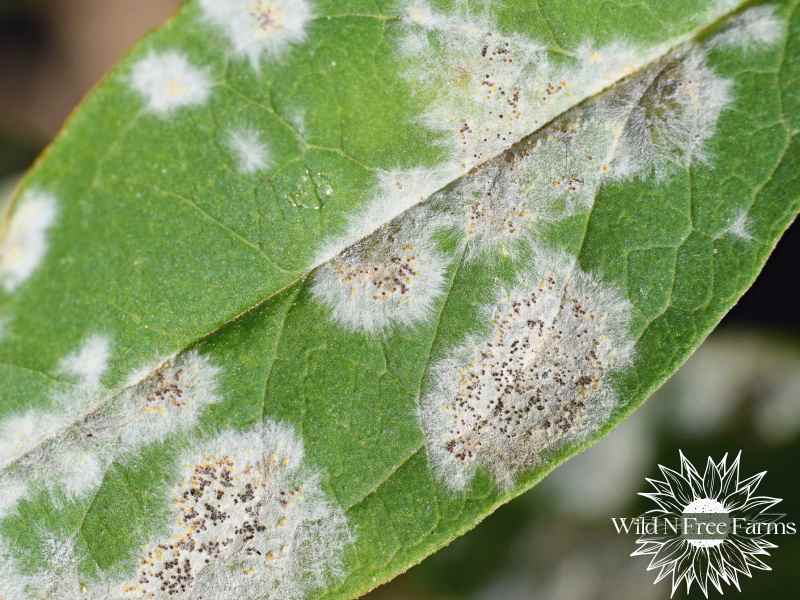
- A white or gray powdery coating on leaves, blossoms, or young shoots
- Distorted, curled, or stunted leaves (especially on new growth)
- Blossoms that fail to open or produce small, deformed fruit
- Infected shoots that stay dormant or die back over winter
The fungus overwinters inside buds and releases spores when temperatures rise, infecting new leaves early in the growing season.
Organic Powdery Mildew Treatment
Once powdery mildew appears, organic management focuses on halting its spread and protecting new growth:
1. Prune Out Infected Growth
- Remove and dispose of infected shoots and leaves immediately.
- Prune in dry weather to avoid spreading spores.
- Burn, bury, or hot-compost infected material (never leave it under the tree).
2. Apply an Organic Fungicidal Spray
Use sulfur, potassium bicarbonate, or a biological fungicide as soon as symptoms appear.
- Sulfur spray: A long-trusted organic remedy that prevents spore germination.
- Potassium bicarbonate: Changes leaf surface pH, making it hostile to mildew.
- Biological sprays: Bacillus subtilis–based products or Bacillus amyloliquefaciens help prevent reinfection naturally.
🌿 Tip: Alternate between products every few weeks to reduce fungal resistance.
3. Neem Oil or Horticultural Oil
Apply neem oil or a light horticultural oil to smother spores on leaf surfaces.
- Use in early morning or evening to prevent leaf burn.
- Avoid applying sulfur and oils within 2 weeks of each other—they can interact and cause damage.
How to Prevent Powdery Mildew Naturally
Prevention is your most powerful organic tool. The fungus can’t thrive if the environment doesn’t suit it.
1. Choose Resistant Varieties
Plant apple varieties known for resistance to powdery mildew, including:
2. Prune for Air Circulation
Open up the canopy to allow sunlight and airflow to reach interior leaves. This keeps foliage drier and reduces spore survival.
3. Avoid Over-Fertilizing with Nitrogen
Excess nitrogen encourages lush, tender growth — the perfect target for mildew. Instead, feed trees with balanced compost or organic fertilizers that promote steady, resilient growth.
4. Sanitize at Season’s End
After harvest, rake up fallen leaves and prune diseased twigs to reduce overwintering spores.
5. Support Tree Immunity
Healthy trees resist infection better. Keep your soil living and nutrient-rich with compost, worm castings, and a thick layer of mulch.

Powdery mildew may look unsightly, but it’s one of the easier apple diseases to control organically once you recognize it. With proper pruning, balanced nutrition, and a few safe sprays, you’ll restore your tree’s health and keep your orchard looking vibrant and productive.
A little proactive care now means fewer fungal problems — and more crisp, clean apples come harvest time.


