
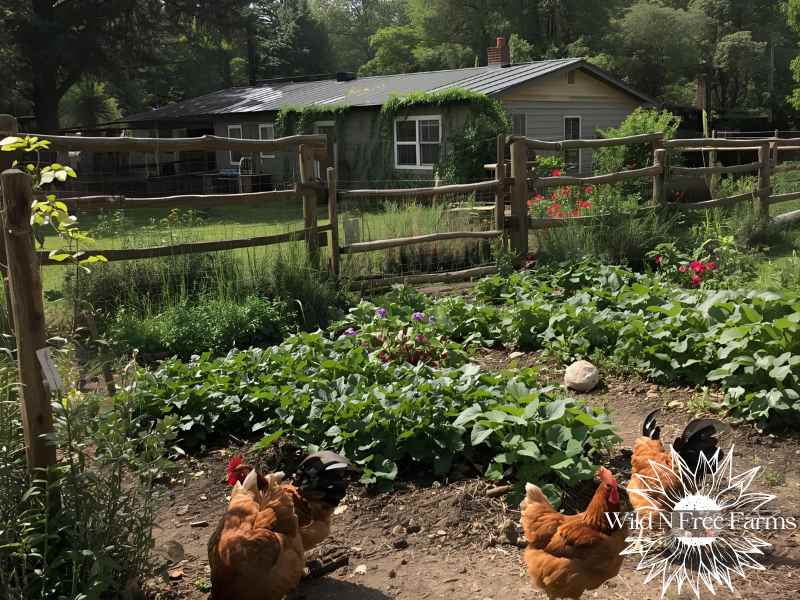
Designing a Productive Micro-Homestead on 1/4 Acre
Dreaming of fresh eggs from your backyard, homegrown veggies straight from the soil, and a slice of self-sufficiency without needing vast farmland? A micro-homestead on just 1/4 acre (about 10,890 square feet) can make that a reality. This size is perfect for urban or suburban lots, allowing you to produce a surprising amount of food while incorporating sustainable practices. As a beginner, starting small avoids overwhelm, and with smart design, you can aim for year-round productivity. In this guide, we’ll walk through essential steps, tips, and best practices to help you plan and build your productive micro-homestead.

Disclaimer
This post contains affiliate links. This means we may earn a commission should you chose to sign up for a program or make a purchase using these links. There is no added cost to you but your purchase through these links helps support our content! Not to worry- I truly believe in and/or use everything I promote!
We also utilize advertisements on many of our articles. This is simply a way to help support all the work we do here at Wild N Free Farms, without adding any extra cost to our readers. Check out our disclaimer and disclosure page for more details.
Assessing Your Space: The Foundation of Success
Before digging in, evaluate your 1/4 acre plot. Start with a site analysis: note sun exposure (most veggies need 6-8 hours of direct sunlight daily), wind patterns, slopes for drainage, and existing features like trees or fences. Check local zoning laws—some areas restrict livestock or structures like greenhouses.
Test your soil for pH (aim for 6.0-7.0) and nutrients using a home kit or lab service. Poor soil is common in small lots, so plan to amend it with compost. Consider water access; rainwater harvesting can save costs. Budget-wise, beginners might spend $500-$2,000 initially on basics like raised beds and tools.
Pro tip: Sketch your property on graph paper at a scale of 1 inch = 10 feet to visualize zones.

Planning the Layout: Maximizing Every Square Foot
A thoughtful layout is key to productivity on limited space. Use permaculture principles like zoning—place high-maintenance elements (e.g., veggie beds) closest to your home for easy access, and lower-maintenance ones (e.g., fruit trees) farther out.
Typical elements for a 1/4 acre micro-homestead:
- Vegetable Garden (2,000-3,000 sq ft): 6-8 raised beds for intensive planting.
- Orchard/Perennials (1,000 sq ft): Dwarf fruit trees and berry bushes.
- Livestock Area (500 sq ft): Small coop for chickens or bees.
- Compost/Water Systems: Centralized for efficiency.
- Paths and Structures: Wide paths (2-3 ft) for wheelbarrow access; include a small greenhouse (100 sq ft) for seedlings.
Incorporate vertical space with trellises for vines like cucumbers or beans to save ground area. Focus on edges for higher yields—plant along fences or create curved beds to increase planting surface.
Here’s a simple phased approach in a table for beginners:

Building Healthy Soil: Your Homestead’s Lifeline
Healthy soil means productive plants. For newbies, skip tilling and go no-dig: layer cardboard, compost, and mulch to suppress weeds and build fertility. Aim for a mix of 1/3 topsoil, 1/3 compost, and 1/3 vermiculite or perlite in raised beds.
Rotate crops annually to prevent pests—follow a 3-year cycle: legumes (beans) → brassicas (cabbage) → roots (carrots) → back to legumes. Add cover crops like clover in off-seasons to fix nitrogen.

Vegetable Gardening: Growing Your Staples
On 1/4 acre, intensive techniques like square-foot gardening can yield enough veggies for a family of four. Plant high-yield crops: tomatoes, peppers, cucumbers, okra, onions, sweet potatoes, garlic, basil, rosemary, mint, and cauliflower.
Use companion planting: pair tomatoes with basil to deter pests. Succession plant every 2-3 weeks for continuous harvest. In a greenhouse, extend seasons—500 sq ft can feed a family year-round.
Vertical gardening saves space: train beans or tomatoes on trellises. Start small with easy wins like lettuce and radishes.

Incorporating Fruit Trees and Berries: Long-Term Rewards
Dwarf or semi-dwarf fruit trees (apples, pears, citrus) fit small spaces—plant 4-6 for variety. Berry patches (strawberries, blueberries) in raised beds or borders provide quick returns. Espalier trees along fences to maximize edges.
Choose varieties suited to your climate; pollinator-friendly plants boost yields.

Raising Animals: Adding Protein Sustainably
Chickens are beginner-friendly: 4-6 hens in a 50 sq ft coop/run produce 200+ eggs yearly. They also provide manure for compost. Check local regs—many allow small flocks.
Bees or quail are low-space alternatives. Integrate animals with gardens: let chickens scratch in fallow beds for natural tilling.

Water Management: Conserving Resources
Install rain barrels (50-100 gallons) connected to gutters. Use drip irrigation to reduce waste by 50%. Mulch beds to retain moisture.
Greywater systems from sinks can irrigate non-edibles, but verify legality.

Composting and Waste Reduction: Closing the Loop
Build a three-bin compost system (100 sq ft total) to turn kitchen scraps and yard waste into gold. Add chicken manure for nitrogen boost. Vermicomposting with worms is space-efficient for apartments-turned-homesteads.
Recycle everything: use old pallets for beds, bottles for cloches.

Permaculture Principles: Working with Nature
Observe and interact: design around natural patterns. Catch and store energy (e.g., solar panels for pumps). Use small, slow solutions—start with one bed before scaling.
Integrate elements: chickens eat garden pests, their waste feeds soil.

Common Mistakes to Avoid
- Overplanting: Start small to learn.
- Ignoring soil health: Always test and amend.
- Poor spacing: Crowded plants invite disease.
- Neglecting maintenance: Daily checks prevent issues.
- Full self-sufficiency myth: 1/4 acre supplements, not replaces, groceries.
With patience, your micro-homestead can produce abundant food, reduce bills, and connect you to nature. Begin today—grab a notebook, assess your space, and plant that first seed. Happy homesteading!


