
Why Salad Gardens Won’t Save You in Hard Times
For years, I thought I was doing the right thing.
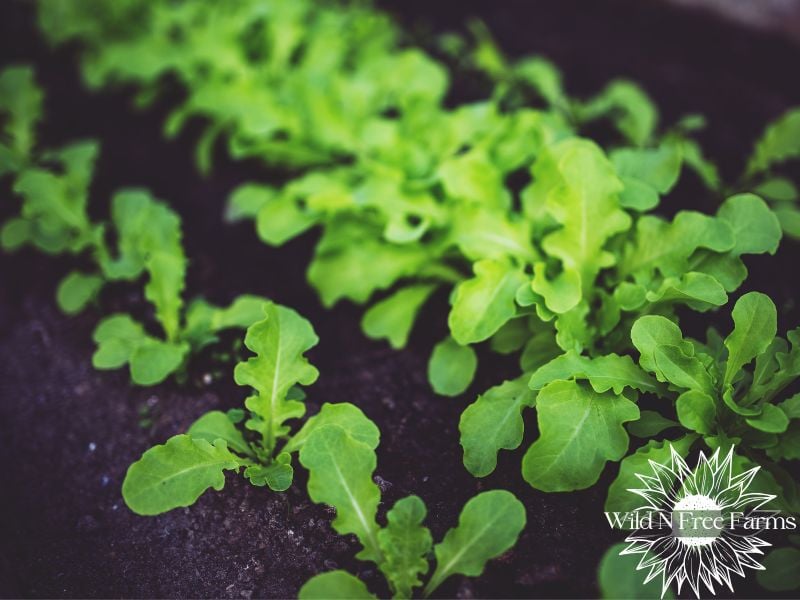
I had raised beds full of leafy greens. Beautiful lettuce mixes. Spinach. Arugula. Herbs spilling over the sides. It looked like abundance. It felt responsible.
But then I did the math.
And that’s when I realized something uncomfortable:
Salad gardens don’t feed families.
They make us feel productive. They make pretty meals. They photograph well. But when times are hard—when grocery bills climb, supply chains wobble, or income tightens—salad alone will not sustain a household.
This isn’t about fear. It’s about honesty.
And honest food security starts with calories.

Disclaimer
This post contains affiliate links. This means we may earn a commission should you chose to sign up for a program or make a purchase using these links. There is no added cost to you but your purchase through these links helps support our content! Not to worry- I truly believe in and/or use everything I promote!
We also utilize advertisements on many of our articles. This is simply a way to help support all the work we do here at Wild N Free Farms, without adding any extra cost to our readers. Check out our disclaimer and disclosure page for more details.
The Hard Truth About Lettuce and Leafy Greens
Let’s talk plainly.
A full head of lettuce contains roughly 100–150 calories.
An adult needs 1,800–2,400 calories per day just to maintain basic energy.
You could eat an entire garden bed of greens and still be hungry.
Leafy greens are:
- Low in calories
- Low in fat
- Low in carbohydrates
They provide micronutrients—but micronutrients don’t fuel bodies through long days of work, stress, or uncertainty.
That doesn’t make salads bad.
It makes them incomplete.

Why We Were Taught to Grow Salad Gardens First
Salad gardens are popular because they are:
- Easy to grow
- Fast to harvest
- Forgiving of mistakes
- Lightweight and non-intimidating
For beginners, they feel like success.
But modern gardening culture often prioritizes:
- Speed over sustenance
- Variety over volume
- Aesthetics over calories
Somewhere along the way, we stopped asking the most important question:
“Could this garden actually feed my family?”
Calories Are the Foundation of Food Security
Food security isn’t about eating perfectly.
It’s about eating enough.
In uncertain times, the body needs:
- Carbohydrates for energy
- Fats for satiety and hormone health
- Protein for muscle and resilience
Lettuce provides almost none of these in meaningful amounts.
That’s why historically, families survived on:
- Potatoes
- Grains
- Beans
- Squash
- Root crops
Not spring mix.

What Actually Feeds a Family (And Keeps Them Full)
If you want a garden that truly supports your household, your focus needs to shift.
1. Potatoes: The Quiet Workhorse
Potatoes are one of the most calorie-dense crops you can grow in a small space.
- ~400 calories per pound
- Stores for months
- Grows in poor soil
- Loved by kids
One well-managed potato bed can provide hundreds of pounds of food.
2. Winter Squash: Long Storage, High Returns
Winter squash offers:
- Complex carbs
- Natural sweetness
- Long shelf life without electricity
A single vine can produce meals for months.
3. Dry Beans & Peas: Protein From the Garden
Beans don’t just fill space—they fill bellies.
They provide:
- Plant-based protein
- Fiber
- Long-term storage potential
They also fix nitrogen, improving soil for future crops.
4. Corn, Grains, and Starches
These are often overlooked because they feel “too big” or “too complicated.”
But they are foundational foods.
Even small-scale grain growing can:
- Reduce grocery dependence
- Teach valuable skills
- Stretch meals further
Where Salad Gardens Do Belong
This isn’t an argument to rip out your greens.
Leafy vegetables are:
- Nutrient-dense
- Important for digestion
- Excellent companions to calorie crops
But they should be supporting players, not the backbone.
Think of salads as:
- Supplements, not sustenance
- Freshness, not fullness
A resilient garden has balance.
The Shift From Hobby Gardening to Food Stewardship
At some point, many of us feel a nudge.
A quiet realization that:
“I don’t just want to garden.
I want to provide.”
That shift changes everything.
You stop asking:
- “What’s trendy to grow?”
And start asking:
- “What will keep my children fed?”
- “What stores well?”
- “What gives the most return on effort?”

That mindset is the heart of practical self-reliance.
A Garden That Can Carry You Through
Hard times don’t always announce themselves loudly.
Sometimes they arrive as:
- Higher grocery bills
- Fewer choices at the store
- Tighter margins month after month
A garden rooted in calories, storage, and practicality doesn’t panic—it steadies.
And that’s what we’re building here:
- Quiet resilience
- Faithful stewardship
- Food that sustains, not just decorates
Start Small, But Start Smart
If you’re early in your journey, don’t feel overwhelmed.
Begin with:
- One calorie-dense crop this season
- One storage skill
- One mindset shift
You don’t need fear to motivate you.
You need clarity.
Salad gardens are lovely.
But they are not enough.
If you want true food security—calm, steady, and grounded—you need gardens that nourish deeply, store well, and feed fully.
And once you see that clearly,
you’ll never plant the same way again.


