Homesteading Skills to Learn This Winter: 15 Skills for the Off-Season
Winter is the quiet season on the homestead, and it’s the best time of year to learn new homesteading skills. The garden is asleep, the chores are shorter, and the long evenings are just begging to be filled with something useful.
Here are 15 homesteading skills you can practice right at your kitchen table, in the barn, or by the wood stove this winter, so you walk into spring more capable and more self-reliant than you were last fall.

Disclaimer
This post contains affiliate links. This means we may earn a commission should you choose to sign up for a program or make a purchase using these links. There is no added cost to you but your purchase through these links helps support our content! Not to worry- I truly believe in and/or use everything I promote! As an Amazon Associate I earn from qualifying purchases.
We also utilize advertisements on many of our articles. This is simply a way to help support all the work we do here at Wild N Free Farms, without adding any extra cost to our readers. Check out our disclaimer and disclosure page for more details.
You don’t need land, livestock, or a big budget for most of these. A few start with a bag of flour, a jar, or a notebook. Pick two or three that fit your season of life and go deep, rather than trying to master all fifteen at once.
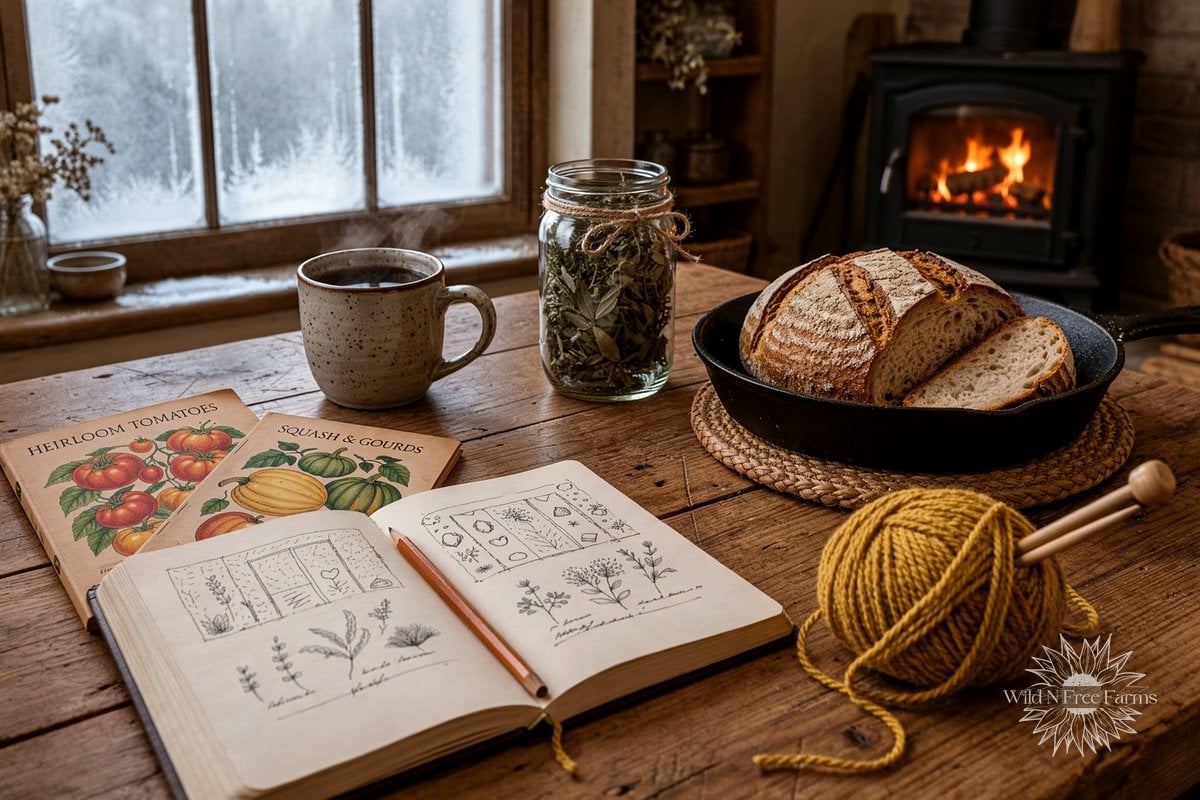
Why Winter Is the Best Time to Learn Homesteading Skills
From spring through fall, the homestead runs on a schedule set by the weather. Seeds have to go in, weeds have to come out, and the harvest won’t wait for you to watch a tutorial. Winter flips that around.
- You Have Time to Practice: A skill like bread baking or mending takes a few rounds before it clicks. Winter gives you room to make mistakes without a garden full of tomatoes going soft on the counter.
- Mistakes Are Cheap: A flat loaf or a lumpy patch on a pair of jeans costs very little. A missed planting window in May costs a whole season.
- Spring Comes Fast: Everything you plan, repair, and learn now is time you don’t have to find in April.
If you’re brand new, start with our beginner’s guide to homesteading with no experience for the big picture, then come back here for the winter to-do list.
Kitchen Homesteading Skills
The kitchen is the heart of the homestead, and most of these skills pay you back three times a day.
1. Bake Bread From Scratch
If you only learn one skill this winter, make it bread. A simple yeast loaf teaches you how dough should feel, and once you’re comfortable there, sourdough is a natural next step. Bread baking also warms the house, which is a nice bonus in January.
Ready to try wild yeast? Our guide to making a sourdough starter from scratch walks you through it day by day.
2. Make Bone Broth and Stock
Broth turns bones and vegetable scraps into the base for soups, stews, and gravies all winter long. It’s one of the easiest ways to stop wasting food, and it’s a good first step toward thinking like a homesteader. Try our Instant Pot bone broth if you want a hands-off method.
3. Stock a From-Scratch Pantry
Pick a few staples you buy every week and learn to make them instead. Homemade vanilla extract, egg noodles, and seasoning blends are all simple and make wonderful gifts.
Introducing
A Foolproof way to start your starter from scratch!

Enabling both beginners and seasoned bakers to track and schedule their sourdough starter, this product supports the development of a healthy and active starter.
Clear, user-friendly layout with day-by-day tracking spaces where you can jot down your starter’s progress.
This Sourdough Starter Tracker & Schedule isn’t just a tool, but a companion on your quest to master the art of sourdough!
Food Preservation Skills
Preserving food is the backbone of self-reliance, and winter is a smart time to learn the rules before the harvest rush.
4. Learn to Pressure Can Safely
Water bath canning works for high-acid foods like jams, pickles, and tomatoes with added acid. Low-acid foods such as meat, beans, broth, and most vegetables need a pressure canner. Winter is a great time to practice with dried beans or broth, because you’re not racing a garden full of produce.
Always use a tested recipe from a reliable source such as the National Center for Home Food Preservation, and read your canner’s manual cover to cover. If you’re shopping for one, a Presto 16-quart pressure canner is a popular, budget-friendly place to start. Before you try a shortcut you saw online, read why dry canning potatoes isn’t considered safe.
5. Practice Fermentation
Fermentation needs nothing more than vegetables, salt, a jar, and time. A batch of fermented carrots or lacto-fermented onions is a gentle first project, and it gives you a feel for brine strength and how long ferments take at room temperature.
6. Dry Herbs and Foods
Drying is the oldest preservation method there is. Start with herbs from the store or the last of the garden, and learn how to tell when something is truly dry enough to store. Our post on the best way of drying herbs covers air drying, the oven, and a dehydrator.
Homestead Skills for the Home and Barn
7. Mend and Sew
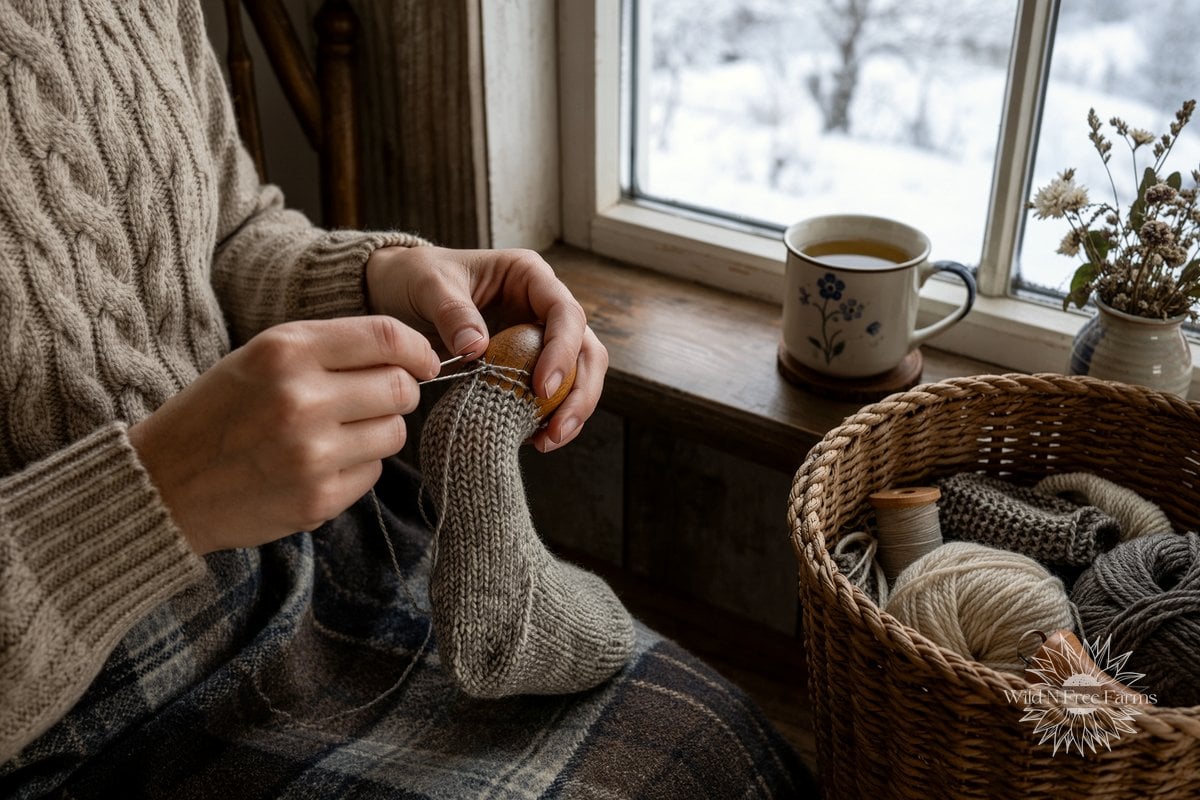
Patching jeans, darning socks, and sewing on buttons will save you a surprising amount of money. Start with hand sewing, a needle, and a spool of heavy-duty thread. Once that feels natural, a basic sewing machine opens up aprons, curtains, and feed-sack bags.
8. Knit or Crochet Something Warm
A simple dishcloth is the classic first project. After that, hats and scarves come quickly. These are good skills to have when you’re stuck inside, and they turn wool and cotton into things your family will actually use.
9. Sharpen and Care for Your Tools
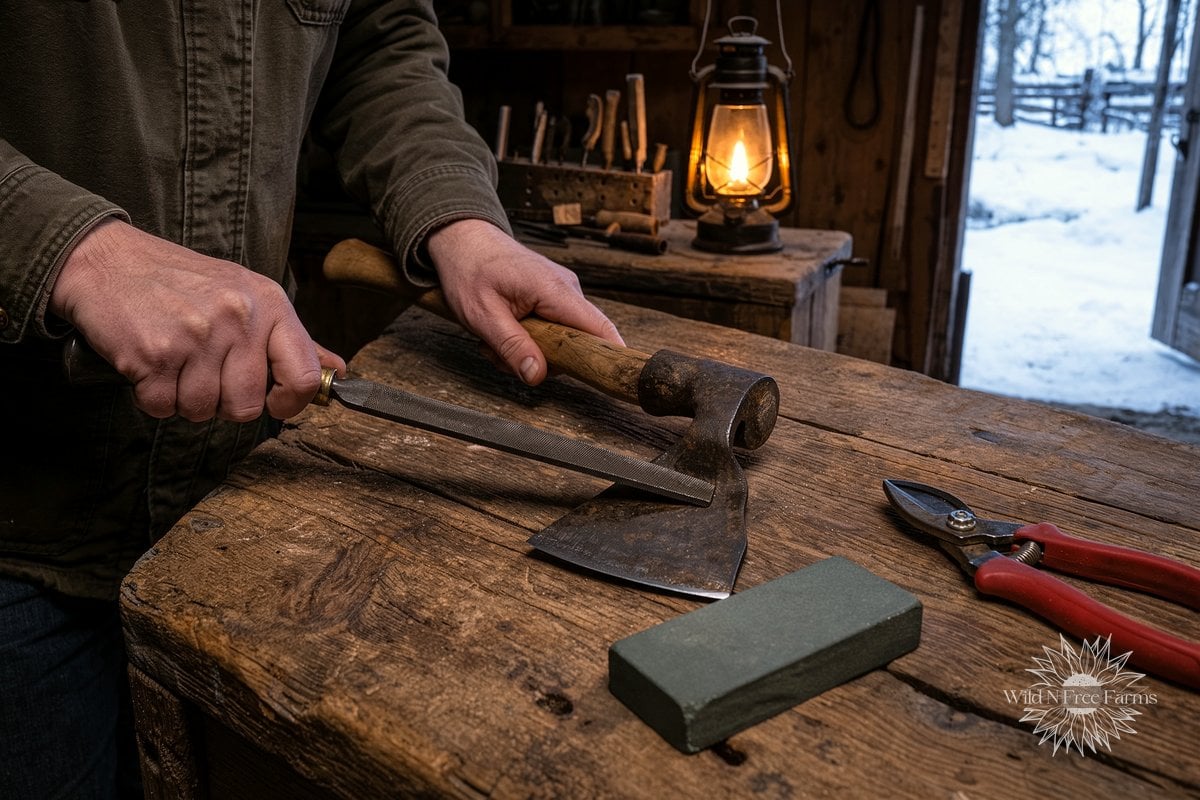
Dull tools make every job harder. Winter is the time to clean rust off shovels and hoes, sharpen pruners and knives, oil wooden handles, and replace anything that broke last season. A file, a sharpening stone, and some linseed oil will take you a long way.
10. Make Simple Herbal Remedies
A homestead first-aid kit built from the herb garden is a skill you’ll lean on for years. Start with an infused oil and turn it into a salve. If you’re new, read what salves are and how they work, then try a homemade comfrey salve for bumps and scrapes. Always check with your doctor before using herbs if you’re pregnant, nursing, or on medication.
For a deeper list, our guide to herbs for first aid covers the basics.
Garden and Growing Skills to Practice in Winter
The garden may be frozen, but a lot of the work that makes spring successful happens right now.
11. Plan Next Year’s Garden
Sketch your beds, note what grew well and what didn’t, and figure out how much you actually need to grow. Our guide on how many plants per person will help you plan a garden that feeds your family without a mountain of zucchini.
Introducing my new ebook
Seed Starting For Success
Discover the secrets of a stress free seed starting adventure
Grow strong, healthy seedlings without the guesswork. You get the full ebook plus a seed starting schedule, a when-to-start-indoors list, and an indoor vs. direct sowing guide.
$14.99 · instant digital download

12. Start Seeds Indoors
Onions, leeks, and slow perennial herbs can be started indoors in mid- to late winter in many areas, and tomatoes and peppers follow about 6 to 8 weeks before your last frost. Mix your own seed starting mix, set up a simple light shelf, and remember to harden off your seedlings before they go outside.
13. Keep the Compost Going
Composting doesn’t have to stop when it gets cold. A well-built pile keeps working through the winter, and a worm bin can live in a basement or garage. See our winter composting guide for tips that keep things breaking down.
Animal Care and Homestead Planning Skills
14. Learn Winter Livestock Care
If you keep chickens, winter teaches you a lot: keeping water thawed, managing coop ventilation without drafts, and understanding why laying slows down when the days get short. If chickens are on your wish list for spring, use the winter to read up on chickens for beginners and plan your coop before chick season.

Grab a copy of my free
Egg Preservation Guide
Learn to preserve the abundance with this FREE guide containing over 10 different ways to turn those fresh eggs into a shelf stable product you can use all year round!
15. Keep Homestead Records and a Budget
It isn’t glamorous, but record keeping might be the most valuable homesteading skill on this list. Track what you spend on feed, seed, and supplies, and what you get back in eggs, meat, and produce. A simple notebook works fine. After one year, you’ll know exactly which projects are worth the effort.
Short on space? Our guide to designing a productive micro-homestead shows how much you can do on a small lot.
How to Choose Which Homesteading Skills to Learn First
Fifteen skills is a lot, so don’t try to do them all this winter. Here’s a simple way to choose:
- Start With What You Use Every Day: Bread, broth, and from-scratch staples save money right away.
- Fill the Gap You Felt Last Year: If tomatoes went to waste, learn to can. If your seedlings flopped, focus on seed starting.
- Pick One Hands Skill and One Head Skill: Pair something practical (like mending) with something planning-based (like garden layout or record keeping).
- Practice Weekly: One evening a week on a single skill adds up to about 12 to 15 sessions over a winter. That’s enough to get really comfortable.
Stay Up To Date
Enter your name and email to subscribe to our weekly newsletter, announements and freebies!
Homesteading Skills FAQ
What are the most important homesteading skills for beginners?
Cooking from scratch, growing a small vegetable garden, preserving food safely, and basic mending and tool care give beginners the biggest return for the least investment. Record keeping is a close second, because it tells you what’s actually working.
Can I learn homesteading skills without land?
Yes. Bread baking, fermentation, canning, sewing, knitting, herbal remedies, and seed starting can all be learned in an apartment. Container gardening and a worm bin bring growing skills indoors, too.
How long does it take to learn a homesteading skill?
Most kitchen skills, like bread or broth, feel comfortable after five or six tries. Bigger skills, like pressure canning or raising animals, take a full season or two. The key is steady practice, not perfection.
What homesteading skills can I practice in winter?
Bread baking, broth making, pressure canning dried beans or broth, fermenting, drying herbs, mending, knitting, sharpening tools, making salves, planning the garden, starting seeds indoors, composting, winter animal care, and record keeping are all perfect winter projects.
Make This the Winter You Learn Something New
Homesteading isn’t one big leap. It’s a lot of small skills stacked on top of each other, year after year. Choose a couple from this list, set aside an evening a week, and by the time the first seed catalog turns into the first seedling, you’ll be ready.