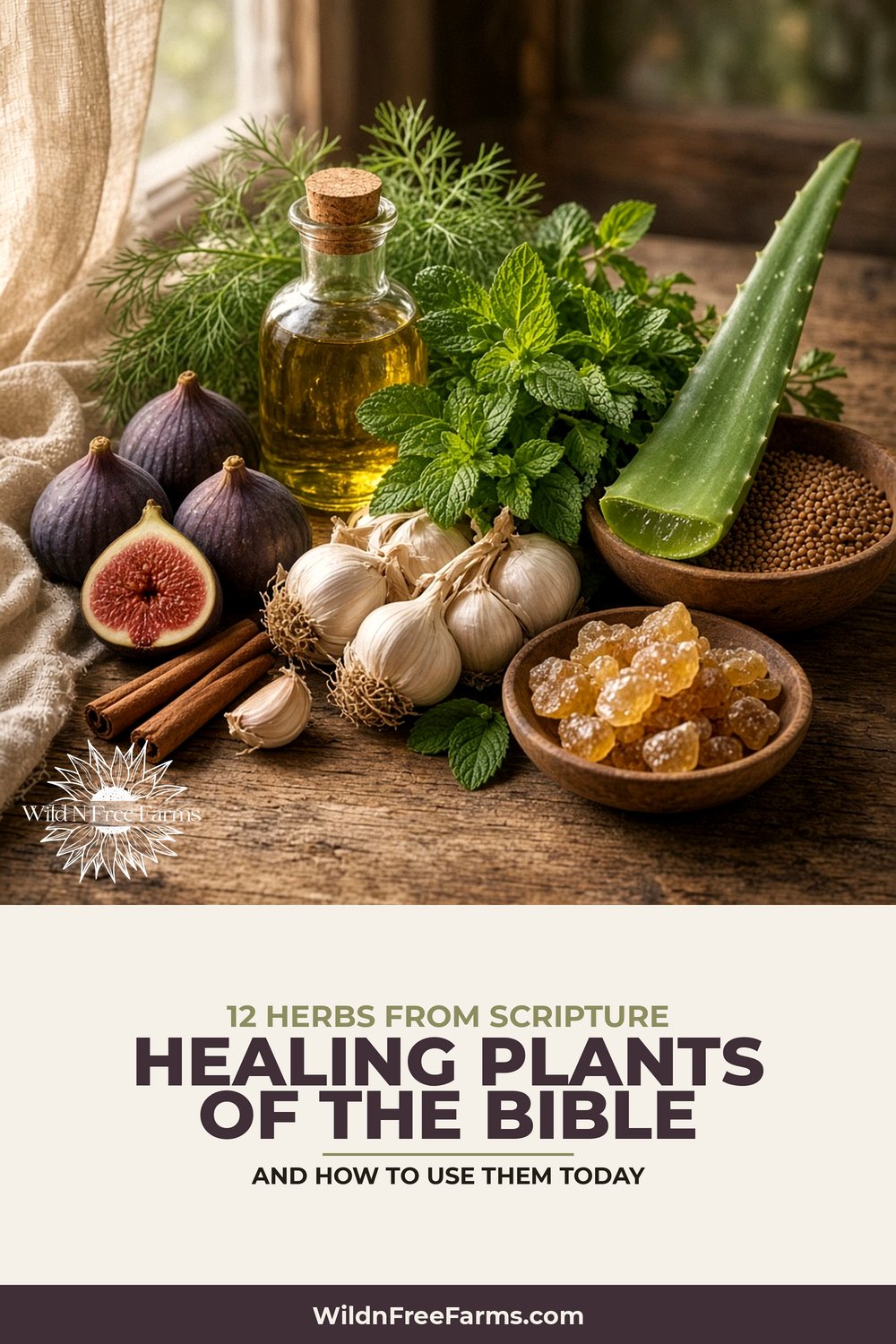
Healing Plants of the Bible: 12 Herbs and Their Uses
The herbs of the Bible were never just decoration in the margins of a story. They were food, fragrance, offerings, and the everyday plants a household reached for, and many of them still earn a place in a homestead garden.
From frankincense and myrrh at Christmas to mint, dill, garlic, fig and olive around the table, these twelve plants give us a simple way to walk through Scripture with our hands in the soil.

Disclaimer
This post contains affiliate links. This means we may earn a commission should you choose to sign up for a program or make a purchase using these links. There is no added cost to you but your purchase through these links helps support our content! Not to worry- I truly believe in and/or use everything I promote! As an Amazon Associate I earn from qualifying purchases.
We also utilize advertisements on many of our articles. This is simply a way to help support all the work we do here at Wild N Free Farms, without adding any extra cost to our readers. Check out our disclaimer and disclosure page for more details.
In this post, you’ll find twelve herbs of the Bible, the verses they’re known for, an honest note about the plant names (because scholars don’t always agree), and which ones you can actually grow in a Zone 6 garden, plus a few I keep in the kitchen or the oil cupboard instead.
This is a garden and history guide, not medical advice. Traditional or historical uses are not a treatment plan. If you have a health condition, are pregnant or nursing, or want to use a plant as a remedy, please talk with a qualified healthcare provider.
Why These Herbs Still Matter
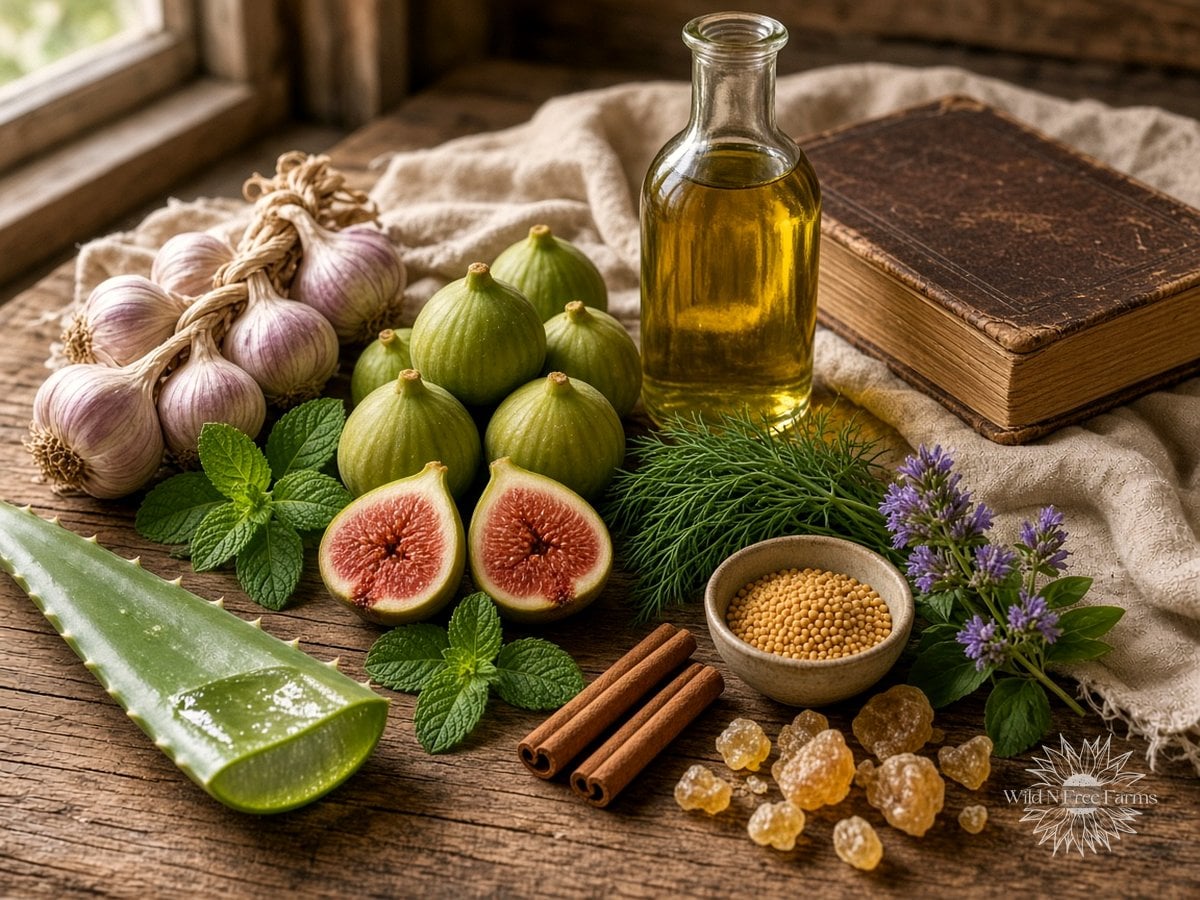
I love a garden that works hard and means something. A small Bible garden does both. It ties the Advent season, the Easter table, and the everyday kitchen back to plants people have known for thousands of years, and it gives children (and grown-ups) a way to remember a verse with something they can smell, taste, or grow.
If you’re just getting started with herbs, our guide to how to start a medicinal garden is the best first step, and you can tuck several of these plants right into that same bed.
An Honest Note About Names and “Healing”
Two things are worth saying up front, because I want this list to be useful and honest.
First, the names don’t always line up neatly. Scripture was written in ancient languages, in a different landscape than most of our backyards. “Aloes” in the burial spices, for example, is often identified by scholars as aloeswood, not the Aloe vera plant on the kitchen windowsill. Biblical hyssop may be a local mint-family herb such as Syrian oregano, not the garden hyssop in a seed catalog. I’ll note those questions as we go, and I’ll also tell you what homesteaders actually grow under those names today.
Second, “healing” here means the way these plants have been used in Scripture, in the kitchen, and in traditional household care. It is not a promise that a plant will cure, treat, or prevent anything. Some of these are food. Some are fragrance. Some were used for anointing or burial. That’s plenty.
12 Herbs of the Bible and Their Uses
1. Frankincense
Frankincense is the resin of Boswellia trees, and it’s one of the gifts the wise men brought to Jesus in Matthew 2:11. In the Old Testament, it was part of the sacred incense in Exodus 30.
Today I use frankincense the way most of us can, as a warm, resinous essential oil for the diffuser and quiet evening blends. I buy Simply Earth frankincense essential oil, and I wrote a full guide to frankincense and myrrh oil uses if you want dilution tips, a Christmas diffuser blend, and the safety notes.
2. Myrrh
Myrrh is another resin, from Commiphora trees, and it was also in that same gift in Matthew 2:11. It appears again when Jesus is buried: John 19:39 describes a mixture of myrrh and aloes, and Esther 2:12 mentions six months of myrrh as part of the old beauty preparations.
Like frankincense, this isn’t a backyard garden plant for most of us, but the oil is a beautiful, earthy companion to it. I use Simply Earth myrrh essential oil in the same winter blends, always diluted, and never internally.
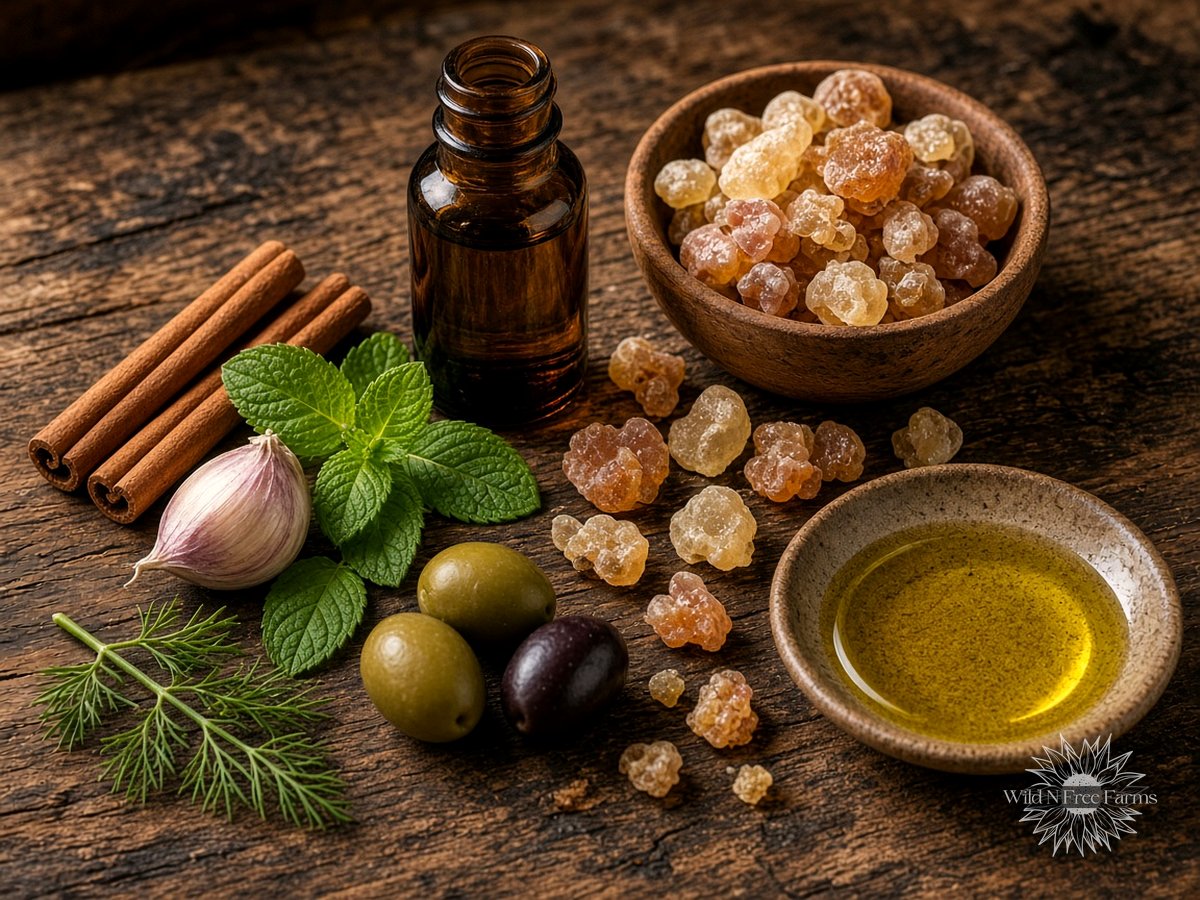
If you’re adding both oils to your cupboard, Simply Earth’s monthly Recipe Box (code WILDFARMSFREE) is the subscription I point people to. A little goes a long way.
Our Favorite source for
Quality Essential Oils


3. Aloe
“Aloes” show up in John 19:39 with myrrh as burial spices, and in passages like Psalm 45:8 and Song of Solomon 4:14. Many Bible scholars think those verses are talking about aloeswood (Aquilaria), a fragrant heartwood, not the succulent we call aloe.
That said, Aloe vera has more than earned its spot in a homestead Bible garden. It’s an easy houseplant in Zone 6, and the clear gel is one of the simplest things I keep on hand for minor kitchen burns and dry skin. If you like making salves, here’s how we use aloe vera gel in salves.
4. Hyssop
Hyssop is one of the most memorable plants in Scripture. In Exodus 12:22, the Israelites are told to dip hyssop in the blood of the Passover lamb and mark the doorposts. Psalm 51:7 says, “Purge me with hyssop, and I shall be clean.” And in John 19:29, a sponge of sour wine is lifted to Jesus on a stalk of hyssop.
The exact plant in the ancient Near East may have been a local herb such as Syrian oregano (Origanum syriacum). What seed catalogs sell as “true hyssop” is Hyssopus officinalis, a hardy, purple-flowered perennial in the mint family. It’s a beautiful, bee-friendly plant for Zone 6, and I like these True Hyssop seeds from Botanical Interests ($3.49, zones 3–11) for starting a short hedge along a path or tucking into an herb bed.
5. Cinnamon and Cassia
Both spices were part of the holy anointing oil in Exodus 30:23–25, mixed with myrrh, calamus, olive oil and cassia. Cinnamon also appears in Proverbs 7:17 and among the cargo of Revelation 18:13.
Unless you live somewhere tropical, you won’t grow a cinnamon tree, but you can keep the scent and the flavor close. In the kitchen, a jar of cinnamon is as useful as it ever was. For a diffuser, I use Simply Earth cinnamon leaf essential oil. A note on that: cinnamon leaf is the milder of the cinnamon oils. Cinnamon bark is much “hotter” on the skin, so I stay with the leaf, use it sparingly, and keep it well diluted.
6. Mint
Mint is one of the garden herbs named when Jesus talks about tithing in Matthew 23:23 and Luke 11:42. It was valuable enough to be counted, and it’s still one of the easiest, most generous herbs you can grow.
I grow mint in a pot or a tucked-away corner, because it will take over a bed if you let it. Fresh or dried, it goes in tea, summer water, and holiday baking. Our guide to drying herbs is the method I use, and a drop of Simply Earth peppermint essential oil in the diffuser is the winter version of walking out to the mint patch.
7. Dill
In Matthew 23:23, the King James Bible says “mint and anise and cummin.” Many scholars and newer translations take that “anise” as dill (Anethum graveolens), a common herb of the region. Either way, dill belongs in this garden.
Dill is an easy annual in Zone 6, and the feathery foliage and seed heads are as useful in pickles and potatoes as they are pretty in a bouquet. I like High Mowing Organic Bouquet Dill ($4.35) for a tall, generous plant with plenty of seeds to save.
8. Cumin
Cumin (“cummin” in the King James) is the third herb in that same verse, Matthew 23:23, and Isaiah 28:25–27 describes sowing and threshing it. It was a everyday seasoning worth tithing.
Cumin is a warm-season annual with delicate, dill-like foliage and small seed heads. It can be a little fussy in a short Midwest season, but it’s fun to try in a hot, well-drained bed. If it doesn’t thrive, a jar of cumin seed in the cupboard still connects the kitchen to the verse.

Lemon Ginger Elixir For Immune Support

Comfrey Salve and Lotion Provides Instant First-Aid Healing
Want To Cut Out More Toxins In Your Life?
Check out our Natural Remedy Index loaded with recipes designed to provide you true health! From beauty products, teas, lotions, first-aid, and so much more! This index will help you live a more natural, free life!
9. Mustard
Few plants in Scripture are as famous as the mustard seed. In Matthew 13:31–32, Jesus says the kingdom of heaven is like a mustard seed, “the least of all seeds,” that grows into a tree the birds can nest in. (You’ll also find the parable in Mark 4 and Luke 13.)
Black mustard and related mustards grow with almost no fuss, and a pinch of seed in a garden bed is a living reminder of that verse. Use the leaves in the kitchen when they’re young and tender, and save the seed for the mustard pot.
10. Garlic
When the Israelites remembered Egypt in Numbers 11:5, they named the food they missed: fish, cucumbers, melons, leeks, onions, and garlic. That’s a homestead list if I’ve ever heard one.
Garlic is one of the most practical plants in this whole article. It goes in the ground in the fall in Zone 6, asks very little, and fills the kitchen all year. Our guide to growing garlic covers planting, and using garlic for traditional household care plus how to store it will get you from harvest to pantry.
11. Fig
Figs run all through Scripture, from sitting under a fig tree in Micah 4:4 to the fig tree in the Gospels. One of the most practical mentions is in 2 Kings 20:7 (and Isaiah 38:21), when a poultice of figs is laid on King Hezekiah’s boil.
You can grow a fig in Zone 6. Chicago Hardy fig from Stark Bro’s is the variety I point people to. It’s self-pollinating, bears in 1 to 2 years, and is one of the toughest figs you can get (outdoor planting in zones 5–10). In our climate the top may die back in a hard winter, but the roots usually send up new growth, and that new growth can fruit the same season. A pot you can wheel into a garage also works beautifully. Fresh figs in late summer feel like a little miracle in a cold-winter garden.
12. Olive
Olive oil is everywhere in the Bible: in the tabernacle, in cooking, in the lamp, in the Garden of Gethsemane (“olive press”), in the Good Samaritan’s care in Luke 10:34, and in James 5:14, where the elders anoint the sick with oil and pray.
An olive tree is not reliably hardy where winters get cold, so this is one I keep in the kitchen instead of the garden. A good bottle of olive oil still earns its keep the same way it always has: in food, in simple oil-and-herb mixtures, and as the carrier I use when I dilute essential oils for scent.
How to Start a Small Bible Garden in Zone 6
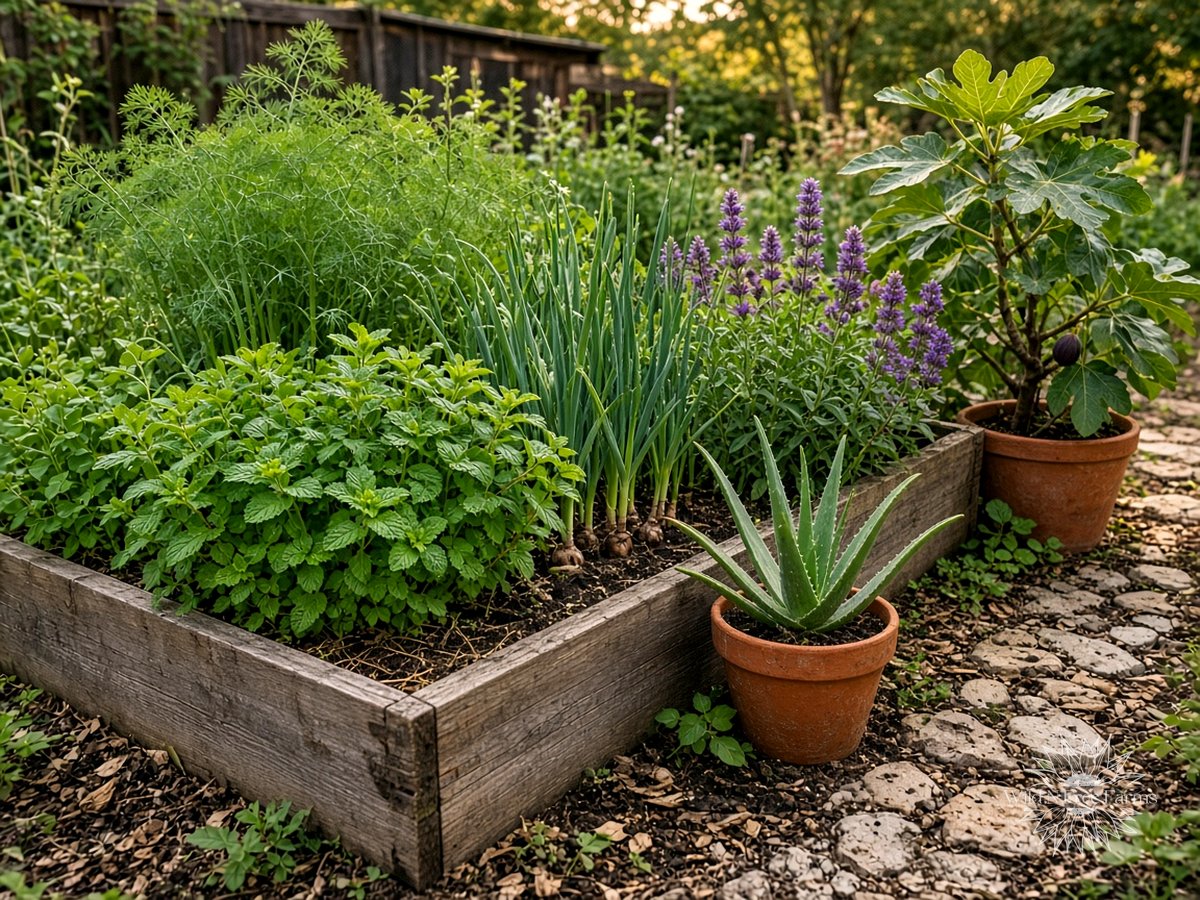
You don’t need a special plot or all twelve plants in year one. Start with what will actually grow for you, and keep the rest in the cupboard.
- Plant These: Mint (in a pot), dill, garlic in the fall, mustard, and true hyssop. Add a Chicago Hardy fig in the ground with winter protection, or in a container you can move. Keep aloe in a pot and bring it indoors before frost.
- Keep These in the Cupboard: Frankincense and myrrh oils, cinnamon, cumin seed, and a good olive oil. Those are the plants that don’t belong in a Zone 6 bed, and they’re still part of the story.
- Give It a Simple Layout: Our medicinal garden layout and beginner medicinal herb garden posts will help you place the ones that like sun, the ones that spread, and the ones you want near the kitchen door.
If you’re starting hyssop, dill or mustard from seed this spring, a simple seed-starting plan makes the timing a lot less guessy.
Introducing my new ebook
Seed Starting For Success
Discover the secrets of a stress free seed starting adventure
Grow strong, healthy seedlings without the guesswork. You get the full ebook plus a seed starting schedule, a when-to-start-indoors list, and an indoor vs. direct sowing guide.
$14.99 · instant digital download

Herbs of the Bible FAQ
What are the herbs of the Bible?
The Bible names many plants used for food, fragrance, offerings, and household care. This list of twelve focuses on some of the best known: frankincense, myrrh, aloe, hyssop, cinnamon and cassia, mint, dill, cumin, mustard, garlic, fig, and olive.
Can you grow Bible herbs in Zone 6?
Yes, several of them. Mint, dill, garlic, mustard, hyssop, aloe (as a houseplant), and a hardy fig are all realistic in a Zone 6 garden like mine. Frankincense, myrrh, cinnamon, and olive trees are not, so those stay in the kitchen or the oil cupboard.
Is biblical hyssop the same as garden hyssop?
Not necessarily. The plant in Scripture may have been a local mint-family herb such as Syrian oregano. Garden “true hyssop” (Hyssopus officinalis) is the hardy perennial sold under that name today, and it’s a lovely stand-in in a Bible garden.
Is the aloe in the Bible Aloe vera?
Probably not. The “aloes” used with myrrh as burial spices are often identified as aloeswood. Aloe vera is still a wonderful homestead plant to grow alongside this list, as long as we don’t force the identification.
Are frankincense and myrrh herbs?
They’re resins from trees, not leafy herbs, but they’re two of the most famous plant products in Scripture and they belong in any biblical plants list, especially at Christmas.
Stay Up To Date
Enter your name and email to subscribe to our weekly newsletter, announements and freebies!
A Garden That Tells a Story
You don’t have to grow all twelve to begin. Plant the garlic this fall, sow a row of dill in the spring, put a pot of mint by the door, and keep a little frankincense and myrrh for the winter evenings. That’s a Bible garden already.
Start with one plant. Learn the verse. Grow from there.
Sources
- The Holy Bible, King James Version. Verse wording and references were checked against the KJV text on BibleGateway.
- Wild N Free Farms. Frankincense and Myrrh Oil Uses: The Biblical Oils at Home.
- Plant identifications for biblical “aloes” (often Aquilaria, or aloeswood) and hyssop (possibly a local mint-family herb such as Origanum syriacum) are presented as the common scholarly view, not as a settled fact.