Lead in Garden Soil: What Really Works (and a Season-by-Season Plan)
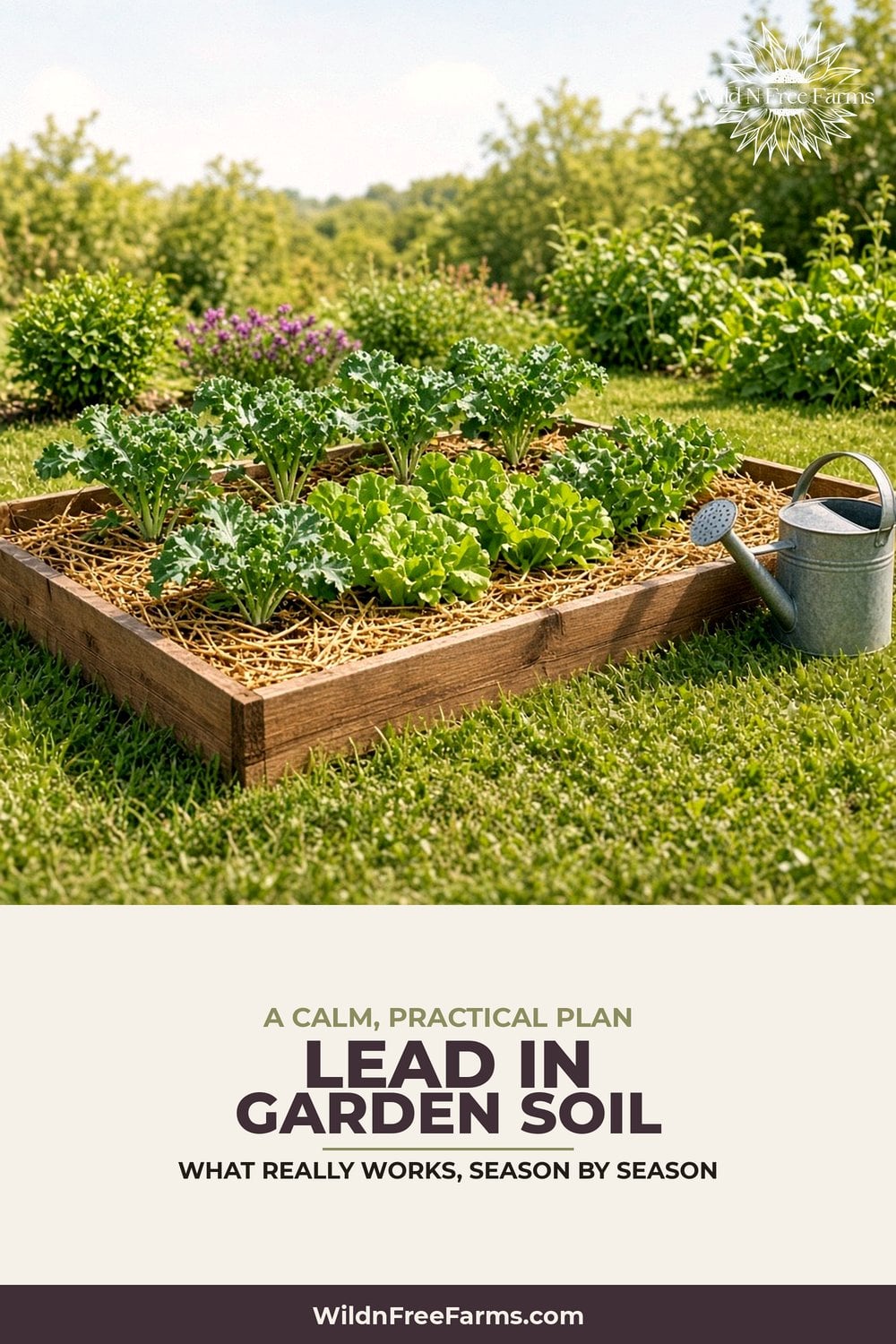
If you’re worried about lead in garden soil for any reason, take a deep breath with me. This is one of those topics where a calm, step-by-step plan beats worry every time. Lead already occurs naturally in every soil, and there are simple, proven things you can do to keep your garden, your family and your flock safe.
Here’s the honest part up front: you can’t really “pull” lead out of a home garden with a plant or a bug. The good news is that you don’t have to. Extension specialists focus on testing, binding the lead in place, covering the soil, and growing smart, and it works. Winter is the perfect time to start, so I’ve laid out what to do now and through spring, summer and fall.

Disclaimer
This post contains affiliate links, so we may earn a commission if you sign up or buy through them, at no added cost to you. It helps support our content, and I only share what I truly believe in or use. As an Amazon Associate I earn from qualifying purchases. We also run ads on many articles. See our disclaimer and disclosure page for details.
A quick note before we dig in: I’m a homesteader, not a soil scientist or a doctor. Everything below comes from university extension services, the EPA, and published research, and I’ve linked every source at the bottom so you can read them yourself. Where the experts disagree, or where the science just isn’t settled, I’ll tell you.
First, Take a Breath: Lead in Garden Soil Is Manageable
Lead is a natural part of soil everywhere. Oregon State University Extension says it typically sits at about 10 to 50 parts per million (ppm) in background soils, and the UMass Soil Lab gives a similar 15 to 40 ppm for New England. Levels run higher near older painted buildings, busy roads, and old orchards where lead arsenate was once sprayed, but even then, plenty of gardens can be managed safely.
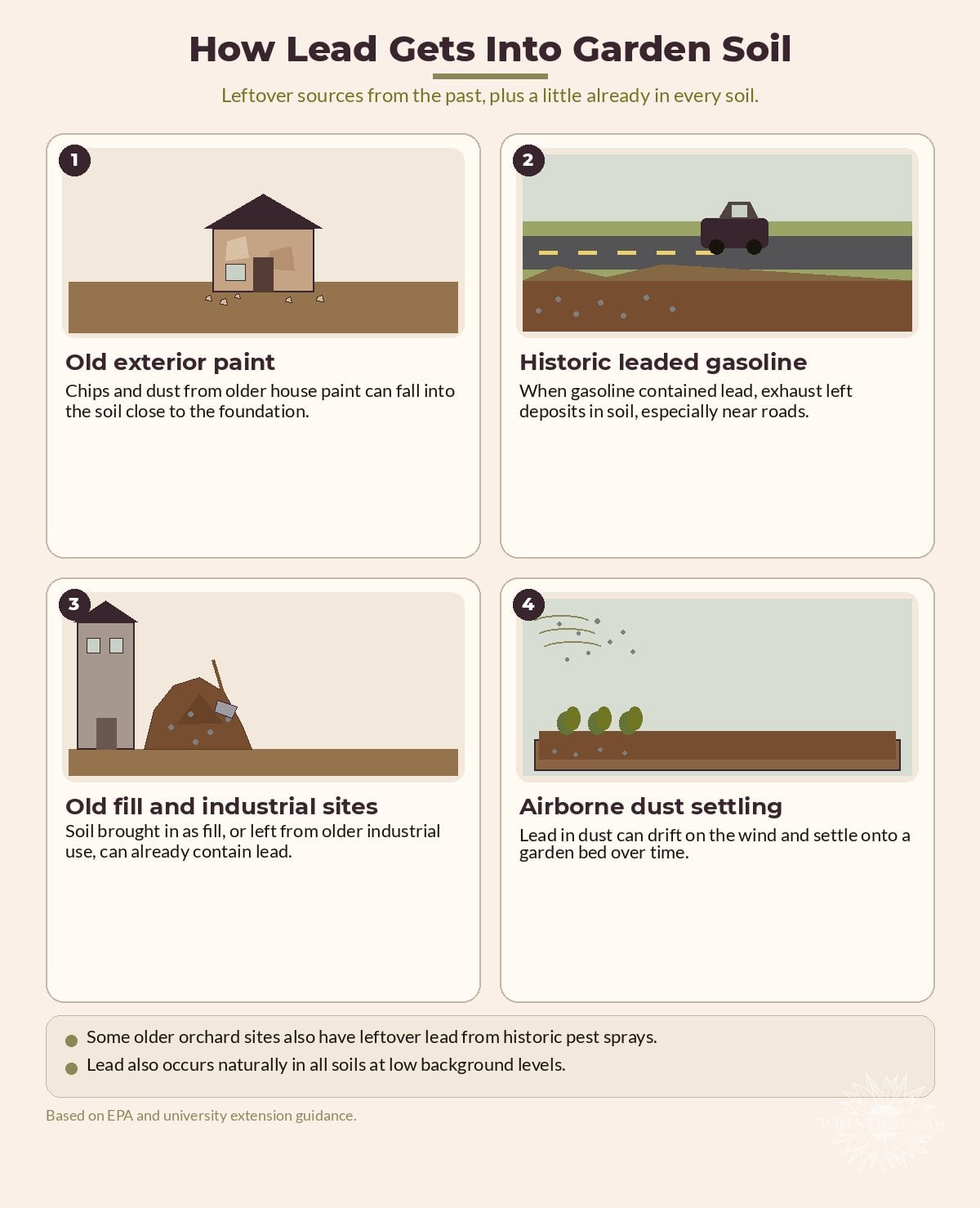
The EPA puts it plainly: with proper care, gardens in yards that may have lead can still be safe places to grow fruits and vegetables. It even points out that eating plenty of fruits and vegetables helps, because studies show a child with a nutritious diet absorbs less lead than a child without one.
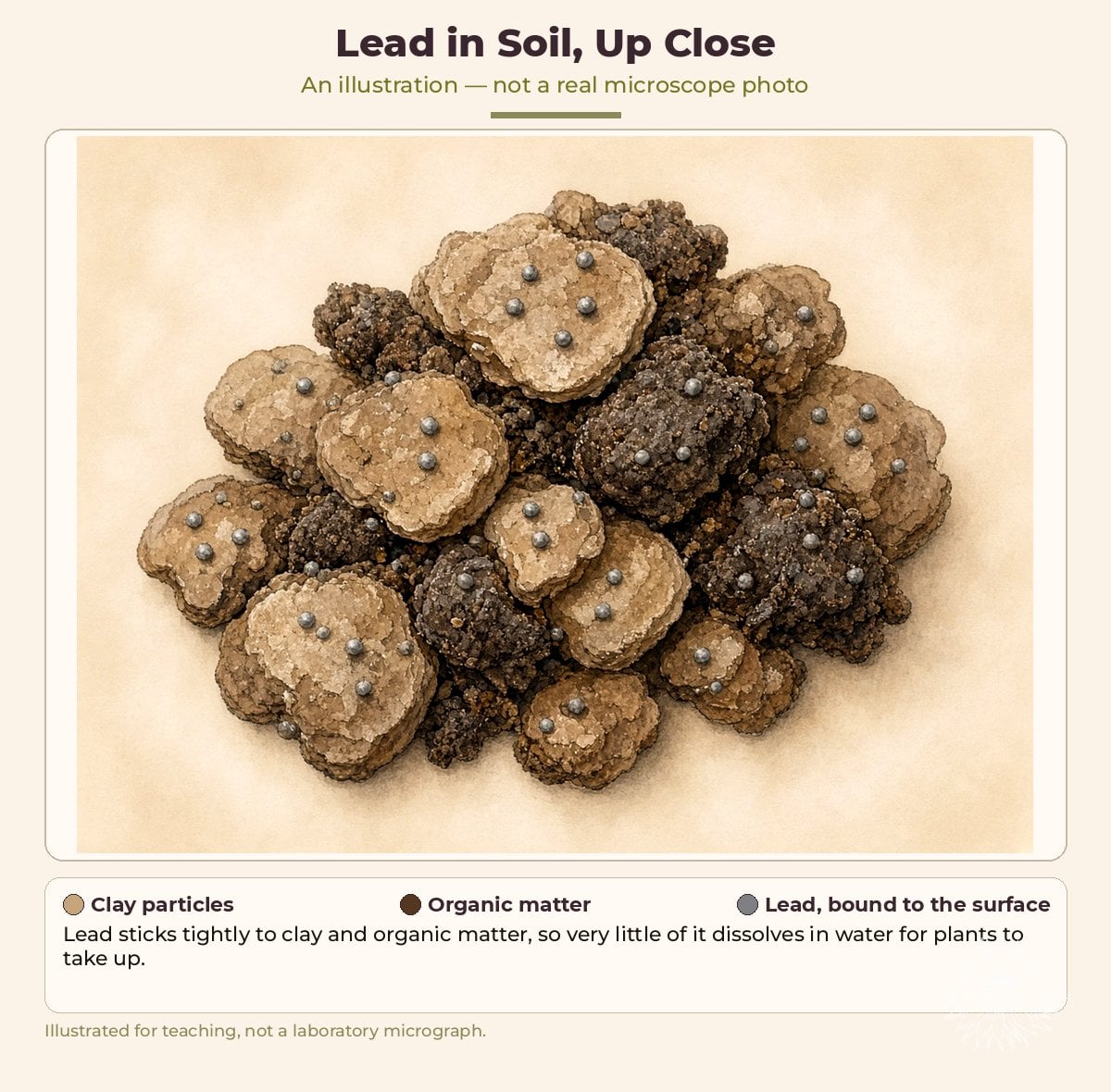
Just as important, the experts agree on how lead usually gets into people. It’s not mainly through the roots of your vegetables. Oregon State explains that lead is held tightly on clay and organic matter and is almost entirely in a solid form that doesn’t dissolve in water, and plant roots can only absorb what’s dissolved. The most common routes are swallowing soil or eating unwashed produce. In other words, dust and dirt are the real target, and dust is something we can control.
Can You Really Get Lead Out of Soil? The Honest Answer
Not with plants, worms, or bugs, at least not in any way that matters in a backyard. A 2020 critical review in the International Journal of Phytoremediation went through the USDA phytoremediation database and found that, without chemical additives, no plant has been confirmed as a lead hyperaccumulator. Their conclusion is that lead phytoextraction (pulling lead out with plants) is not a viable cleanup option.
Soil scientists quoted in a BioScience article on this exact question say the same thing. Lead is stuck to organic matter, iron oxides and clay, and when there’s enough phosphate for plants to grow, it forms very insoluble minerals. A Kansas State soil scientist who ran a seven-year EPA-funded study on urban gardens put it simply: they don’t have a good plant to pull lead from soil.
The encouraging flip side is that the same chemistry makes lead easy to keep in place. The strategies that work are about locking lead down, covering it up, and keeping clean soil between you and it. Here’s what each tool really does:
| Tool | What it actually does | Does it remove lead? |
|---|---|---|
| Compost and organic matter | Binds lead to the soil, cuts dust, helps plants grow strong | No, it holds it in place |
| Soil pH near neutral (about 6.5 to 7) | Keeps lead from dissolving so plants can’t take it up as easily | No |
| Phosphorus (when a soil test says it’s needed) | Forms very insoluble lead-phosphate minerals | No |
| Mulch and ground cover | Stops dust and soil splash onto your crops and you | No |
| Raised beds or containers with clean soil | Puts clean soil between your roots and the lead | No, but the lead stays out of reach |
| Sunflowers, Indian mustard and other plants | Take up small amounts, very slowly | Only a tiny amount; not a practical fix |
| Pill bugs and earthworms | Store a little lead in their bodies; worms can move it around | No |
| Mycorrhizal fungi and soil microbes | Support healthy soil; effects on lead are mixed | No |
The only way to truly take lead out of a spot is to remove and replace the soil. That’s generally reserved for very high results, and if your test comes back that high, your local health department or an extension office can point you to the right help.
Step 1: Test Your Soil (and Know How to Read the Numbers)
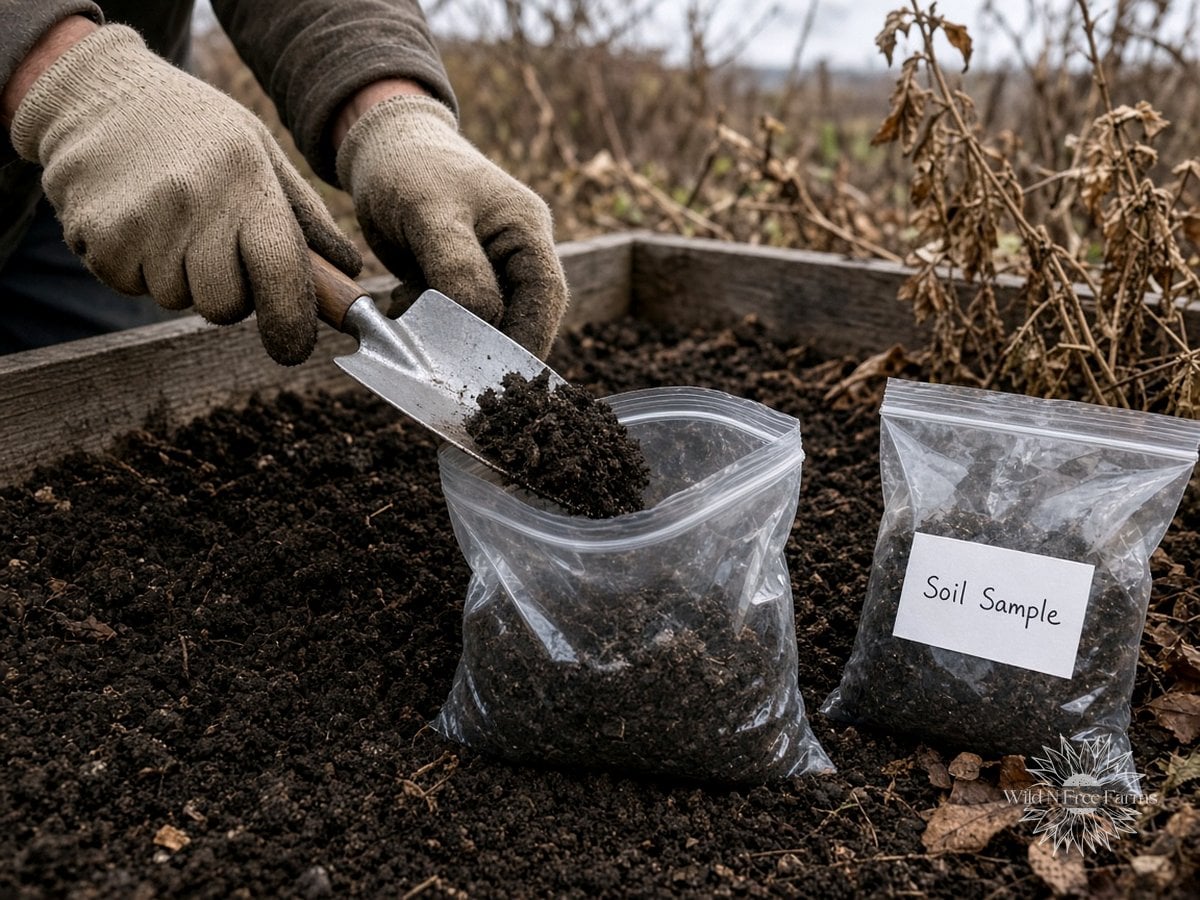
Testing is the single most useful thing you can do, because it replaces worry with a number. The EPA notes that most state university agricultural labs and extension offices offer soil testing, and some local health departments do too. Search for your state’s extension soil lab and ask for a total lead test. It may be labeled “total lead,” “total recoverable,” or listed with an EPA 3050B method. Oregon State is clear that the guideline numbers below only apply to total lead, not to “available” or “dissolvable” lead screens.
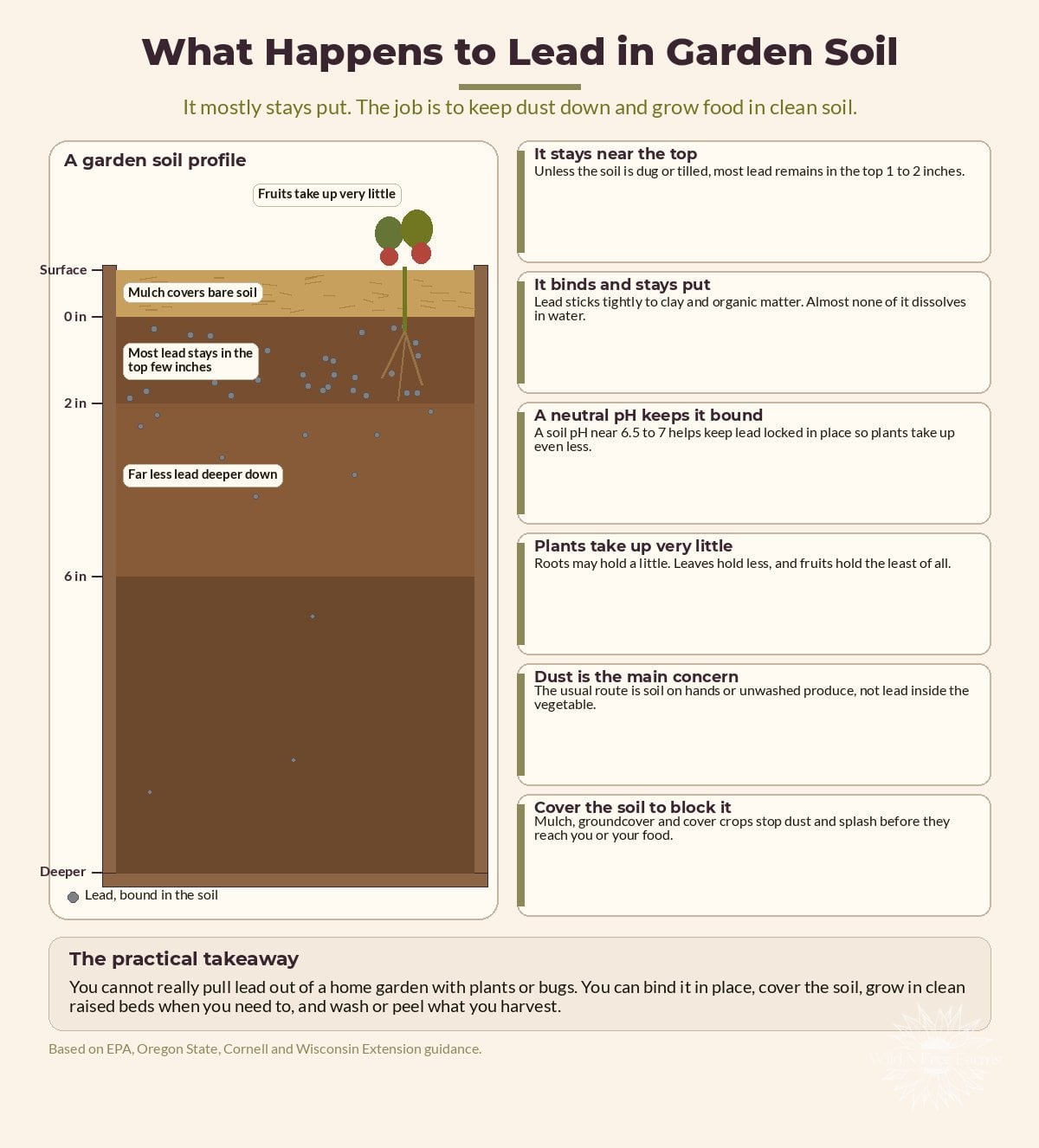
Lead can vary a lot over a few feet, so how you sample matters. Oregon State suggests mixing 15 to 20 small scoops from the area into one sample, taking garden soil from the surface down to about 6 inches, and sampling play areas (the top 2 inches) separately. University of Maryland Extension adds that most of the lead sits in the top 1 to 2 inches of undisturbed soil. Your lab’s instructions come first, so follow theirs.
Here’s the part that confuses everyone: the U.S. has no official, health-based standard for lead in garden soil (Cornell and Oregon State both say so). Different universities draw their lines in different places. Here’s how a few of them read the numbers, so you can see the general pattern:
| Source | What they say about total lead in soil (ppm) |
|---|---|
| EPA healthy gardening practices | Around 200: use good hygiene habits. 200 to 400: raised beds with clean soil, cover bare soil, peel root vegetables. Over 400: don’t use the existing soil for food; use raised beds with at least 16 inches of clean soil on garden fabric, or containers. |
| Oregon State Extension (EC 1616) | Under 50: no special precautions. 50 to 200: grow any vegetables, limit dust and soil contact. 200 to 1,200: don’t grow leafy or root crops in that soil. Over 1,200: not recommended for vegetable gardening in place. |
| Cornell Healthy Soils, Healthy Communities | Uses 400 as a guidance value (a New York cleanup objective, not a fixed limit). Notes that lead can pose some risk even below it, and more concern the higher it goes. |
| UMass Soil Lab | Under 400: follow good gardening practices. 400 to 999: keep kids off bare soil; grow leafy greens and root crops in raised beds of clean soil. 1,000 to 2,000: don’t grow food crops in it. |
The sources agree on the big picture even though the cutoffs differ: the lower your number, the fewer steps you need, and the steps for every level are the ones in this article. Treat these as guidance, not a pass/fail grade, and let your own state lab help you interpret your result.
Step 2: Keep Your Soil pH Near Neutral
This is one of the quietest, most powerful tools you have. Cornell’s metals guide explains that lead isn’t very soluble in soil unless the pH is very low (under 5.0) or high (over 7.5), and it holds tightly to organic matter, especially above pH 5. The EPA recommends adjusting soil pH to near neutral (6.5 to 7.5) to minimize lead absorption into plants, and Cornell’s healthy gardening list says 6.5 to 7.
If your soil is on the acidic side, lime is the usual fix. Oregon State advises maintaining a pH near 7 with lime when soil lead is above 200 ppm, only after a soil test tells you how much you need. Lime takes about 3 to 6 months to work, which is why fall (or very early spring) is a common time to apply it. Our guide to soil pH and how to adjust it naturally walks through the options.
One exception: blueberries love acidic soil (around 5.5), so don’t lime around them. Oregon State suggests covering the bare soil there with a thick layer of woody mulch or bark instead. If you grow them, see our post on the best soil for blueberry plants.
Step 3: Feed the Soil With Clean Compost
If I could only pick one thing for lead in garden soil, it would probably be compost. Cornell recommends using clean soil and compost and adding compost often, and Oregon State says compost helps bind lead to the soil, reducing dust and lead solubility. Compost-amended soil clumps together more strongly, so there is less loose dust to blow around or end up on your hands. Healthy, well-fed plants also grow robustly, which Oregon State notes helps reduce the concentration of any lead that might be taken up.
Oregon State suggests adding 1 to 2 inches of composted yard debris to your beds each year, or mulching with leaves in the fall. The University of Maryland goes further for garden beds with some lead: aim for roughly a third organic matter in the top 8 inches over time.
Here’s the catch: the compost itself needs to be clean. Oregon State recommends asking suppliers whether compost or planting mix has been tested for metals, and avoiding topsoil, compost or mixes of unknown origin. It notes that products carrying the OMRI logo or the U.S. Composting Council Seal of Testing Assurance have been tested for metals. If you make your own, start with our hot composting guide.
Step 4: Cover Bare Soil (Your Dust Control)
Since dust is the main way lead gets from the ground to us, keeping soil covered is a huge win. The EPA says to apply mulch to reduce dust and prevent soil from getting onto crops. Oregon State suggests covering bare ground with perennial groundcover, dense grass, or heavy organic mulch, and planting transplants and mulching right away in vegetable beds so there is as little bare soil as possible. Cornell adds that paths and non-growing areas can be covered with wood chips or stones.
A few more tips from the same sources: drip irrigation reduces splashing of soil onto edible parts, and forking is less likely to raise dust than rototilling. If you’re curious about a gentler approach, our no-till gardening guide covers it, and our mulch how-to shows what to use. In raised beds, cover crops keep the soil covered in the off-season.
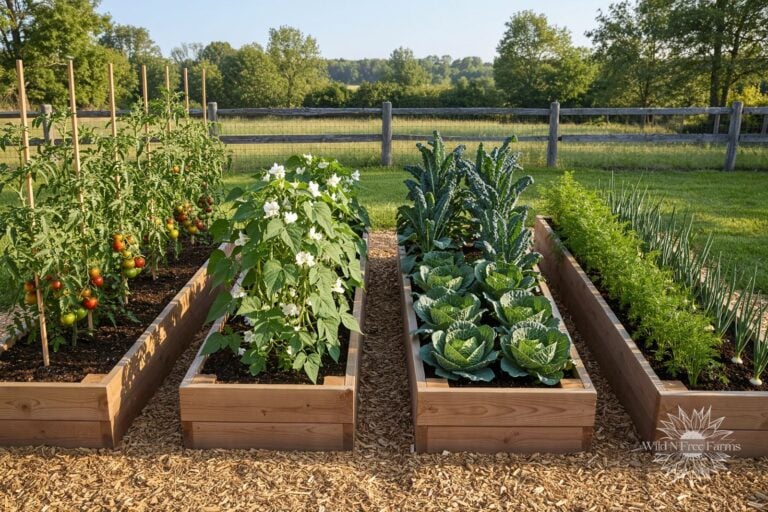
Step 5: Use Raised Beds or Containers With Clean Soil
The EPA calls this a key practice: one of the best ways to protect yourself while gardening is to use raised beds filled with clean soil. For extra security, set them on a visible barrier like garden fabric so you’ll always know where the clean soil ends and the old soil begins. Containers work the same way.
A few details from the extension guides: build beds deep enough for your crops’ roots and keep topping them off with compost (Cornell); skip railroad ties, telephone poles, pressure-treated wood and painted wood, because they can leach chemicals of their own (Cornell); and if you’re picking a spot for a new garden, Oregon State suggests staying at least 20 feet away from painted structures and busy streets, since the soil beside a house or garage often has the most lead. If you want a ready-made option, a modular bed like the Vego 9-in-1 raised garden bed goes together without tools and can be set up in a few shapes. Fill it with tested, clean soil and compost, not whatever is handy.
A raised bed is only as clean as what goes into it, and bare soil in the bed still needs mulch. Cornell’s SoilNOW raised-bed page also reminds us that the benefits of raised beds only show up when you start with healthy, uncontaminated soil.
Step 6: Choose Your Crops, Then Wash and Peel
In soil with some lead, what you plant matters. The University of Wisconsin Extension explains that roots tend to take up and hold the most lead, leaves less, and fruits least, and that fruiting plants like tomatoes, eggplant, cucumbers and zucchini pose less risk than other crops. Root vegetables, carrots in particular, are more likely to carry it. Oregon State adds that dust on the outside of the produce is the bigger concern than lead inside it, so crops that are hard to wash, such as lettuce, chard, spinach, carrots, radishes and berries, deserve extra care.
Here’s an easy way to think about it if your test shows elevated lead:
- Easiest to wash (lower worry): tomatoes, peppers, tomatillos, eggplant, beans, cucumbers, squash, pumpkins, zucchini, apples, pears, peaches, plums, kale, onions, garlic, potatoes, and herbs like basil, parsley, rosemary, sage and thyme (Oregon State’s list).
- Harder to wash (grow in clean raised beds or containers): lettuce, spinach, chard, mustard greens, carrots, parsnips, turnips, radishes, strawberries and other berries (Oregon State’s list).
Then, prepare it well. The EPA says to discard the outer leaves of leafy vegetables, wash fruits and vegetables, and peel root crops like carrots, beets, turnips and radishes. Oregon State adds: wash with cold running water right before eating or cooking, scrub root crops with a clean produce brush, and note that the FDA does not recommend soaking produce or using soap or commercial washes.
Introducing my new ebook
Seed Starting For Success
Discover the secrets of a stress free seed starting adventure
Grow strong, healthy seedlings without the guesswork. You get the full ebook plus a seed starting schedule, a when-to-start-indoors list, and an indoor vs. direct sowing guide.

Step 7: Easy Garden Habits That Cut Your Exposure
None of these are complicated, and they’re all straight from the EPA’s healthy gardening page:
- Wear gloves, and wash your hands, tools, and clothes after gardening.
- Take your shoes off at the door, use doormats, and keep garden tools out of living areas.
- Keep children and pets out of the garden while lead levels are unknown, and supervise hand washing after outdoor play (the EPA and Oregon State both stress that young children are the most sensitive).
- If you’re pregnant or nursing, the EPA says you may want to limit garden activity when soil lead is approaching 200 ppm, because you’re more sensitive to the effects of lead.
- Keep your garden away from old painted buildings and heavily traveled roads when you can.
Chickens, Eggs and Lead: What to Know
If you keep chickens, they scratch and eat soil all day, so it’s worth testing the run and free-range areas the same way you’d test the garden. Cornell’s lead in soil and chicken eggs guide suggests that if run soil tests above 400 ppm you add clean soil, mulch or other clean cover, avoid scattering feed on bare ground, and use feeders for regular feed, grit and calcium. Cornell also points out there are no health-based U.S. standards for lead in eggs.
For flocks with unknown exposure, veterinary researchers who documented a backyard flock with lead in its eggs recommend having the eggs tested, starting with a pooled sample, and then retesting periodically (see the case report in the Journal of Medical Toxicology; the UC Cooperative Extension poultry page also recommends retesting eggs periodically). In that report, lead was found in every eggshell but in only a little over half of the edible contents, so testing the actual eggs gives a real answer. It’s a small step for real peace of mind. If your flock shares the garden, our post on keeping chickens in the garden has ideas for separating their space from your beds.
Nature’s Helpers: Sunflowers, Pill Bugs, Earthworms and More
This is the part many people have asked about, so let’s give each helper a fair and honest look. They all do good things for a garden. Removing lead just isn’t one of them.
Sunflowers
Sunflowers have a famous reputation as lead cleaners, and the science is more modest. They do take up some lead into their roots and shoots, but in real garden soil, where lead is tightly bound, the amount is small. A BioScience report found that after promising early studies, more extensive research was disappointing, and the only way to boost uptake is with chemical chelators like EDTA, which are expensive and can wash lead into groundwater. The 2020 review above notes that even for a top-performing plant (a geranium), one calculation put full cleanup at 151 to 914 years.
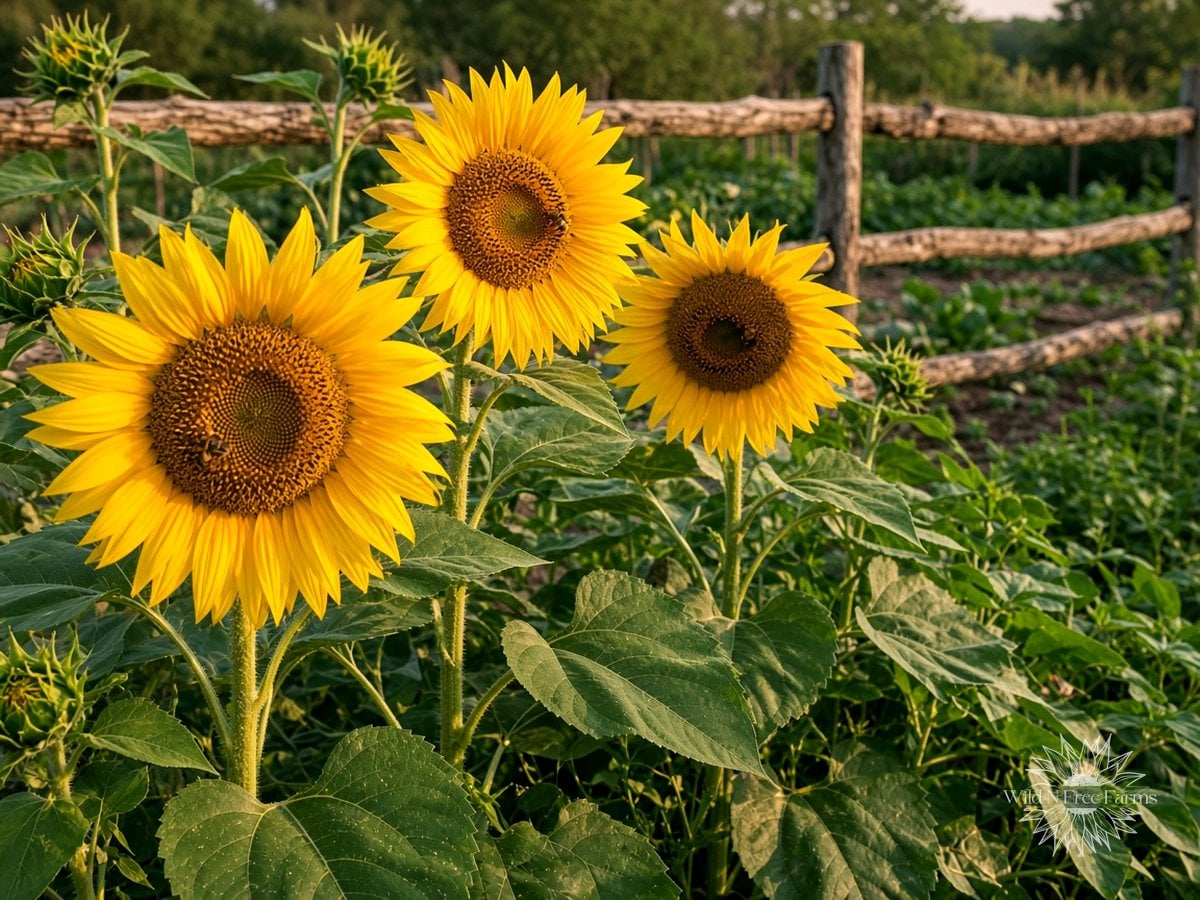
So think of it as slow, multi-season, and small. If you do plant sunflowers in a spot with known lead, treat them as a cleanup crop, not a food crop: bag up and throw away the plants at the end of the season, and don’t compost them, eat the seeds, or feed them to your animals. Wisconsin Extension notes that lead phytoremediation requires a license to dispose of the harvested plant material, which tells you how seriously it’s taken. Mostly I’d grow sunflowers for what they’re great at: feeding bees and birds and making you smile. Grow them with your heart, not as your plan. If you want some, I like Botanical Interests Mammoth Sunflower seeds, but plant them where you won’t be eating the seeds if lead is a concern.
Indian mustard (a plant often listed with sunflowers) works the same way. It can take up more lead in greenhouse tests with chelators added, but those same chemicals make lead more mobile and raise the risk of leaching, which is why researchers don’t recommend them for gardens.
There’s one plant job that does work for lead, though: covering the soil. The same review says that planting tolerant species to sequester lead in the root zone, limit its movement and keep dust from blowing is effective, a strategy called phytostabilization. A thick, healthy cover of grass, groundcover or perennials is a real, practical help.
Pill Bugs (Roly-Polies)
Pill bugs, which are isopods, are amazing little recyclers, and they really do accumulate heavy metals. A study of the woodlouse Porcellio scaber found that lead is stored in specialized structures inside the animal’s digestive gland, and a review of terrestrial isopods in soil ecotoxicology describes their “tremendous capacity” for storing metals. Scientists have used them since the 1970s as bioindicators to monitor metal pollution near smelters and mines.
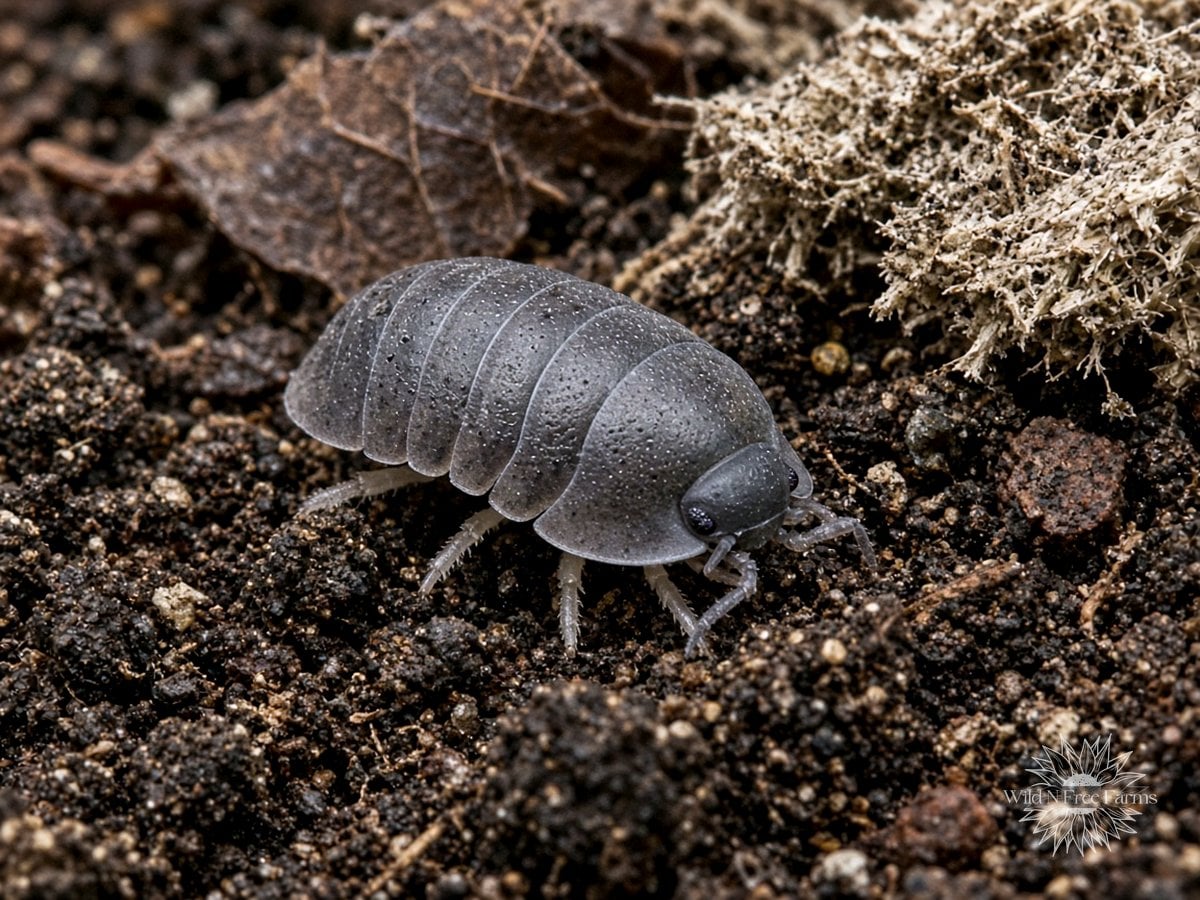
But they’re an indicator, not a cleanup crew. A pill bug weighs next to nothing, so even a thriving crowd can only hold a minuscule amount compared with all the soil in your beds, and the research treats them as a way to measure metals, not remove them. What they do give your garden is steady help breaking down leaf litter and plant debris into compost-friendly material. So if you spot pill bugs under your mulch, welcome them. Just don’t count on them to detoxify soil.
Earthworms
Earthworms are the heroes of soil structure, but they aren’t lead removers either. The Canadian soil guidelines report that earthworms do accumulate lead, but the amount in their bodies is usually lower than in the soil around them. The U.S. Geological Survey adds that worms can redistribute metals in soil and make them more available to the food web. A recent lab study (a conference abstract) even found worms moving some lead up into their casts and the mulch layer. So keep your worms happy because they improve the soil, and keep your mulch and compost layer in place. Our vermiculture guide is a good start if you’d like a worm bin.
Mycorrhizal Fungi and Soil Microbes
Healthy fungi and microbes are the engine of good soil, and compost feeds them. But their effect on lead is mixed. The 2020 review notes that mycorrhizal fungi have increased lead uptake into plants in some studies and immobilized lead in the soil in others, so scientists don’t yet have a reliable recipe. Think of them as part of building healthy soil, not as a lead treatment.
Phosphate and Bone Meal (Go Carefully)
Phosphorus reacts with lead to form minerals that don’t dissolve easily, and that’s why extension services mention it. Oregon State says to add phosphorus when a soil test shows you need it. Wisconsin Extension describes an approach that uses sulfur plus a phosphate fertilizer such as triple super phosphate or fish bone meal, but only after a lab analysis, and notes it won’t lower total lead. Because not all sources agree, and because natural mineral products can carry trace metals of their own (Montana State Extension notes this for rock phosphate), I wouldn’t add bone meal or phosphate to a lead-concern garden without a soil test and your extension office’s advice.
Your Season-by-Season Game Plan for Lead in Garden Soil
Here’s the whole plan in order. You don’t need to do everything at once. Start with the winter list and let each season build on the last.
Winter (Right Now)
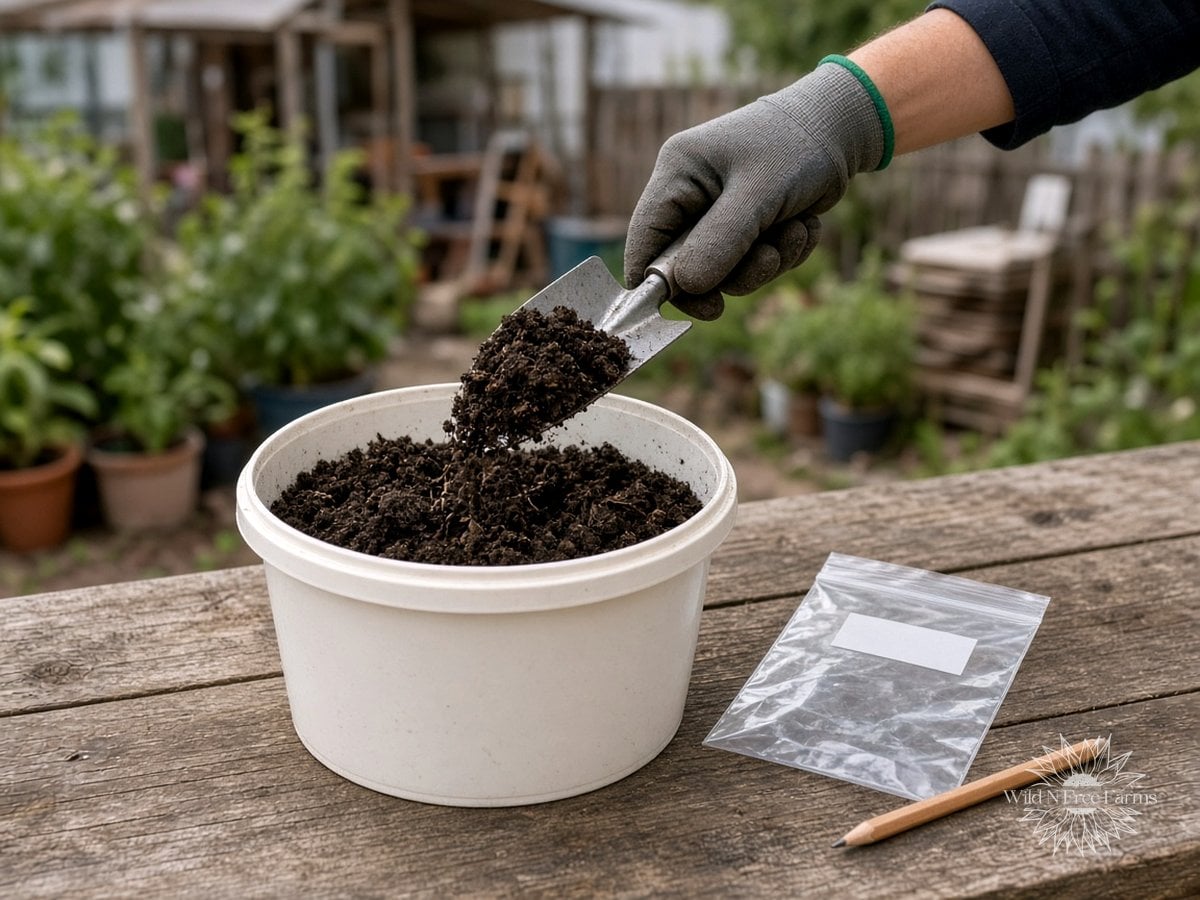
- Plan your test. Find your state extension soil lab, get their lead test instructions and sample bags, and decide where to sample (garden beds, chicken run, any bare spots near the house). You’ll need soil you can dig, so if the ground is frozen, collect your sample on a thaw or wait for early spring. Labs tend to be busier in spring, so getting your order in early is smart.
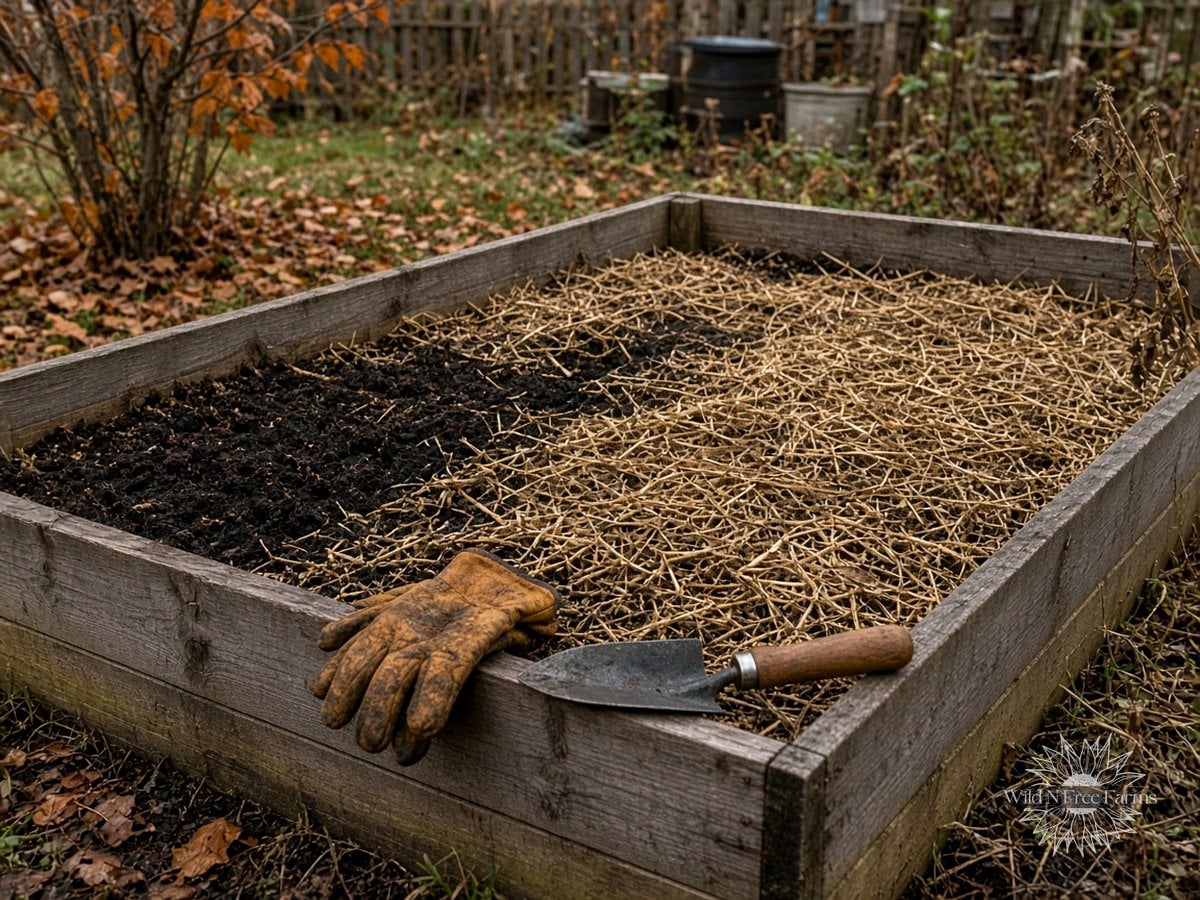
- Leave the mulch alone. Keep a blanket of leaves, straw or wood chips over bare soil, and don’t till. That keeps dust down all winter.
- Plan raised beds and containers. Sketch where they’ll go (away from painted buildings and roads), measure for barrier fabric, and decide what they’ll hold.
- Line up clean compost and soil. Ask suppliers about metals testing, look for OMRI or Seal of Testing Assurance, or start building your own with our winter composting tips.
- Plan your crops. Sort your seed list into fruiting crops (tomatoes, peppers, beans, squash) and leafy or root crops that will go in clean raised beds if your test shows elevated lead.
- Set up good habits. A boot tray, a dedicated pair of garden gloves and a hand-washing station at the door.
Spring
- Collect and send your soil sample as soon as the soil is workable, if you haven’t already. Compare the total lead number to the guidance above and your lab’s notes.
- Adjust pH if your lab recommends it. Lime takes 3 to 6 months to work, so an early start helps. Skip lime around blueberries.
- Build and fill raised beds on top of barrier fabric with tested clean soil and compost, or set up containers.
- Add 1 to 2 inches of clean compost to existing beds, then plant transplants and mulch right away so soil isn’t bare.
- Put fruiting crops in existing soil and leafy greens and root crops in clean raised beds if your levels are elevated.
- Start your chicken-area cover. Add clean soil, mulch or wood chips to bare run areas and use feeders instead of scattering feed on the ground.
Summer
- Keep the soil covered. Top up mulch as it breaks down, and use drip irrigation or water at the base of plants to limit splashing.
- Weed gently. Hand-pull or hoe when the soil is slightly damp rather than dry and dusty.
- Harvest clean. Pick into a clean basket (not set on bare ground), rinse produce under cold running water, discard outer leaves, and scrub and peel root crops.
- Wash up. Gloves on, hands washed, shoes off at the door, and little ones supervised.
- If you grow sunflowers for the bees, enjoy them, and don’t eat or compost the plants or seeds if they are in a high-lead spot.
Fall
- Add compost or leaf mulch again. Oregon State recommends 1 to 2 inches of compost or a leaf mulch each year.
- Apply lime now if your test said you need it. Fall is the classic time because it takes months to work.
- Plant a cover crop in empty beds so soil isn’t bare through winter (our raised bed cover crops guide shows how).
- Clean up carefully. Bag and trash any plants you grew as a lead-cleanup experiment. Don’t compost them.
- Look back and retest. Next winter, a fresh test of the same spots will show how your changes are working.
Stay Up To Date
Enter your name and email to subscribe to our weekly newsletter, announements and freebies!
When to Get Extra Help
If your test comes back high, or you have small children, someone who is pregnant, or any health concern, don’t go it alone. Call your local health department or your state extension office. Oregon State suggests talking to your doctor if you suspect any lead-related health problems, and your doctor or local health department can arrange blood lead testing, which is the only way to know a person’s actual exposure. For very high results (the UMass Soil Lab says over 2,000 ppm), they advise contacting your local health department, your Cooperative Extension office or your state environmental agency about lead abatement measures.
Frequently Asked Questions About Lead in Garden Soil
Can I still eat vegetables from soil that has some lead?
In most cases, yes, with a few precautions. Oregon State says plants grown in well-managed soil don’t absorb much lead through their roots and that dust on the produce is the main exposure, which is why washing, peeling, mulching and raised beds matter so much. How comfortable you can be depends on your test number, so get one and follow your lab’s advice.
Do sunflowers remove lead from garden soil?
Barely. They take up small amounts slowly, and research reviews don’t consider them a practical way to clean a garden. If you grow them in lead-affected soil, bag and throw out the plants and don’t eat the seeds or compost them.
Do pill bugs or earthworms clean the soil?
No. Pill bugs store some lead in their bodies and are used by scientists as indicators of pollution, and earthworms accumulate a little and can move lead around. Both are great for the soil, but neither will remove meaningful amounts of lead.
Is a raised bed enough?
It’s one of the best steps, as long as the soil you fill it with is clean, there’s a barrier underneath, and you still mulch the top. The EPA calls raised beds with clean soil a key practice.
Can adding compost or lime lower my total lead?
No. They don’t reduce total lead, but they can make it less available and less dusty, as Oregon State and Cornell explain. That’s still a very worthwhile benefit.
How often should I test?
A first test tells you where you stand. Retesting after a few seasons of changes, or any time you add soil or change a space, is a reasonable way to see how things are going. Your lab can advise you on how often.
Should I test my chickens’ eggs?
If your flock forages in soil that tests high, or you simply don’t know, researchers recommend testing the eggs (starting with a pooled sample) and retesting periodically. Adding clean cover to the run helps too.
Start Small, and Start With a Test
Lead in garden soil sounds scary, but the plan is simple and calm: test your soil, keep your pH near neutral, feed it clean compost, cover the bare spots, grow in raised beds where it makes sense, wash and peel your harvest, and keep little hands clean. Plants and critters like sunflowers, pill bugs and earthworms are wonderful for a garden, but the real heavy lifting comes from the basics. This winter, order that test and give yourself the gift of knowing.
Sources
- U.S. Environmental Protection Agency. Healthy Gardening Practices to Reduce Exposure to Lead-Contaminated Soil.
- Oregon State University Extension Service. Reducing Lead Hazard in Gardens and Play Areas (EC 1616).
- University of Wisconsin-Madison Extension, Wisconsin Horticulture. Lead in Home Garden Soil (A4089).
- University of Wisconsin-Madison Extension. Reducing Exposure to Lead in Your Garden Soil (A4088).
- Cornell Healthy Soils, Healthy Communities. Metals in Urban Garden Soils: Guidance Values and Background Levels.
- Cornell Healthy Soils, Healthy Communities. Understanding Your Test Results: Metals in Garden Soils and Vegetables.
- Cornell Healthy Soils, Healthy Communities. Healthy Gardening: 10 Best Practices.
- Cornell Healthy Soils, Healthy Communities. Understanding Your Test Results: Lead in Soil and Chicken Eggs.
- UMass Amherst Soil and Plant Nutrient Testing Laboratory. Soil Lead Fact Sheet.
- UMass Amherst Home Lawn and Garden. Soil Lead: Testing, Interpretation, and Recommendations.
- University of Maryland Extension. Lead in Garden Soils.
- The limits of lead (Pb) phytoextraction and possibilities of phytostabilization in contaminated soil: a critical review. International Journal of Phytoremediation (2020).
- Phytoremediation of Lead: What Works, What Doesn’t. BioScience (2017).
- Canadian Council of Ministers of the Environment. Canadian Soil Quality Guidelines for the Protection of Environmental and Human Health: Lead.
- U.S. Geological Survey. Metals and Terrestrial Earthworms (Annelida: Oligochaeta).
- Terrestrial isopods as model organisms in soil ecotoxicology: a review. PubMed Central.
- Heavy metals in the terrestrial isopod Porcellio scaber Latreille. II. Subcellular fractionation of metal-accumulating lysosomes from hepatopancreas. PubMed.
- Lead Exposure from Backyard Chicken Eggs: A Public Health Risk? Journal of Medical Toxicology (2014), PubMed Central.
- UC Cooperative Extension Poultry. Heavy Metal Contaminant Resources.
- Cornell SoilNOW. Raised Beds.
- Assessing the Role of Earthworms (Lumbricus terrestris) on Lead Transport and Accumulation in Lead Contaminated Urban Garden Soils and Potential for Bioremediation. Geological Society of America Abstracts with Programs (2026).
- Montana State University Extension. Market Vegetables: Soil Phosphorus, Potassium and Micronutrients.