How to Grow Lettuce Indoors in Containers (Fresh Salad Greens All Winter)
When the garden is frozen solid and the hens are tucked in their coop, I still want a fresh salad. The good news? You can grow lettuce indoors in simple containers all winter long. A sunny window or a cheap grow light, a few pots of potting mix, and a packet of loose-leaf seeds are really all it takes.
In this guide I’ll walk you through the best lettuce varieties for indoor containers, how much light they actually need, how to sow and care for them step by step, and how to harvest so the same pots keep feeding you for weeks.

Disclaimer
This post contains affiliate links, so we may earn a commission if you sign up or buy through them, at no added cost to you. It helps support our content, and I only share what I truly believe in or use. As an Amazon Associate I earn from qualifying purchases. We also run ads on many articles. See our disclaimer and disclosure page for details.
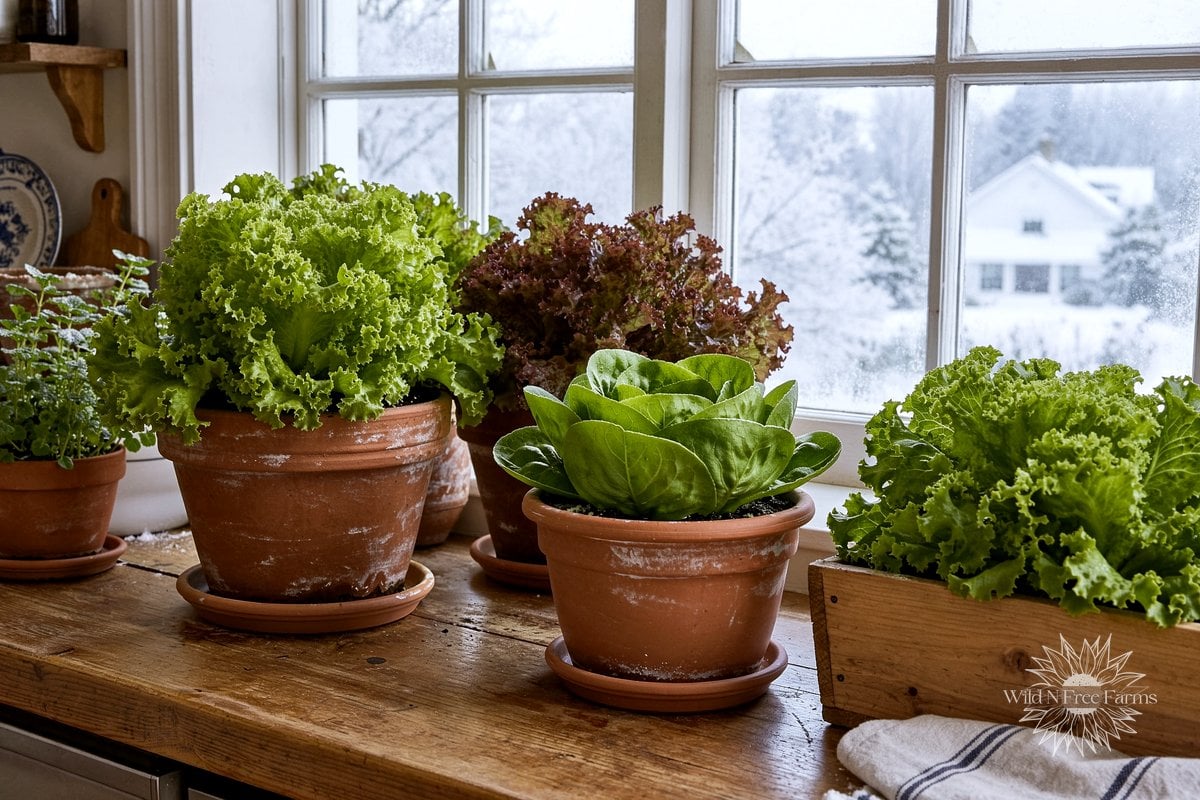
Why Grow Lettuce Indoors in Winter?
- Fresh Greens When the Garden Is Asleep: No frost, snow, or slugs to worry about.
- It’s Fast: Loose-leaf lettuce is usually ready to start picking in about four weeks.
- It Fits Almost Anywhere: A windowsill, a kitchen counter, or a shelf with a light is plenty of room.
- It Saves Money: A few dollars of seed and soil can replace a lot of pricey winter salad mix.
- Nothing Goes to Waste: Any leaves that turn bitter or bolt go straight to the chickens, and they think it’s a party.
The Best Lettuce Varieties to Grow Indoors
The University of Illinois Extension says loose-leaf lettuce is your best bet indoors, because you can start picking leaves long before a head would ever form. Here are the types I’d reach for:
- Loose-Leaf Blends: A mix like Botanical Interests Salad Bowl Blend gives you green and red oakleaf-style leaves that regrow well after cutting.
- Red Leaf Lettuce: Red Sails is a pretty, ruffled red leaf lettuce that adds color to your bowl and is slow to turn bitter.
- Mesclun Mixes: Farmers Market Blend mesclun is perfect for sowing thick and cutting as baby greens.
- Butterhead: Buttercrunch is tender and sweet. Indoors, I just pick the outer leaves instead of waiting for a full head.
- Mini Romaine: Little Gem stays small, so it’s a great fit for a deeper pot if you want crunchy little hearts.
What You Need to Grow Lettuce Indoors
- Containers With Drainage Holes: Lettuce has shallow roots. UVM Extension says a container 2 to 6 inches deep works, depending on whether you want baby greens or bigger plants. I like 4 to 6 inches so the soil doesn’t dry out as fast. Window boxes, terracotta pots, old dishpans with holes drilled in the bottom, and even a wooden crate lined with landscape fabric all work. Set each one on a tray or saucer to catch drips.
- Good Potting Mix: Use a light, fresh potting mix, not garden soil or topsoil, which packs down and stays soggy in a pot. Espoma Organic Potting Mix is a well-reviewed, budget-friendly bag that lasts for several containers.
- Lettuce Seeds: One packet goes a long way. See the varieties above.
- A Sunny Window or a Grow Light: More on this below. The Barrina T5 LED grow light strips are an affordable, well-rated choice with a built-in timer, so you don’t need a separate outlet timer.
- Optional Plant Stand: If you catch the indoor-growing bug, a shelf with built-in lights like the Vego 3-tier plant stand with grow lights lets you grow several trays of greens in one corner, then start your spring seedlings on it later.
Light: Sunny Windowsill vs. Grow Lights
Light is the biggest thing that decides how well lettuce grows indoors in winter. According to the Illinois Extension, lettuce needs about 6 to 8 hours of bright light a day, and a south-facing window is the best spot. Most of us don’t get that much winter sun, and that’s okay. You just add a light.
- Windowsill Lettuce: Pick your brightest, south-facing window. Turn the pots every few days so the plants don’t lean toward the glass.
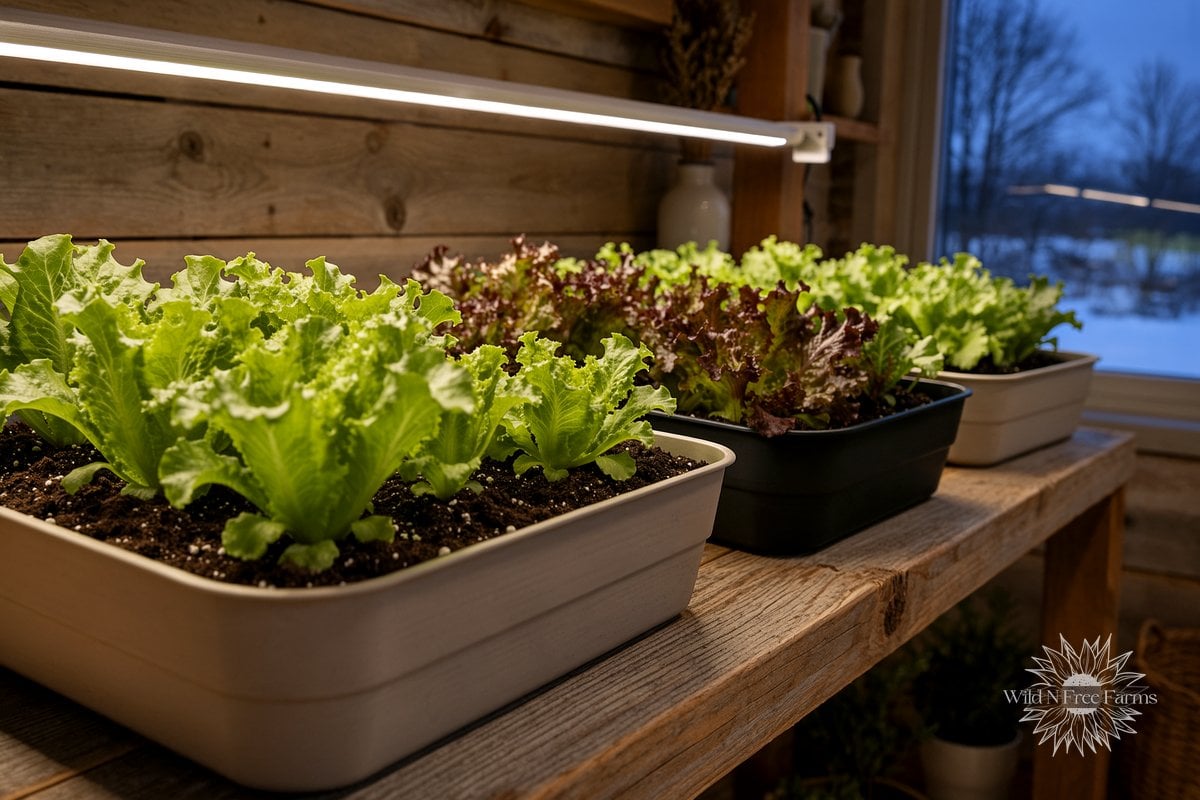
- Grow Lights: Extension guides recommend running lights about 14 to 16 hours a day, because artificial light is weaker than the sun. Illinois Extension estimates about 2 hours of lamp light for every hour of sunlight you’re replacing.
- Keep Lights Close: UVM Extension suggests keeping grow lights just 2 to 4 inches above the tops of the plants. Hang them from a chain or set your pots on books so you can adjust the height as the lettuce grows.
- Watch the Plants: Long, pale, floppy stems mean they need more light (or the light is too far away). Lettuce that looks bleached or crispy at the tips is too close or too hot.
How to Grow Lettuce Indoors in Containers, Step by Step
1. Moisten the Potting Mix
Dump your potting mix into a bucket or bowl and stir in warm water until it feels like a wrung-out sponge. Fill your containers to about half an inch below the rim and gently firm the surface. If you like to mix your own, our homemade seed starting mix works great for sowing greens too.
2. Sow the Seeds
Scatter the seeds about an inch apart across the surface, then cover them with a very thin layer of mix, about 1/4 inch at most. Lettuce seeds are tiny and need a little light to sprout, so don’t bury them deep. UVM Extension suggests misting the surface after sowing so the seeds don’t wash around.
3. Cover Until They Sprout
Cover the pots with a humidity dome, plastic wrap, or a clear bag to hold in moisture. Seedlings usually pop up within a week. Lettuce sprouts best in a cool room. The University of Maryland Extension recommends a potting mix temperature of about 65°F to 75°F for most vegetable seeds, and lettuce doesn’t like it much warmer, so keep the pots off radiators and heat vents.
4. Move Them Into the Light
As soon as you see green, take off the cover and set the pots in your sunny window or under your light. Waiting even a day or two can make seedlings stretch.
5. Thin the Seedlings
Once the seedlings have a couple of true leaves, snip extras at the soil line with scissors so the rest have room. For baby greens, leave them about an inch apart. For bigger plants, thin to 4 to 6 inches apart. Eat the thinnings. They’re the first tiny salad of the season!
6. Water Gently
Keep the mix evenly moist but never soggy, and don’t let the pots sit in standing water. I like to water from the bottom by pouring water into the tray and letting the soil soak it up for 15 to 20 minutes, then dumping what’s left. It keeps the leaves dry and helps prevent fungus gnats.
7. Feed Lightly
Potting mix usually has a little fertilizer in it, which carries lettuce through the first few weeks. After that, feed every couple of weeks with a gentle, water-soluble fertilizer mixed at half strength (or follow the label). Too much fertilizer can make lettuce grow fast and leggy. Want to make your own? Check out our homemade organic fertilizers.
Introducing my new ebook
Seed Starting For Success
Discover the secrets of a stress free seed starting adventure
Grow strong, healthy seedlings without the guesswork. You get the full ebook plus a seed starting schedule, a when-to-start-indoors list, and an indoor vs. direct sowing guide.

Temperature and Humidity for Indoor Lettuce
Lettuce is a cool-season crop, so it’s happy in a cool house. UVM Extension says leafy greens do best between 60°F and 70°F, and Illinois Extension recommends keeping them at 70°F or below. Warm rooms make lettuce bolt (send up a flower stalk) and turn bitter.
- Avoid Drafts: Keep pots away from cold, leaky windows at night and away from heat vents, wood stoves, and radiators.
- Add a Little Humidity: Winter air is dry. Group your pots together or set them on a tray of pebbles with water just below the tops of the stones.
- Keep Air Moving: A little air flow helps prevent mold and damping off. Don’t cram pots so tightly that the leaves stay damp.
How to Harvest Lettuce Grown Indoors
Here’s the fun part. Baby greens are usually ready in about a month. UVM Extension recommends cutting the outer leaves once they’re 3 to 4 inches tall and leaving the center to keep growing. This is called cut-and-come-again harvesting, and it’s how a few pots can keep you in salads for weeks.
- Pick the Outer Leaves: Snip or pinch the biggest outer leaves and leave at least the small center leaves on each plant.
- Or Give It a Haircut: For thick mesclun, cut the whole container about an inch above the soil. Many plants will regrow for a second cutting.
- Harvest in the Morning: Leaves are crispest before the room warms up.
- Sow Again Every 2 Weeks: Start a new pot every couple of weeks for a steady supply, the way UVM Extension suggests, so you always have one coming on while another is getting tired.
- Wash Before Eating: Rinse leaves under cool running water and spin or pat dry.
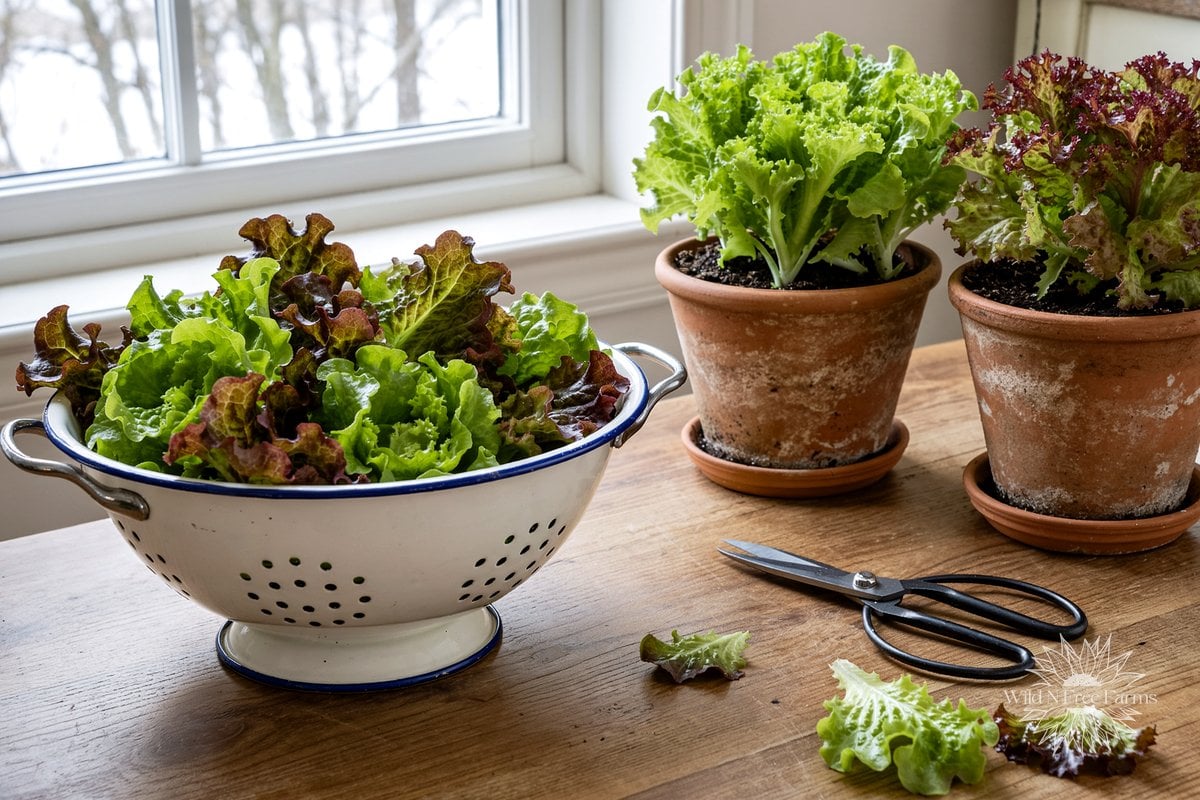
When a pot finally starts to bolt or taste bitter, I pull it and hand it to the hens. Then the old potting mix goes in the compost (our winter composting guide has tips for keeping the pile going in the cold), and I start a fresh container. Lettuce is also on our list of crops to grow for chickens.
Common Problems When Growing Lettuce Indoors
- Tall, Leggy Seedlings: Not enough light. Move the light closer or add more hours.
- Bitter Leaves or a Flower Stalk: The room is too warm or the plant is old. Move it somewhere cooler and start a new pot.
- Yellowing Leaves: Usually overwatering or hungry plants. Let the top of the soil dry slightly and feed at half strength.
- Fungus Gnats: These tiny flies love wet soil. Water from the bottom and let the surface dry out between waterings.
- Seedlings Falling Over at the Soil Line: That’s damping off, a fungal problem. Use fresh potting mix, clean containers, and better air flow. Here’s more on how to prevent damping off in seedlings.
- Brown, Crispy Leaf Edges: Often from dry air or uneven watering. Add humidity and water a little more consistently.
Grow Lettuce Indoors: FAQs
Can I grow lettuce indoors without a grow light?
Yes, if you have a bright, south-facing window. Growth will be slower in the darkest weeks of winter, and leaves may be a bit smaller. If your plants stretch and flop, that’s your sign to add a light.
How deep does a container need to be for lettuce?
For baby greens, 2 to 4 inches is enough. For full-size leaf lettuce, aim for 4 to 6 inches or more. Deeper pots hold more water, so you won’t have to water as often.
How long does it take to grow lettuce indoors?
Loose-leaf lettuce is usually ready to start picking in about four weeks. Butterhead and romaine take longer to size up, but you can pick their outer leaves early.
Can I regrow lettuce from the store?
You can set the base of a head of romaine in a little water and get a few new leaves, but it won’t regrow a full head. Starting from seed gives you far more salad for your money.
What other greens grow well indoors?
Spinach, arugula, and endive all grow well in shallow containers alongside lettuce, according to UVM Extension. Herbs like chives and parsley are good windowsill partners too.
Fresh Salads All Winter Long
Growing lettuce indoors is one of the easiest ways to keep something green and growing through the cold months. Start with a loose-leaf mix, give it plenty of light and a cool spot, and pick the outer leaves as it grows. Sow a new pot every couple of weeks, and you’ll be eating homegrown salads until it’s time to plant the spring garden.
Stay Up To Date
Enter your name and email to subscribe to our weekly newsletter, announements and freebies!
Sources
- University of Illinois Extension. Grow Herbs and Lettuce Indoors this Winter.
- University of Vermont Extension Master Gardener. Growing Edibles Indoors.
- University of Maryland Extension. Starting Vegetable Seeds Indoors.