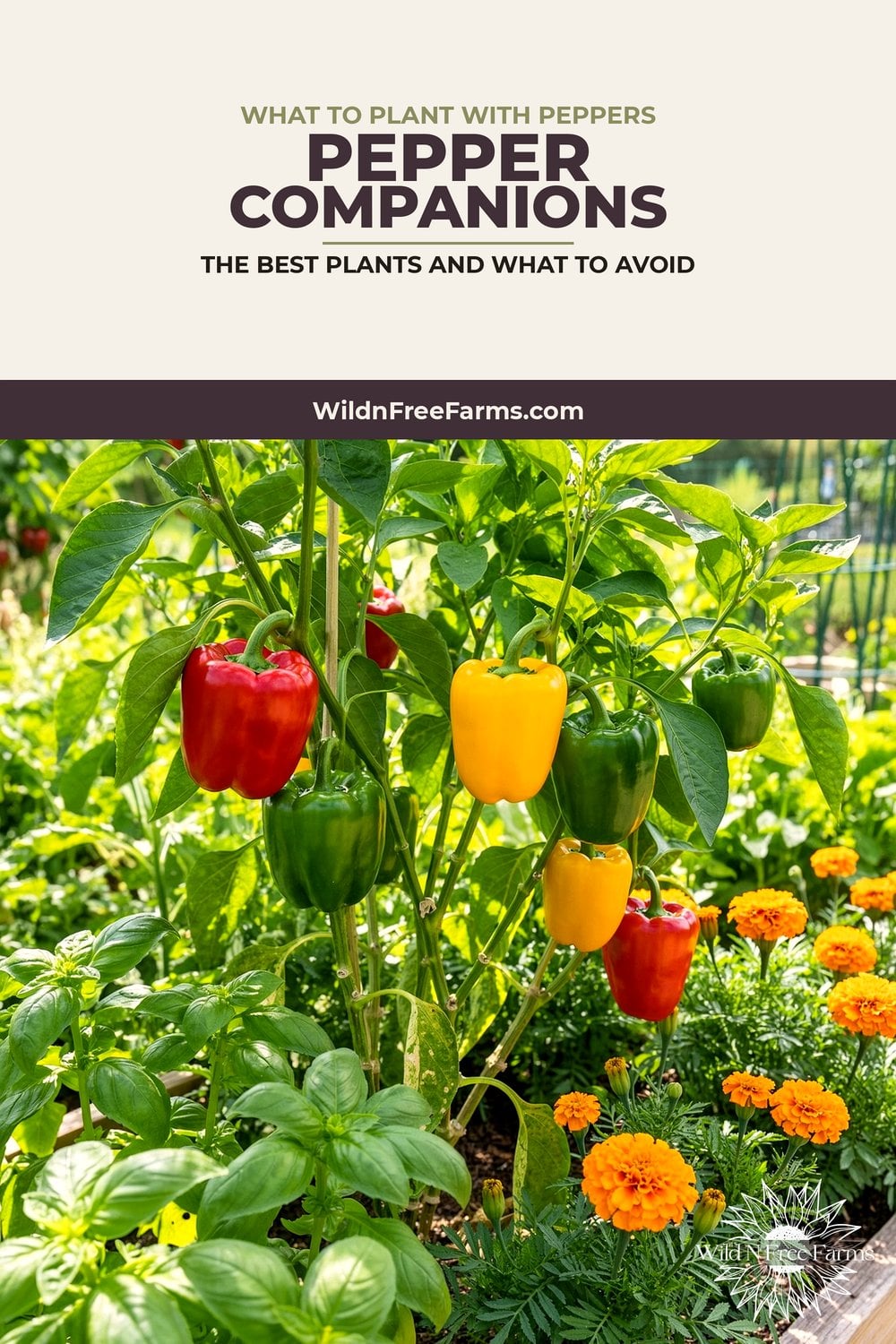
Pepper Companion Plants: What to Plant With Peppers (and What to Avoid)
Peppers are one of the most rewarding crops on the homestead, and the right neighbors can make them even easier to grow. In this guide to pepper companion plants, I’ll share the plants I like to tuck in around my peppers, which ones actually have research behind them, and what not to plant with peppers.
Winter is the perfect time to plan this, because pepper seeds get started indoors earlier than almost anything else in the garden. By the time you’re ordering seeds, you’ll know exactly where your peppers, flowers, and herbs are going to go.

Disclaimer
This post contains affiliate links, so we may earn a commission if you sign up or buy through them, at no added cost to you. It helps support our content, and I only share what I truly believe in or use. As an Amazon Associate I earn from qualifying purchases. We also run ads on many articles. See our disclaimer and disclosure page for details.
A quick, honest note before we start: a lot of companion planting charts online are based on tradition rather than testing. I’ve leaned on university extension sources and field research here, and I’ll tell you when a pairing is proven, when it’s promising, and when it’s mostly folklore.
What Companion Planting Can (and Can’t) Do for Peppers
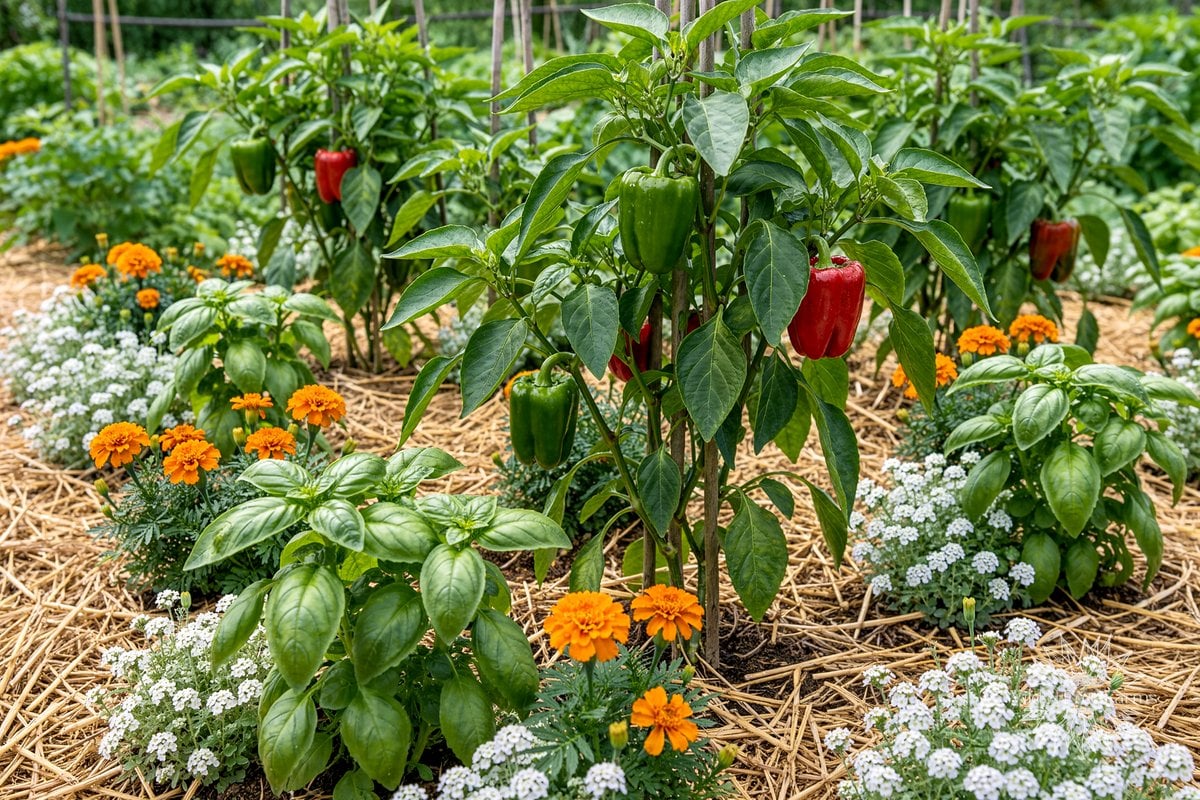
University of Minnesota Extension explains that companion plants mostly help with insects in three ways: with smells that attract, repel, or mask; by attracting predators and parasitoids that eat pests; and by being visually distracting, since a mix of plant heights, colors, and textures makes it harder for pests to find their target. Companions can also save space and support soil health.
What companion planting can’t do is replace the basics. Peppers still need full sun, warm soil, steady water, and a spot where their relatives haven’t grown recently. Think of good companions as a helpful layer on top of good growing habits.
The Best Pepper Companion Plants
1. Sweet Alyssum
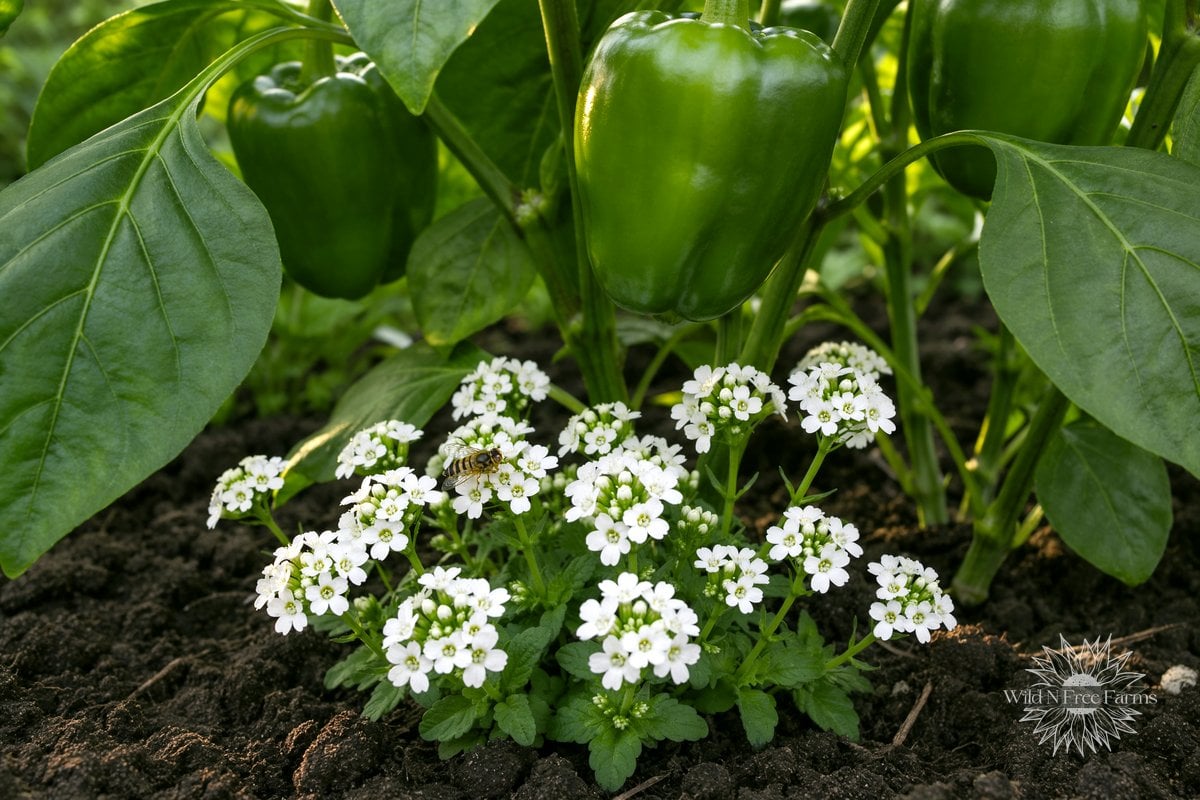
This low, honey-scented flower is my favorite pepper companion. Iowa State University Extension shared how one grower planted sweet alyssum between his pepper rows and at the ends of the rows and saw a significant drop in insect damage. That’s an on-farm observation rather than a controlled trial, but it fits what we know: alyssum flowers feed hoverflies and lady beetles, and UMN Extension notes that hoverfly (syrphid) larvae eat large numbers of aphids.
Sow it around the edges of your pepper bed or between plants where it won’t shade them. Botanical Interests Tiny Tim Sweet Alyssum stays compact, so it won’t crowd young pepper plants.
2. Hot Cherry Peppers (a Trap Crop for Bell Peppers)
This one has the strongest research behind it. University of Connecticut IPM recommends planting hot cherry peppers as a perimeter trap crop around bell and other sweet peppers to protect them from the pepper maggot. Researchers found that up to 92% of fruit infestation landed on the unsprayed hot cherry peppers around the outside. When growers treated just the cherry pepper border at the right time, infestation in the bell peppers inside dropped by 98 to 100% compared with unprotected plantings.
The trick is an unbroken ring of cherry peppers. UConn says gaps in the border are the main reason it fails. Pepper maggots are mostly found along the Atlantic seaboard and west to Ontario and Texas, so this is most useful if they’ve been a problem for you. Bonus: you still get to eat the cherry peppers!
I like True Leaf Market Large Red Cherry Hot pepper seeds for this.
3. Basil
Basil and peppers love the same warm weather, sunshine, and steady water. UMN Extension points to studies where basil and marigolds reduced thrips on tomatoes, a close cousin of peppers. I haven’t found the same studies done on peppers, so I count basil as a promising companion rather than a proven one. It’s also a great way to use space: UMN suggests planting basil early and then tucking peppers or tomatoes into the same bed. Try Italian Genovese basil seeds from Botanical Interests.
4. Marigolds
French marigolds are a classic edging for peppers. UMN Extension lists them with basil for reducing thrips in tomato studies, though it also notes that marigolds don’t deter Colorado potato beetles, so they aren’t a cure-all. Their bright blooms also add color and pollen for beneficial insects. Our guide to growing marigolds has more tips, and Botanical Interests French marigold seeds are an easy place to start.
5. Dill and Cilantro
Let a few dill and cilantro plants flower near your peppers. Their small, flat flowers are easy for tiny beneficial insects like hoverflies to feed from. UMN Extension says simply including plenty of flowers in your garden attracts adult hoverflies, which then lay their eggs nearby, where their larvae eat aphids. Tetra dill is a compact variety that fits nicely into a pepper bed.
6. Lettuce and Spinach
These are space savers. UMN Extension suggests planting lettuce or spinach early in the season, then transplanting peppers into the same bed as the greens mature. By the time you harvest the greens, the pepper canopy is starting to fill in, which helps with weeds and keeps living roots in the soil.
7. Bush Beans
Beans are a friendly neighbor for peppers, and as legumes they fix nitrogen. Just don’t count on them to feed your peppers much in the same season. UMN Extension warns that too much nitrogen gives peppers bushy, leafy plants that are slow to bear fruit, so peppers don’t need a nitrogen boost anyway. Think of beans as a long-term soil builder.
8. Sunflowers and Sorghum
These are mixed. A two-year study at 11 sites in 8 states, summarized by the Rodale Institute, planted a sunflower and sorghum border around organic peppers. The border attracted far more stink bugs than the peppers, and protected peppers had less injury, but it didn’t stop adult stink bugs early in the season and the benefit wasn’t large enough to pay off for farms. For a backyard grower, it’s a pretty border that may help a little later in summer, not a fix.
What Not to Plant With Peppers
- Black Walnut Trees: University of Wisconsin-Madison Extension lists peppers, tomatoes, and eggplant among the plants sensitive to juglone, the compound black walnuts release. Keep your pepper bed well away from walnut roots and leaves.
- Last Year’s Nightshade Spot: UMN Extension recommends planting peppers where you haven’t grown tomatoes, potatoes, peppers, eggplants, or tomatillos for the past three or four years, because they share pests and diseases. Our garden crop rotation plan makes this easy.
- Horse Nettle: This weedy nightshade is a host for the pepper maggot. UConn notes the cherry pepper trap crop won’t work if horse nettle grows freely inside the border, so pull it.
- Anything That Shades or Crowds Them: Peppers need sun and good airflow. Keep tall, sprawling crops like squash vines or corn from shading or smothering them.
- Fennel (Maybe): Many charts say to keep fennel away from peppers. I couldn’t find research testing this, so treat it as folklore. Fennel does grow tall and bushy, though, so it can shade peppers.
Introducing my new ebook
Seed Starting For Success
Discover the secrets of a stress free seed starting adventure
Grow strong, healthy seedlings without the guesswork. You get the full ebook plus a seed starting schedule, a when-to-start-indoors list, and an indoor vs. direct sowing guide.

A Simple Pepper Companion Planting Layout
Here’s how I’d plant a 4 x 8 foot raised bed (a modular bed like the Vego 9-in-1 raised garden bed works well):
- Center: Two rows of sweet or bell peppers, spaced about 18 inches apart, which matches UMN Extension’s spacing recommendation.
- Between Peppers: A few basil plants.
- Edges: Sweet alyssum and French marigolds all the way around, with a couple of dill or cilantro plants at the corners.
- Early Spring: Lettuce or spinach in the open spaces until the peppers fill in.
- If Pepper Maggots Are a Problem: A complete outer ring of hot cherry peppers around your sweet pepper planting.
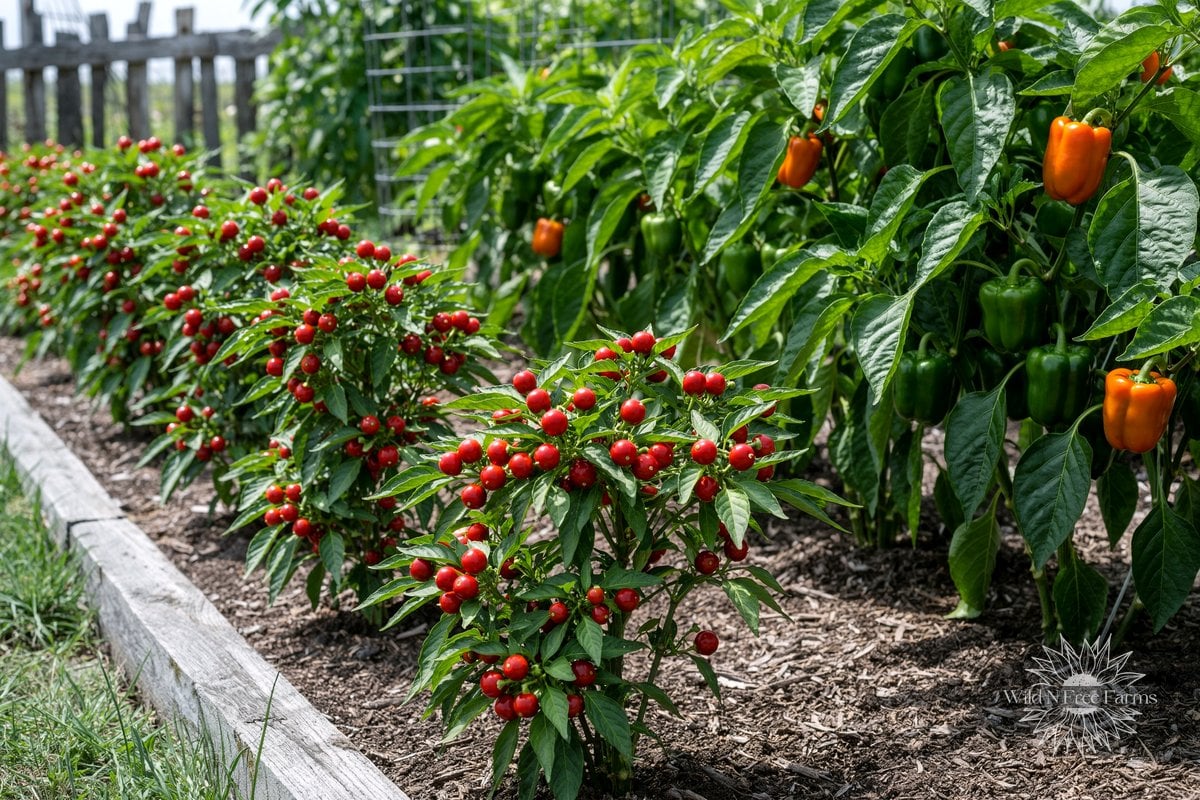
In a bigger in-ground garden, the same idea works on a larger scale: peppers in the middle, flowers along the edges, and herbs tucked into the gaps.
Pepper Growing Tips That Matter More Than Companions
Companion plants are a bonus, but these basics from UMN Extension will make the biggest difference to your harvest:
- Start Seeds Early: Start pepper seeds indoors about eight weeks before you plan to set them out. That’s earlier than tomatoes. Peppers sprout best in warm soil.
- Wait for Warm Nights: Transplant after nighttime lows stay above 50°F.
- Water Steadily: Give about 1 inch of water a week if it doesn’t rain. Uneven moisture can lead to blossom-end rot.
- Go Easy on Nitrogen: Too much nitrogen gives leafy plants with fewer peppers. Aim for a soil pH of 6.5 to 7.
- Mulch: Weed-free straw or other organic mulch 3 to 4 inches deep helps hold moisture and block weeds.
- Watch for Aphids: Look for curled, sticky leaves, and look for natural enemies feeding on them before you reach for a spray.
For more ways to manage bugs without harsh chemicals, see our natural pest control guide.
Stay Up To Date
Enter your name and email to subscribe to our weekly newsletter, announements and freebies!
Pepper Companion Plants FAQs
Can I plant peppers and tomatoes together?
Yes, plenty of gardeners grow them side by side, and they like the same conditions. Just remember they’re both nightshades, so rotate the whole group to a new spot each year rather than swapping one for the other.
What is the best companion plant for peppers?
For pest help, the hot cherry pepper trap crop has the strongest research behind it, but only for pepper maggots. For an all-around helper, I’d choose sweet alyssum, because it feeds hoverflies and other aphid predators all season.
Should I plant peppers and potatoes together?
Many gardeners keep them apart because they’re in the same family and share some pests and diseases. At the very least, don’t plant peppers where potatoes grew in the last few years. Our potato companion plants guide covers potatoes’ side of things.
Do marigolds keep bugs off peppers?
Sometimes. Research shows marigolds can reduce thrips on tomatoes, but they don’t help with every pest. They’re worth planting for color and beneficial insects, but don’t rely on them alone.
Can I grow companion plants with peppers in containers?
Yes. Pair one pepper plant with a small basil plant or a few sweet alyssum seedlings around the edge of a large pot. Avoid crowding, so the pepper gets full sun and good airflow.
Plan Your Pepper Bed This Winter
The best pepper companion plants give you more than peppers: flowers for the beneficial insects, herbs for the kitchen, and a garden that’s harder for pests to take over. Start with sweet alyssum, basil, and marigolds, add a cherry pepper border if pepper maggots are a problem, and keep peppers out of last year’s nightshade bed. Pair that with good watering and warm soil, and you’ll be picking peppers all summer.
Sources
- University of Minnesota Extension. Companion planting in home gardens.
- University of Minnesota Extension. Growing peppers in home gardens.
- University of Connecticut IPM. Perimeter Trap Crop Recommendations for Pepper Maggots.
- Iowa State University Extension and Outreach. Attract Beneficial Insects by Growing Sweet Alyssum.
- Mathews, C.R. et al. (2017). Evaluating a Polyculture Trap Crop for Organic Management of Halyomorpha halys and Native Stink Bugs in Peppers (Rodale Institute summary).
- University of Wisconsin-Madison Extension, Wisconsin Horticulture. Black Walnut Toxicity.