Homemade Turkey Stock From the Leftover Carcass (Stovetop, Instant Pot or Slow Cooker)
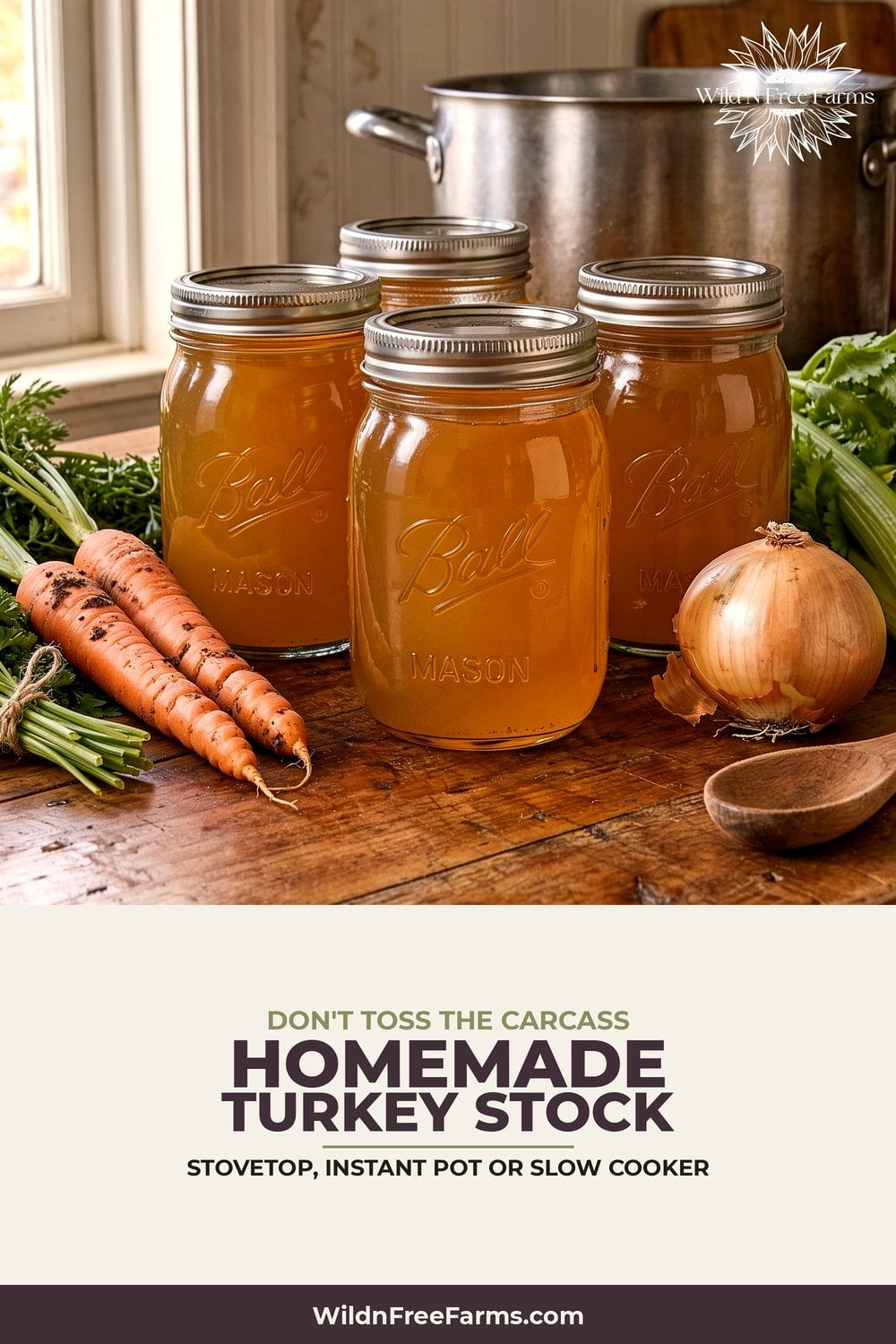
Don’t toss that turkey carcass! After the big holiday meal, I always pull out my biggest pot and turn the leftover bones into a batch of homemade turkey stock. It costs next to nothing, it makes the whole house smell amazing, and it fills my freezer with rich, golden stock for soups, gravy, and cozy winter dinners.
In this post I’ll walk you through exactly how I make it on the stovetop (plus Instant Pot and slow cooker options), how long the carcass and finished stock keep safely, and how to freeze or pressure can it so none of it goes to waste.

Disclaimer
This post contains affiliate links, so we may earn a commission if you sign up or buy through them, at no added cost to you. It helps support our content, and I only share what I truly believe in or use. As an Amazon Associate I earn from qualifying purchases. We also run ads on many articles. See our disclaimer and disclosure page for details.
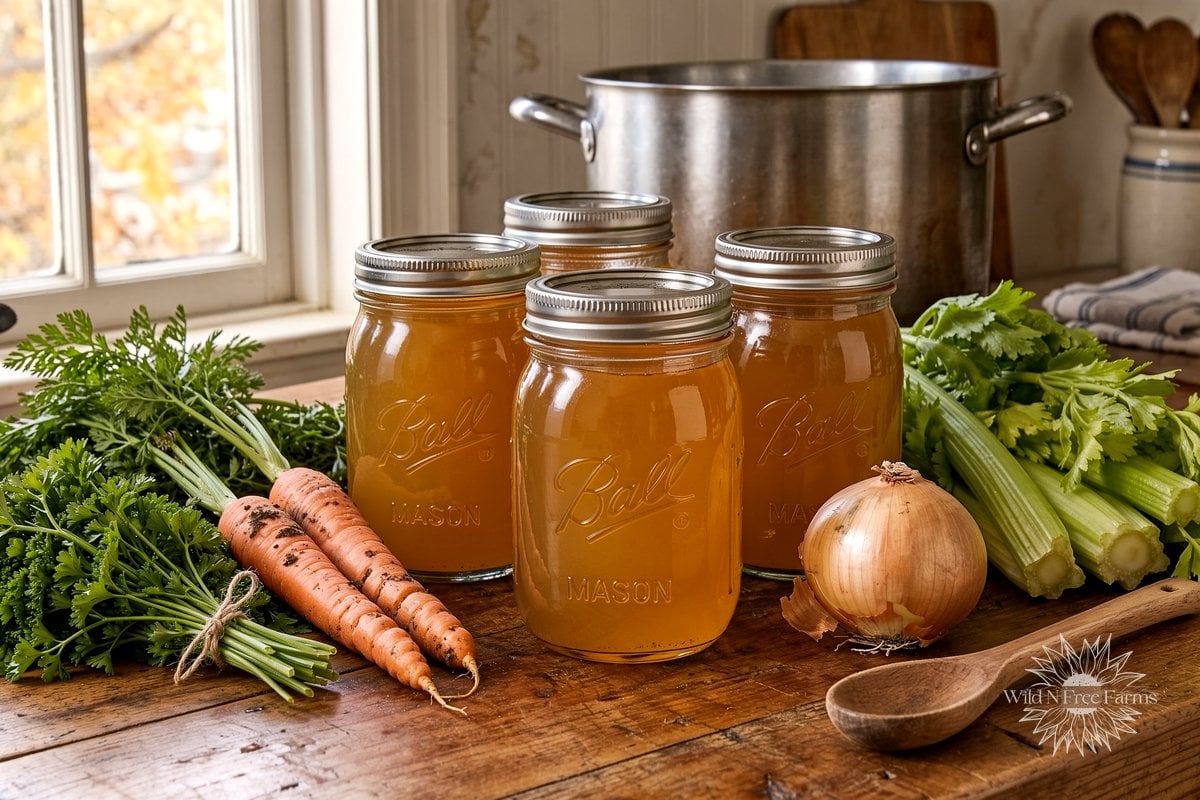
Why Make Homemade Turkey Stock?
A roasted turkey carcass still has a lot to give. The bones, skin, and connective tissue simmer down into a stock with deep roasted flavor and plenty of body, something a carton from the store just can’t match.
- It’s Practically Free: You’re using bones you would have thrown away, plus a few vegetables and pantry spices.
- Better Flavor: Roasted bones make a richer, more savory stock than raw ones.
- You Control the Salt: I leave it unsalted so I can season each soup or gravy just the way I want it.
- It Stocks the Freezer (or Pantry): One carcass makes 3 to 4 quarts, enough for several winter meals.
It’s one of my favorite homesteading skills because it’s so simple and stretches one meal into many more.
Turkey Stock vs. Broth vs. Bone Broth
You’ll see these words used almost interchangeably, but here’s how I think about them:
- Stock: Made mostly from bones, simmered a few hours. It’s unsalted and has body from the gelatin, which makes it the best base for gravy and soup.
- Broth: Made mostly from meat, usually seasoned, and lighter in body. It’s nice for sipping.
- Bone Broth: Bones simmered much longer, often 12 to 24 hours, for the most gelatin and minerals.
Homemade Turkey Stock Ingredients
You don’t need anything fancy. Use what you have on hand, and don’t stress about exact amounts.
- 1 Turkey Carcass: From a 12 to 16 pound roasted turkey, with most of the meat picked off. Include the wings, neck, skin, and any bits of meat still clinging to the bones. A smaller bird or a turkey breast frame works too; just use less water.
- Onion: 1 large, quartered. The papery skin adds a nice golden color.
- Carrots: 2, cut into big chunks.
- Celery: 2 ribs, leaves and all.
- Garlic: 3 or 4 cloves, smashed (optional).
- Herbs: A small handful of parsley stems, 2 or 3 sprigs of fresh thyme (or 1/2 teaspoon dried), and 1 bay leaf.
- Black Peppercorns: About 1 teaspoon.
- Apple Cider Vinegar: 1 tablespoon (optional). Many homesteaders add a splash to help draw more from the bones. Homemade works great, like our apple cider vinegar from apple scraps.
- Cold Water: About 4 quarts (16 cups), or enough to cover the bones by an inch.
Tip: Freeze vegetable scraps like onion ends, carrot peels, and celery tops in a bag through the fall, then toss a few handfuls in with the carcass.
Equipment You’ll Need
- A Large Stockpot: At least 10 to 12 quarts so the whole carcass fits. I like a sturdy stainless pot like this 12-quart Cook N Home stockpot.
- A Fine-Mesh Strainer: For straining out the bones and little bits. This Cuisinart fine-mesh strainer set has a size for every job.
- A Big Bowl or Second Pot: To strain into.
- Shallow Containers and Freezer-Safe Jars or Bags: For cooling and storing.
Food Safety First: How Long Is the Carcass Good?
This part matters, so please don’t skip it. The USDA Food Safety and Inspection Service (FSIS) says to refrigerate cooked turkey within 2 hours and to use it within 3 to 4 days. The Iowa State University Extension gives the same advice for the bones: bag and refrigerate them within two hours of taking the turkey out of the oven, then use them within 3 to 4 days or freeze them.
- Pull the Stuffing Out: If you stuffed the bird, remove all of the stuffing from the cavity before you refrigerate the carcass.
- Left Out Overnight? Toss It: A carcass that sat on the counter for more than 2 hours (1 hour above 90°F) shouldn’t be used. Simmering won’t make it safe again.
- Not Ready Yet? Break the carcass into pieces, bag it, and freeze it. You can make stock straight from frozen.
How to Make Homemade Turkey Stock on the Stovetop
1. Break Up the Carcass
Pull off any meat worth saving for sandwiches and soup. Then use your hands or kitchen shears to break the carcass into a few pieces so it fits snugly in your pot. Smaller pieces need less water, which means a richer stock.
2. Cover With Cold Water
Put the bones in the pot and add cold water until they’re covered by about an inch. Add the vinegar, if you’re using it.
3. Bring It Up Slowly and Skim
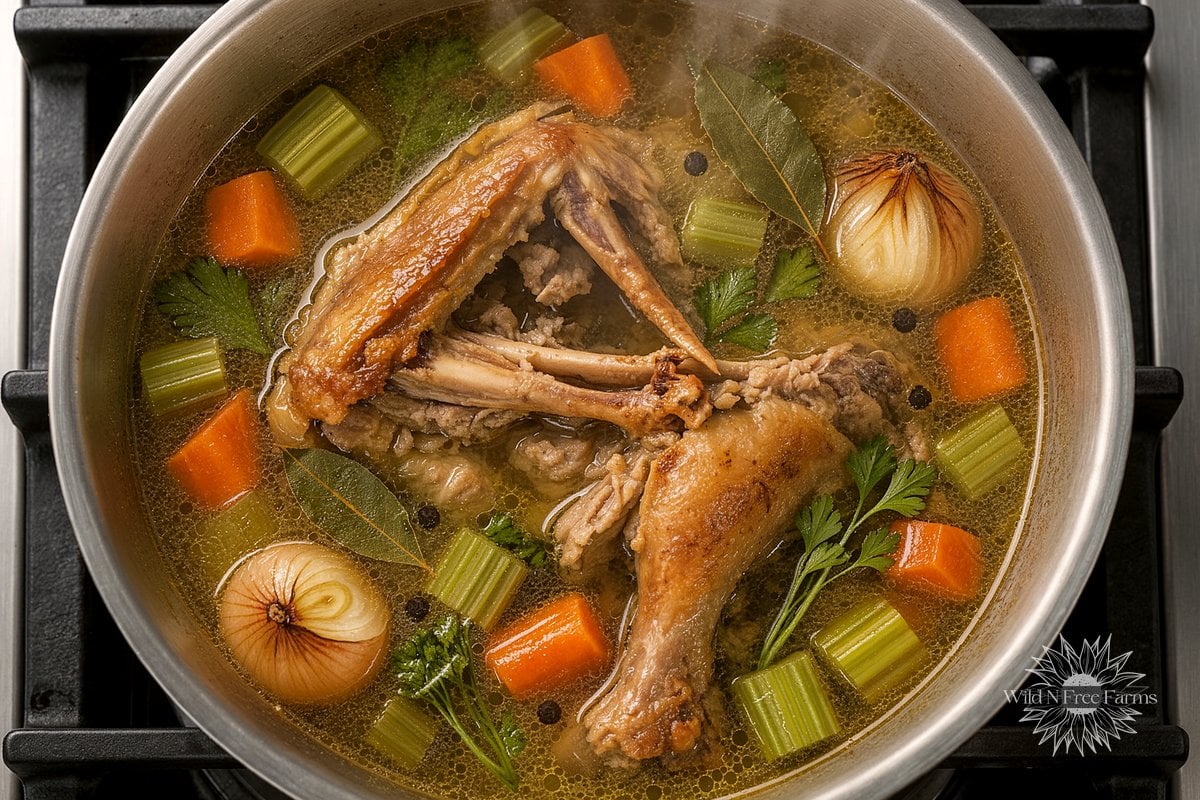
Heat the pot over medium heat until it just starts to bubble, then turn it down to a gentle simmer, with just a few lazy bubbles breaking the surface. Skim off any gray foam that rises during the first 20 to 30 minutes.
4. Add the Vegetables and Herbs
Add the onion, carrots, celery, garlic, herbs, and peppercorns. Top off with a little more water if the bones are poking out.
5. Simmer 3 to 4 Hours
Let it barely simmer, partly covered, for 3 to 4 hours, adding a splash of water if the level drops below the bones. Iowa State suggests simmering three or more hours, and the University of Illinois Extension turkey broth recipe simmers for two hours and then reduces the strained broth for a more concentrated flavor. Don’t let it boil hard. A rolling boil churns the fat into the liquid and makes your stock cloudy and greasy.
6. Strain
Carefully lift out the big bones with tongs, then pour the stock through a fine-mesh strainer into a large bowl or a second pot. For extra-clear stock, line the strainer with a damp, clean cotton cloth or cheesecloth. Discard the bones and spent vegetables (keep cooked bones away from dogs, since they can splinter).
7. Cool It Fast
This is the most important step for safety. A big, hot pot of stock takes a long time to cool, and bacteria grow fastest between 40°F and 140°F. The USDA recommends dividing large amounts into shallow containers so they cool quickly, and says hot food can go straight into the refrigerator or into an ice or cold-water bath first. I set my bowl of stock in a sink of ice water and stir it for a few minutes, then pour it into shallow containers and refrigerate it within 2 hours.
8. Skim the Fat
Once the stock is cold, the fat hardens into a layer on top. Lift it off with a spoon. Underneath, good stock is often jiggly like gelatin. That’s the collagen from the bones, and it’s exactly what you want. It melts back into liquid as soon as you warm it.
Homemade Turkey Stock (From a Leftover Carcass)
Equipment
- Large stockpot, 10 to 12 quarts
- Fine-mesh strainer
- Large bowl or second pot to strain into
- Shallow containers, freezer-safe jars or freezer bags
- Optional: Instant Pot
- Optional for canning: pressure canner
Ingredients
- 1 roasted turkey carcass from a 12 to 16 lb turkey, most meat removed, broken into pieces (include wings, neck and skin)
- 1 large onion quartered (skin on is fine)
- 2 carrots cut into large chunks
- 2 celery ribs with leaves cut into large chunks
- 3 to 4 garlic cloves smashed (optional)
- 1 small handful parsley stems
- 2 to 3 sprigs fresh thyme or 1/2 tsp dried
- 1 bay leaf
- 1 tsp whole black peppercorns
- 1 tbsp apple cider vinegar optional
- About 4 quarts 16 cups cold water, enough to cover the bones by 1 inch
Instructions
- Pick off any meat worth saving. Break the carcass into pieces so it fits snugly in the pot. (Use a carcass that was refrigerated within 2 hours of cooking and within 3 to 4 days, or one that was frozen. Remove any stuffing.)
- Place the bones in the stockpot, add the vinegar if using, and cover with cold water by about 1 inch.
- Heat over medium until it just begins to bubble, then reduce to a bare simmer. Skim off gray foam during the first 20 to 30 minutes.
- Add the onion, carrots, celery, garlic, parsley stems, thyme, bay leaf and peppercorns. Add a little more water if bones are exposed.
- Simmer gently, partly covered, for 3 to 4 hours. Do not let it boil hard. Add water as needed to keep the bones covered.
- Lift out the large bones, then strain the stock through a fine-mesh strainer into a large bowl. Discard bones and vegetables.
- Cool quickly: set the bowl in an ice-water bath and stir, then divide into shallow containers and refrigerate within 2 hours.
- When cold, lift off and discard the fat layer. Refrigerate up to 3 to 4 days or freeze, leaving at least 1 inch of headspace.
Notes
- Instant Pot: fill no higher than the max line, cook on high pressure about 90 minutes, natural release. A 6-quart pot holds about half a large carcass.
- Slow cooker: cook on low 8 to 10 hours with the lid on, then strain and cool quickly.
- Storage (USDA FSIS): refrigerate up to 3 to 4 days; freeze for best quality within about 2 to 3 months. Reheat to a rolling boil.
- Pressure canning only (NCHFP): skim fat, reheat to boiling, 1-inch headspace; pints 20 min, quarts 25 min at 10 lb weighted gauge (0-1,000 ft; 15 lb above) or 11 lb dial gauge (0-2,000 ft; 12/13/14 lb at higher elevations). Never water-bath can stock.
- Unsalted on purpose: season the dish you use it in. Brined or smoked carcasses can make a salty stock, so taste first.
- Do not use a carcass that sat at room temperature more than 2 hours (1 hour above 90°F).
Did you make this recipe? Don’t forget to share with me, @wildnfreefarm on Instagram, Pinterest, or Youtube! Tag us with #wildnfreefarms
Instant Pot and Slow Cooker Turkey Stock
Instant Pot Method
A pressure cooker makes great stock in a fraction of the time. Break the carcass small enough to fit in your Instant Pot, add the vegetables, herbs, and peppercorns, and add water to cover without going past the pot’s maximum fill line. Seal and cook on high pressure for about 90 minutes, then let the pressure release naturally before opening. It’s the same timing we use in our Instant Pot bone broth for poultry bones. A 6-quart pot holds about half a large carcass, so you may need two batches or a bigger pot.
Slow Cooker Method
Add everything to a large slow cooker, cover with water, and cook on low for 8 to 10 hours. Keep the lid on, then strain and cool it quickly the same way as the stovetop method.
How to Store Turkey Stock
- Refrigerator: Use within 3 to 4 days. The USDA storage chart lists 3 to 4 days in the refrigerator for poultry broth.
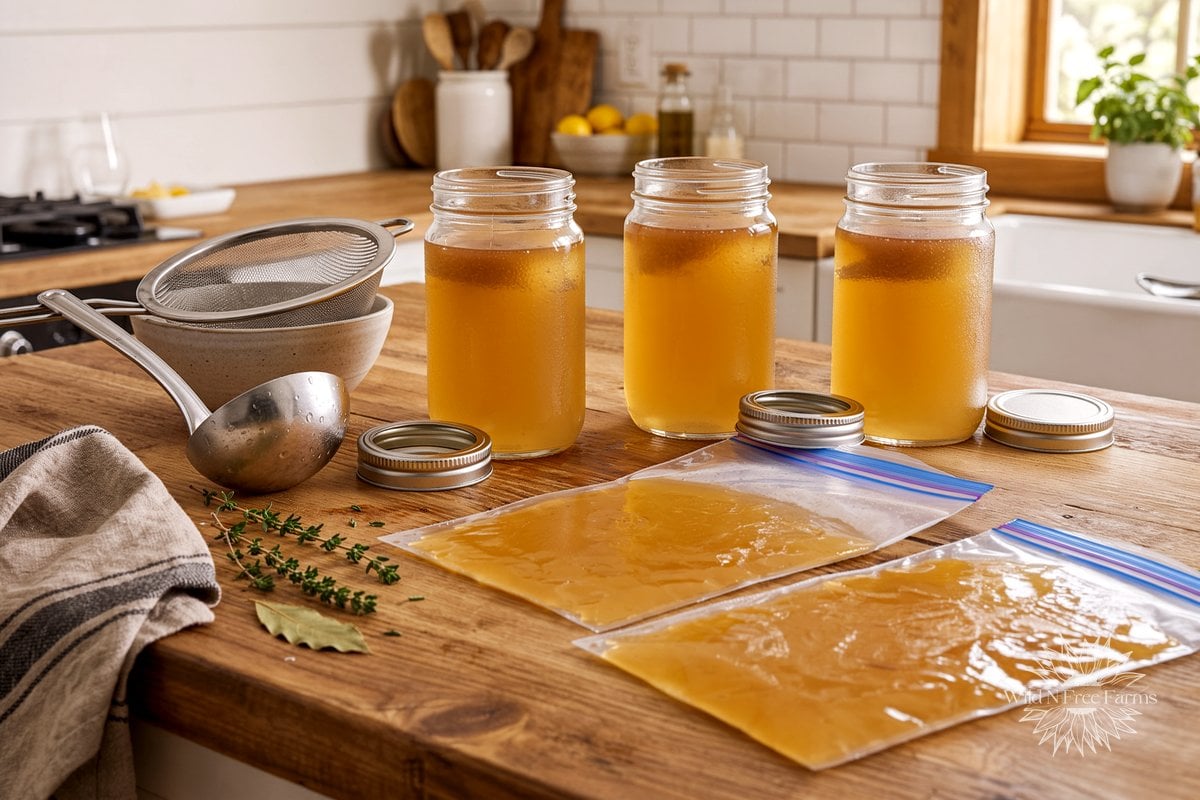
- Freezer: Freeze in jars, freezer bags, or containers for the best quality within about 2 to 3 months, per the same USDA chart. Frozen stock stays safe as long as it stays frozen; it just slowly loses flavor.
- Leave Headspace: Liquids expand as they freeze. Leave at least an inch of space at the top of jars and use straight-sided, freezer-safe jars so they don’t crack.
- Freeze Flat: Freezer bags laid flat on a sheet pan freeze into thin slabs that stack like books and thaw fast.
- Freeze Small Portions: Freeze some stock in muffin tins or ice cube trays, then pop them into a bag. They’re perfect for deglazing a pan or loosening leftovers.
- Reheat Well: The USDA says to reheat soups, sauces, and gravies by bringing them to a rolling boil, and that all leftovers should reach 165°F when reheated.
How to Pressure Can Turkey Stock
If your freezer is full, turkey stock can be home canned, but only in a pressure canner. Stock is a low-acid food, so a water bath canner is never safe for it. Here’s the tested method from the National Center for Home Food Preservation (NCHFP):
- Make the stock, remove the bones, cool it, and skim off and discard the excess fat.
- Reheat the stock to boiling and ladle it into hot jars, leaving 1 inch of headspace. Wipe the rims and add lids.
- Process pints for 20 minutes and quarts for 25 minutes.
- Use 10 pounds of pressure in a weighted-gauge canner at 0 to 1,000 feet (15 pounds above 1,000 feet), or 11 pounds in a dial-gauge canner at 0 to 2,000 feet (12 pounds at 2,001 to 4,000 feet, 13 at 4,001 to 6,000 feet, and 14 at 6,001 to 8,000 feet).
Follow your canner manual for venting and cooling, and don’t add rice, noodles, flour, or cream to the jars. If you’re shopping for one, the Presto 16-quart pressure canner is a well-reviewed, budget-friendly choice that holds 7 quarts. You’ll find more step-by-step canning photos in our post on canning bone broth.

Your One Stop For Sourdough

Farm To Table recipes you’ll love!
Want More Homestead Inspired Recipes?
Check out our Recipe Index for delicious creations!
Ways to Use Homemade Turkey Stock
- Turkey Soup: Simmer leftover turkey, carrots, celery, and noodles in your stock. Our homemade egg noodles are perfect here.
- Gravy: Whisk it into a butter-and-flour roux for gravy that tastes like the holiday all over again.
- Rice and Grains: Cook rice, barley, or quinoa in stock instead of water.
- Stews and Casseroles: Use it anywhere a recipe calls for chicken stock or broth.
- A Warm Mug: Season a cup with a pinch of salt and sip it on a cold morning. Or try it unsalted in our bone broth hot chocolate.
Homemade Turkey Stock FAQs
Can I make stock from a smoked or brined turkey?
Yes. A smoked carcass makes a smoky stock that’s wonderful in bean soup. Brined birds can make a salty stock, so wait until the end to taste it before adding any salt, and dilute it with water if needed.
Why is my turkey stock cloudy?
It probably boiled too hard. Cloudy stock is still safe and tasty. Next time, keep it at a bare simmer and skim the foam early.
Why didn’t my stock gel?
Too much water or not enough bones and connective tissue. It’s still good stock. Next time, break the carcass smaller, use less water, and add the wings and neck.
Can I use the carcass twice?
You can do a second simmer, sometimes called a remouillage. It will be lighter in flavor, so it works best for cooking rice or thinning soups.
Should I add salt?
I don’t. Unsalted stock gives you more control later, especially if you reduce it for gravy, which concentrates the salt.
Make the Most of Your Holiday Turkey
Homemade turkey stock is one of the easiest ways to get one more meal (or five) out of your holiday bird. Break up the carcass, simmer it low and slow with a few vegetables, strain, cool it fast, and stash it in the freezer or pantry. Your future soups will thank you.
Stay Up To Date
Enter your name and email to subscribe to our weekly newsletter, announements and freebies!
Sources
- USDA FSIS. Turkey Basics: Handling Cooked Dinners.
- USDA FSIS. Leftovers and Food Safety.
- USDA FSIS. Happy Thanksgiving: food safety basics and leftovers.
- USDA FSIS. Chicken from Farm to Table (storage chart for poultry broth).
- National Center for Home Food Preservation. Meat Stock (canning).
- Iowa State University Extension, Spend Smart Eat Smart. Turkey Time: Now and Later.
- University of Illinois Extension. Turkey Bone Broth.