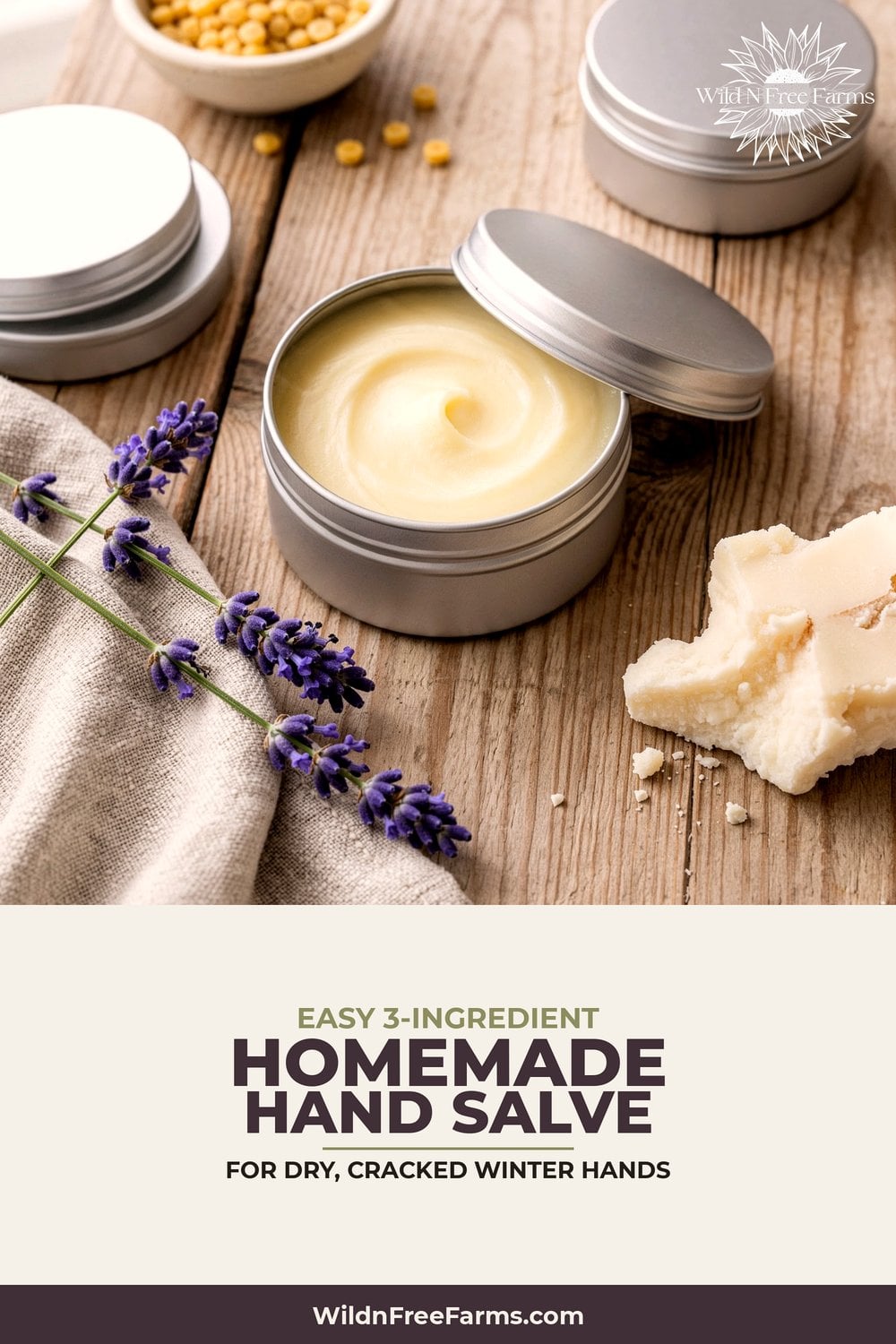
Homemade Hand Salve for Dry, Cracked Hands (Easy Beeswax and Shea Recipe)
When winter hits, my hands are the first thing to suffer. Between chores in the cold, washing up after every meal, and dry indoor heat, my knuckles crack and sting by December. A homemade hand salve is my favorite fix: it’s thick, water-free, and made with just three simple ingredients you can melt together in about 20 minutes.
In this post I’ll show you the exact ratio I use (beeswax, shea butter, and a liquid oil), how to make it softer or firmer, whether to add essential oils, and the dermatologist-backed habits that help cracked hands heal faster. It also makes a sweet little gift tucked into a stocking.

Disclaimer
This post contains affiliate links, so we may earn a commission if you sign up or buy through them, at no added cost to you. It helps support our content, and I only share what I truly believe in or use. As an Amazon Associate I earn from qualifying purchases. We also run ads on many articles. See our disclaimer and disclosure page for details.
Not medical advice: This post is for educational purposes only. It is not meant to diagnose, treat, cure or prevent any disease. If your hands have deep or bleeding cracks, blisters, signs of infection, or dryness that doesn’t improve, please see a doctor or dermatologist. Patch test any new skin product first, and check with your healthcare provider before using essential oils if you are pregnant, nursing, or have a skin condition.
Why a Salve Works So Well for Dry, Cracked Hands
The American Academy of Dermatology (AAD) says ointments and creams add more moisture to skin and are more effective than lotions, and it lists shea butter, jojoba oil, and lanolin among the ingredients to look for. A salve is basically a homemade ointment: oils and butters held together with beeswax, with no water added.
- It Seals Moisture In: Beeswax and butters sit on the skin and slow down water loss, which is exactly what chapped, cracked skin needs.
- It’s Concentrated: A pea-sized amount covers both hands, so one small tin lasts a long time.
- It’s Simple: No emulsifiers, no water, and no preservatives, because there’s no water in it for mold or bacteria to grow in. (That’s also why you should only scoop it with clean, dry fingers.)
- You Control the Ingredients: The AAD recommends fragrance-free products for dry, sensitive skin. When you make your own, you can leave the fragrance out completely.
Homemade Hand Salve Ingredients
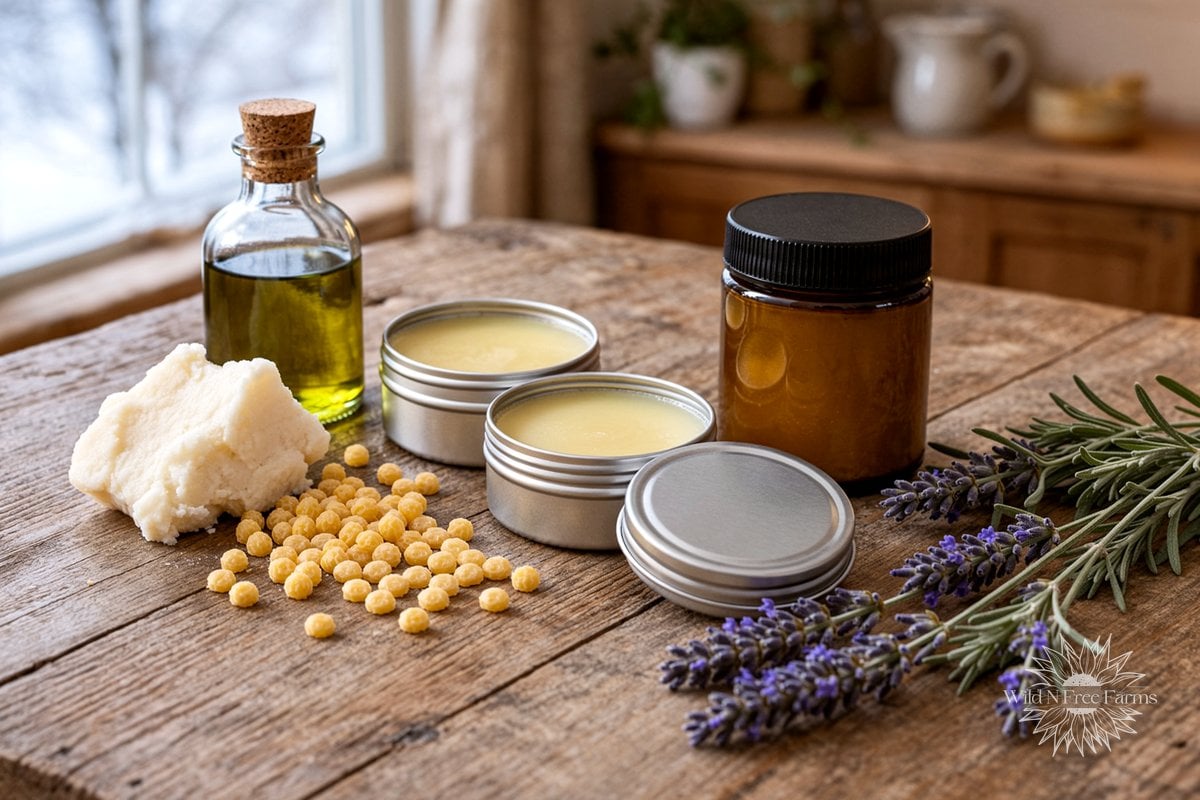
You only need three ingredients. I give the amounts by weight, because beeswax pellets and solid butters are hard to measure accurately in cups.
- Beeswax (1 oz / 28 g): This is what makes it a salve instead of an oil. Pellets (also called pastilles) melt faster than a block. I use Simply Earth beeswax.
- Shea Butter (1 oz / 28 g): Rich and creamy, and one of the moisturizing ingredients the AAD lists for dry skin. Try Simply Earth shea butter.
- Liquid Oil (3 oz / 85 g): Olive oil is inexpensive and probably already in your pantry. Sweet almond oil feels a little lighter on the skin. Both work. Simply Earth carries olive oil and sweet almond oil too.
- Optional Essential Oil: Up to about 1%, which is roughly 20 to 40 drops for the whole batch. I explain below why I often leave it out. Lavender is a gentle favorite, like Simply Earth lavender essential oil.
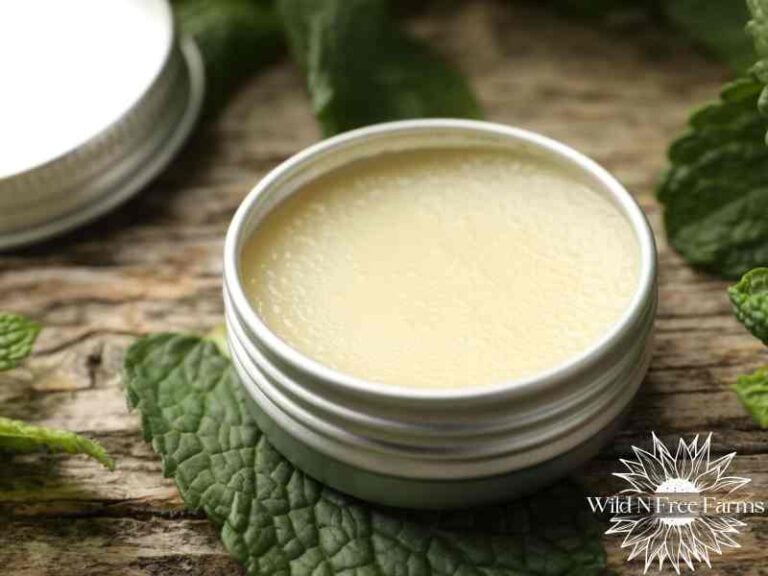
This makes about 5 ounces, enough for two and a half 2-ounce tins or five 1-ounce tins.
Equipment You’ll Need
- Kitchen Scale: Weighing is the easiest way to get a consistent texture every time. An inexpensive digital scale like the Etekcity food scale measures in grams and ounces.
- Double Boiler: Or a heat-safe glass measuring cup with a spout set in a saucepan with a couple of inches of simmering water.
- Tins or Jars: Small screw-top tins are perfect for hands and for gifting. I like these 2-ounce aluminum salve tins. Small glass jars work too.
- A Spoon in the Freezer: For testing the texture before you pour.
- A Spatula or Chopstick: For stirring. Beeswax is hard to clean off, so use something you don’t mind keeping just for salve making.
The Salve Ratio (and How to Adjust It)
Most salve recipes start from about 1 part beeswax to 4 parts oil. The Arboretum at Flagstaff uses 1 ounce of beeswax to 4 ounces of oil for about 5 ounces of salve, and adds more beeswax for a firmer salve or less for a softer one. Bastyr University‘s herbal workshop notes that salves should be harder for summer and softer for winter, and uses about 1 ounce of wax per cup of oil for a softer product.
| Texture | Beeswax | Shea Butter | Liquid Oil | Best For |
|---|---|---|---|---|
| Firm (travel tin) | 1 oz / 28 g | 1 oz / 28 g | 3 oz / 85 g | Pockets, purses, and the barn coat |
| Soft (winter bedside) | 3/4 oz / 21 g | 1 oz / 28 g | 3 1/4 oz / 92 g | Easy to scoop and spread at night |
| Extra Soft (ointment-style) | 1/2 oz / 14 g | 1 oz / 28 g | 3 1/2 oz / 99 g | Very dry hands under cotton gloves |
Shea butter softens the salve a little and makes it creamier. If you’d rather skip the shea, replace it with the same weight of liquid oil and keep the beeswax the same.
How to Make Homemade Hand Salve
1. Weigh Your Ingredients
Set a heat-safe glass measuring cup on your scale, tare it, and weigh in the beeswax, shea butter, and oil.
2. Melt Gently
Set the cup in a saucepan with a couple of inches of water and bring the water to a gentle simmer. Stir now and then until the beeswax is completely melted, about 10 to 15 minutes. Keep the heat low, never leave melting wax unattended, and don’t melt beeswax directly over a burner.
3. Test the Texture
Dip your frozen spoon into the mixture and let it set for a minute. Rub it between your fingers. Too hard? Stir in a little more oil. Too soft? Add a few more beeswax pellets and let them melt. Bastyr’s workshop uses the same frozen-spoon test.
4. Add Essential Oil (Optional)
Take the cup off the heat and let it cool for a minute or two, then stir in your essential oil if you’re using it.
5. Pour and Cool
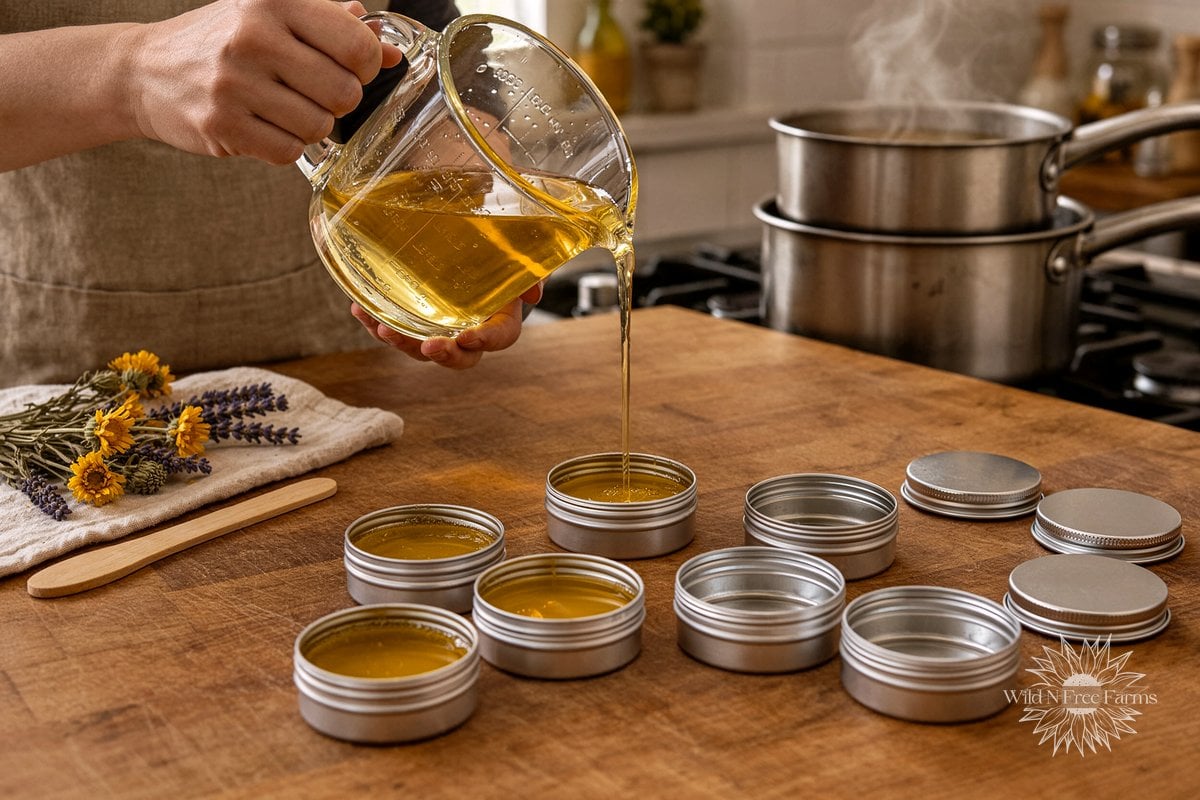
Carefully pour the warm salve into clean, completely dry tins or jars. Let them cool undisturbed until firm, then put the lids on. Bastyr suggests leaving the lids off until the salve is cool so condensation doesn’t form inside, which helps discourage mold.
6. Label
Write the ingredients and date on each tin, especially if you’re giving them away, so anyone with an allergy (for example, to tree nuts if you used almond oil) can check.
Homemade Hand Salve (Beeswax and Shea Butter)
Equipment
- Double boiler, or a heat-safe glass measuring cup with a spout set in a saucepan of simmering water
- Metal spoon chilled in the freezer (texture test)
- Spatula or chopstick for stirring
Ingredients
- 1 oz beeswax pellets 28 g
- 1 oz shea butter 28 g
- 3 oz olive oil or sweet almond oil 85 g
- 20 to 40 drops lavender essential oil optional, about 1% or less
Instructions
- Set a heat-safe glass measuring cup on the scale, tare it, and weigh in the beeswax, shea butter and oil.
- Set the cup in a saucepan with a couple of inches of water. Bring the water to a gentle simmer and stir now and then until the beeswax is completely melted, 10 to 15 minutes. Keep the heat low and never leave melting wax unattended.
- Dip the frozen spoon into the mixture and let it set for a minute. If it is too hard, stir in a little more oil; if too soft, add a few more beeswax pellets and let them melt.
- Take the cup off the heat and let it cool for a minute or two. Stir in the essential oil now, if using.
- Pour into clean, completely dry tins or jars. Leave the lids off until the salve is cool and firm, then cap.
- Label each tin with the ingredients and date.
Notes
- Softer winter version: use 3/4 oz (21 g) beeswax and 3 1/4 oz (92 g) oil. Extra-soft ointment style for overnight use under cotton gloves: 1/2 oz (14 g) beeswax and 3 1/2 oz (99 g) oil.
- No shea butter? Replace it with the same weight of liquid oil.
- For very cracked or sensitive skin, and for children, leave the essential oil out. Patch test on the inner arm first. Avoid citrus oils in products worn in the sun.
- Use with clean, dry fingers and keep water out of the tin. Store cool and dry; use within about a year and discard if it smells rancid or shows mold.
- If almond oil is used, label it for tree-nut allergies.
- For external use only. Not medical advice. See a doctor or dermatologist for deep or bleeding cracks, blisters, signs of infection, or dryness that does not improve.
Did you make this recipe? Don’t forget to share with me, @wildnfreefarm on Instagram, Pinterest, or Youtube! Tag us with #wildnfreefarms
Should You Add Essential Oils?
It’s up to you, but for cracked hands, I usually leave them out. The AAD recommends fragrance-free products for dry, sensitive skin, and essential oils are fragrance. The Tisserand Institute explains that the higher the concentration of essential oil, the greater the risk of a skin reaction, and that allergic reactions are the most common type.
If you’d like a light scent, keep it to about 1% or less. The Tisserand Institute dilution chart puts 1% at about 9 drops per ounce of carrier oil. For this 5-ounce batch, that’s roughly 20 to 40 drops total. Here are a few gentle ideas:
- Lavender: Soft, familiar, and a favorite for evening hand care.
- Frankincense: Warm and woodsy. Our post on frankincense and myrrh oil uses covers safety notes.
- Unscented: The best choice for very cracked, stinging skin, for little ones, and for anyone with sensitive skin.
Skip citrus oils like lemon and bergamot in anything you’ll wear in the sun, since some can cause phototoxic reactions, and test a small amount on your inner arm before using any new blend all over your hands.
Our Favorite source for
Quality Essential Oils


How to Use It to Heal Dry, Cracked Hands
The salve does the most good when you pair it with a few simple habits. These come straight from the AAD‘s hand-care advice:
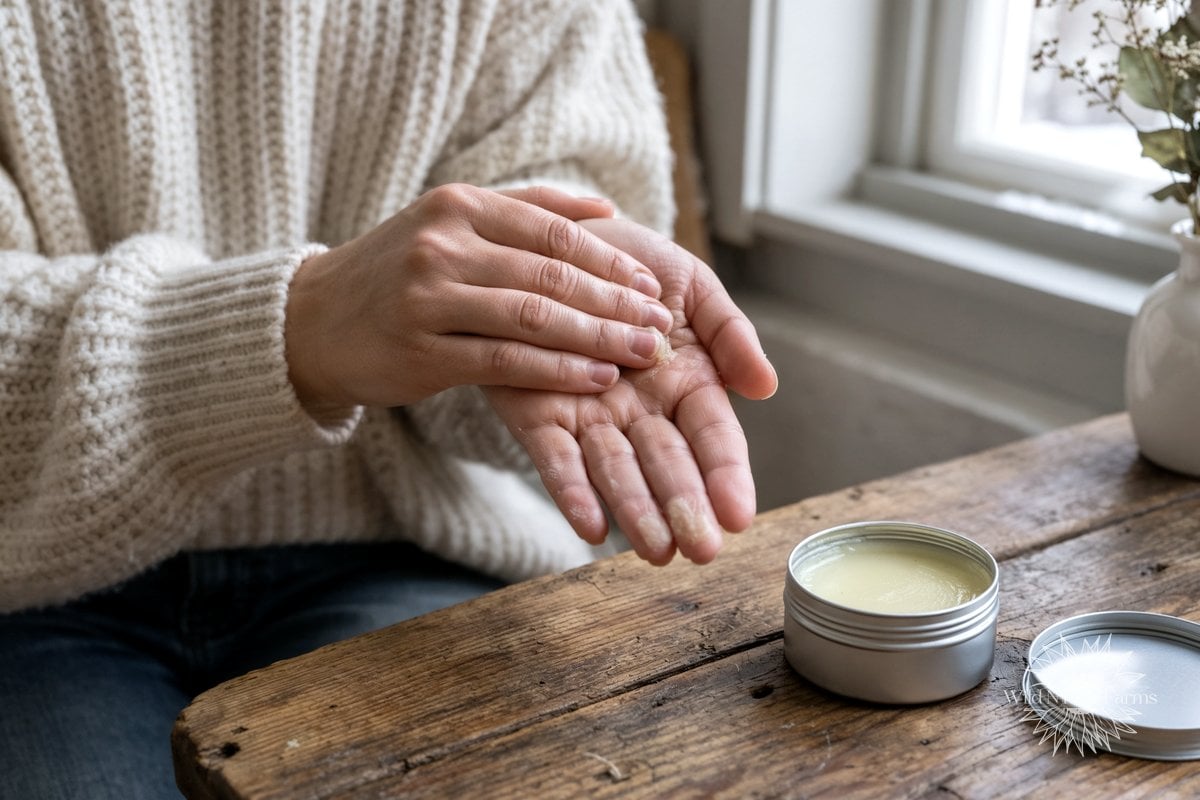
- Apply After Every Hand Wash: Put it on while your hands are still a little damp, so it locks in that moisture.
- Use More When It’s Cold: Cold outdoor air and indoor heat both dry out skin, so reapply more often in winter.
- Try the Overnight Trick: Soak your hands in warm water, pat dry, apply a generous layer of salve, and wear cotton gloves to bed. Running a humidifier helps too.
- Wear Gloves for Wet Work: The AAD suggests gloves for dishes, gardening, and anything that keeps your hands wet, and for cold, dry air.
- Pat, Don’t Rub: Pat your hands dry gently, and use a gentle cleanser instead of a harsh soap.
When to See a Doctor
Sometimes it’s more than dry skin. The AAD explains that hand eczema can look like dry skin at first, but can cause deep painful cracks, bleeding or weeping skin, itchy blisters, crusts, or pus. If your hands are that sore, or if moisturizing throughout the day doesn’t help, see a dermatologist. Hand eczema usually needs more than a moisturizer to clear.
How to Store Your Salve (and How Long It Lasts)
- Keep It Cool: Store tins in a cool, dry spot away from sunlight. A firm salve handles a warm pocket better than a soft one.
- Keep Water Out: Use clean, dry fingers, and don’t store an open tin by the sink.
- Shelf Life: Salves are often said to last 1 to 3 years, but the oils in it can go rancid sooner, especially in warm spots. I use mine within about a year. If it ever smells sharp, stale, or like old crayons, or if you see mold, toss it.
Make It a Homestead Gift
Little tins of hand salve are one of my favorite handmade gifts for teachers, neighbors, and anyone who works with their hands. Tie a tin with twine and a sprig of dried lavender, and add a label with the ingredients and date. They pair nicely with a bottle of homemade vanilla or peppermint extract in a gift basket.
Homemade Hand Salve FAQs
Can I make hand salve without beeswax?
Yes. Candelilla wax is a common plant-based swap. It’s harder than beeswax, so start with a little less and use the frozen-spoon test until you like the texture.
Can I use coconut oil?
You can swap some of the liquid oil for coconut oil. It’s solid below about 76°F, so the salve will be firmer in a cool house and softer in summer.
Why is my salve grainy?
Shea butter can turn grainy if it melts slowly and cools slowly. Melt everything fully, then let the tins cool where they won’t be disturbed. If it does turn grainy, it’s still fine to use, or you can re-melt it and cool it again.
Is homemade hand salve safe for kids?
A plain, unscented salve made with food-grade oils is very gentle. I’d leave essential oils out of anything for children, and check with your pediatrician for babies or any child with eczema.
Can I use herb-infused oil?
Yes. Replace some or all of the liquid oil with a dried-herb infused oil, like our homemade lemon balm oil. Make sure the infused oil is completely free of water before you use it. Skip comfrey for cracked hands, though. It contains pyrrolizidine alkaloids, and most safety references advise against using it on broken skin.

Lemon Ginger Elixir For Immune Support

Comfrey Salve and Lotion Provides Instant First-Aid Healing
Want To Cut Out More Toxins In Your Life?
Check out our Natural Remedy Index loaded with recipes designed to provide you true health! From beauty products, teas, lotions, first-aid, and so much more! This index will help you live a more natural, free life!
Make Your Own Homemade Hand Salve This Winter
A homemade hand salve takes three ingredients, one saucepan, and about 20 minutes, and it can make a real difference for hands that crack every winter. Weigh your beeswax, shea, and oil, melt them gently, test on a cold spoon, and pour. Then use it after every hand wash and under cotton gloves at night.
Stay Up To Date
Enter your name and email to subscribe to our weekly newsletter, announements and freebies!
If you’re stocking up on winter self-care, our list of homesteading skills to learn this winter has more cozy projects to try.
Sources
- American Academy of Dermatology. Dermatologists’ top tips for relieving dry skin.
- American Academy of Dermatology. 4 skin care tips for your hands.
- American Academy of Dermatology. Dry, scaly, and painful hands could be hand eczema.
- Bastyr University. Herbal Holiday Gift Making Workshop (salve instructions).
- The Arboretum at Flagstaff. How to Make a Calming Calendula Salve.
- Tisserand Institute. Essential Oil Dilution Chart.
- Tisserand Institute. Dilution for essential oils.