What Is Loam Soil? How to Build Loamy Soil in Your Garden
If you’ve ever read a seed packet or a gardening book, you’ve probably seen the phrase “grows best in well-drained loam soil.” It’s the soil most gardeners dream about: dark, crumbly, easy to dig, and able to hold moisture without turning into a swamp.
The good news? You don’t have to be born with it. In this guide, you’ll learn what loam soil actually is, how to tell what kind of soil you have, and how to build loamy, living garden soil over time, no matter where you’re starting.

Disclaimer
This post contains affiliate links. This means we may earn a commission should you choose to sign up for a program or make a purchase using these links. There is no added cost to you but your purchase through these links helps support our content! Not to worry- I truly believe in and/or use everything I promote! As an Amazon Associate I earn from qualifying purchases.
We also utilize advertisements on many of our articles. This is simply a way to help support all the work we do here at Wild N Free Farms, without adding any extra cost to our readers. Check out our disclaimer and disclosure page for more details.
We’ll cover the sand, silt, and clay that make up every soil, a simple squeeze test you can do with one handful, and the slow-and-steady method that turns heavy clay or fast-draining sand into the kind of soil vegetables love.
What Is Loam Soil?
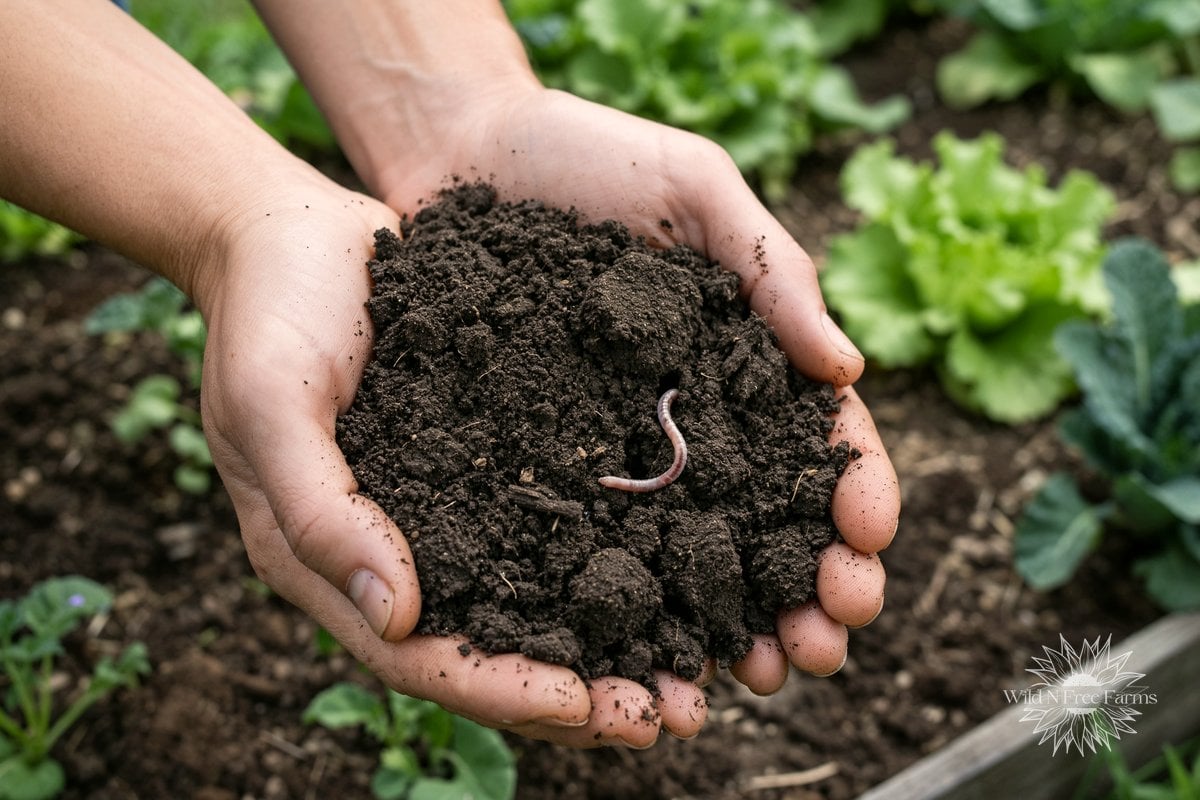
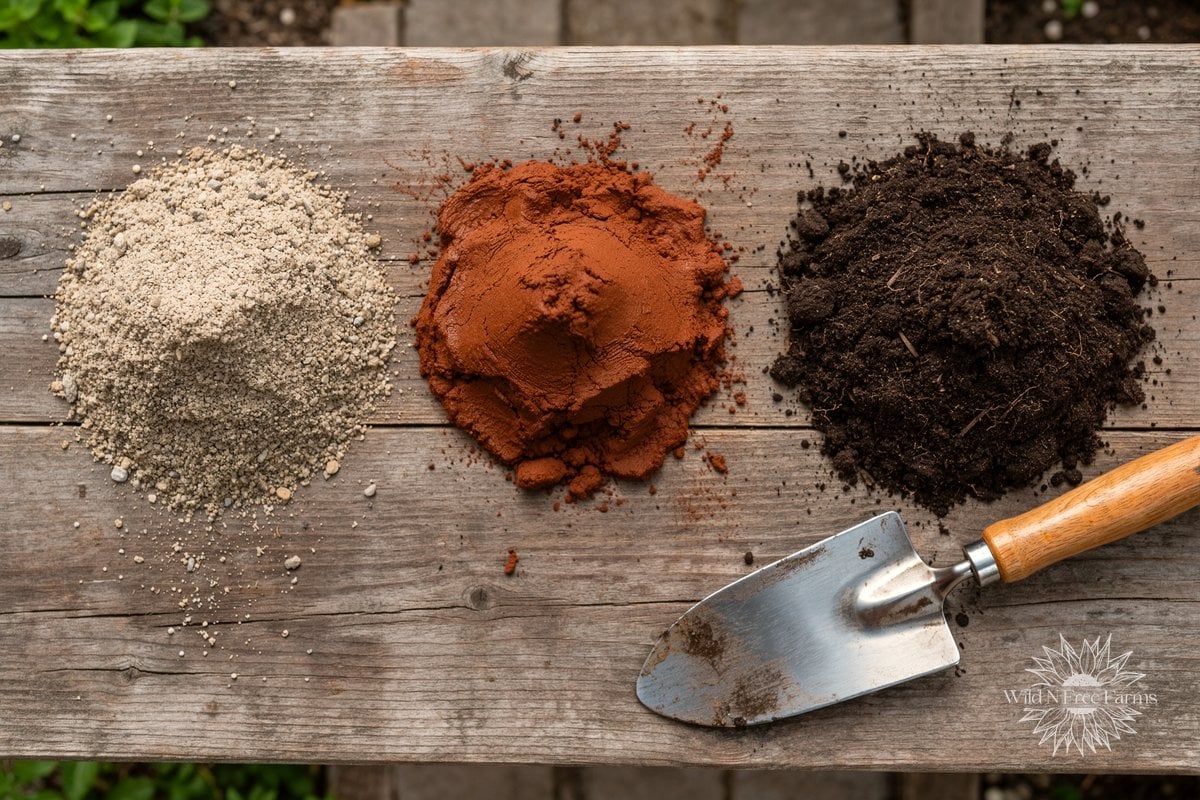
Loam soil is a balanced mix of the three mineral particles found in every soil: sand, silt, and clay. According to the University of Illinois Extension, a classic loam is roughly 40% sand, 40% silt, and 20% clay. Because clay particles are so tiny and active, it only takes about a fifth of the mix to have a big effect.
That balance is what makes loam so easy to garden in. The sand keeps it loose and lets water drain. The silt adds a smooth, fertile middle ground. The clay holds onto water and nutrients so they don’t wash away.
Sand, Silt, and Clay: The Building Blocks
| Particle | Size | How It Feels | What It Does |
|---|---|---|---|
| Sand | 2.0 to 0.05 mm | Gritty | Drains fast and lets air into the soil |
| Silt | 0.05 to 0.002 mm | Smooth, like flour | Holds moisture and adds fertility |
| Clay | Less than 0.002 mm | Sticky when wet | Holds water and nutrients tightly |
Particle sizes are from the NC State Extension Gardener Handbook. To picture it, if a grain of sand were a basketball, a silt particle would be a marble and a clay particle would be the head of a pin.
Types of Loam Soil
Most garden soil isn’t a perfect 40-40-20. It leans one way or the other, and that’s where these names come from:
- Sandy Loam: More sand. Feels gritty but still holds together when squeezed. Warms up and drains quickly in spring, but needs more frequent watering.
- Silt Loam: More silt. Feels smooth and silky. Holds a lot of water and is very fertile, but can crust over on the surface.
- Clay Loam: More clay. Feels sticky and holds its shape. Rich in nutrients, but slow to dry out and easy to compact.
Why Gardeners Love Loam Soil
The Washington State University Extension explains that loams make good garden soils because they have a balance of large and small pore spaces. In plain terms, that means:
- Good Drainage: Extra water moves down and out, so roots don’t sit in a soggy bed.
- Good Water Holding: Enough moisture stays behind that you’re not watering every single day.
- Room for Air: Roots and soil life need oxygen, and loam has plenty of open space.
- Holds Nutrients: The clay and organic matter grab onto nutrients so they stay where roots can reach them.
- Easy to Work: It crumbles in your hand, digs easily, and is kind to young roots and seedlings.
Vegetables, herbs, berries, and most flowers all thrive in loam. It’s the “just right” soil of the garden world.
How to Tell If You Have Loam Soil
You don’t need a lab to get a good idea of your soil texture. Start with these two simple checks.
The Squeeze Test
Grab a handful of slightly moist soil (not soaking wet) from about 4 to 6 inches down and squeeze it firmly in your fist. Then open your hand.
- It Falls Apart Right Away: Your soil is sandy.
- It Holds a Shape but Crumbles When You Poke It: Congratulations, that’s the feel of loam.
- It Stays in a Tight, Sticky Ball: Your soil is high in clay.
The Ribbon Test
Take a moistened lump about the size of a walnut and press it between your thumb and finger, pushing it up into a ribbon. Sandy soil won’t ribbon at all. Loam makes a short, weak ribbon that breaks before it gets about an inch long. Clay makes a long, shiny ribbon that holds together. Rub a little between your fingers, too: grit means sand, a silky feel means silt, and stickiness means clay.
For a closer look at the actual percentages, you can do a simple soil jar test, which Clemson Extension recommends for estimating sand, silt, and clay. And if you’re unsure about nutrients or pH, a soil test through your local extension office is inexpensive and worth it. Our guide to soil pH explains what those numbers mean.
Introducing my new ebook
Seed Starting For Success
Discover the secrets of a stress free seed starting adventure
Grow strong, healthy seedlings without the guesswork. You get the full ebook plus a seed starting schedule, a when-to-start-indoors list, and an indoor vs. direct sowing guide.
$14.99 · instant digital download

Can You Turn Clay or Sandy Soil Into Loam?
Here’s the honest answer: you can’t really change your soil’s texture, but you absolutely can change how it behaves. The NC State Extension handbook points out that a garden 6 inches deep over an acre weighs about 2 million pounds. Changing the sand content by just 1% would take 10 tons of sand, and a noticeable change would take around 100 tons.
That’s why the old advice to “just add sand to clay” usually backfires. A little sand mixed into heavy clay can actually make it denser and harder, more like a brick than a loam.
What changes everything is organic matter. Compost, aged manure, leaves, and plant roots don’t change the ratio of sand, silt, and clay, but they glue the particles into crumbs (called soil structure), open up pore space in clay, and help sand hold water. Over a few seasons, your soil starts to look, feel, and act a lot more like loam. Gardeners call this “loamy” soil, and it’s exactly what your plants want.
How to Build Loamy Soil in Your Garden
1. Add Compost Every Year
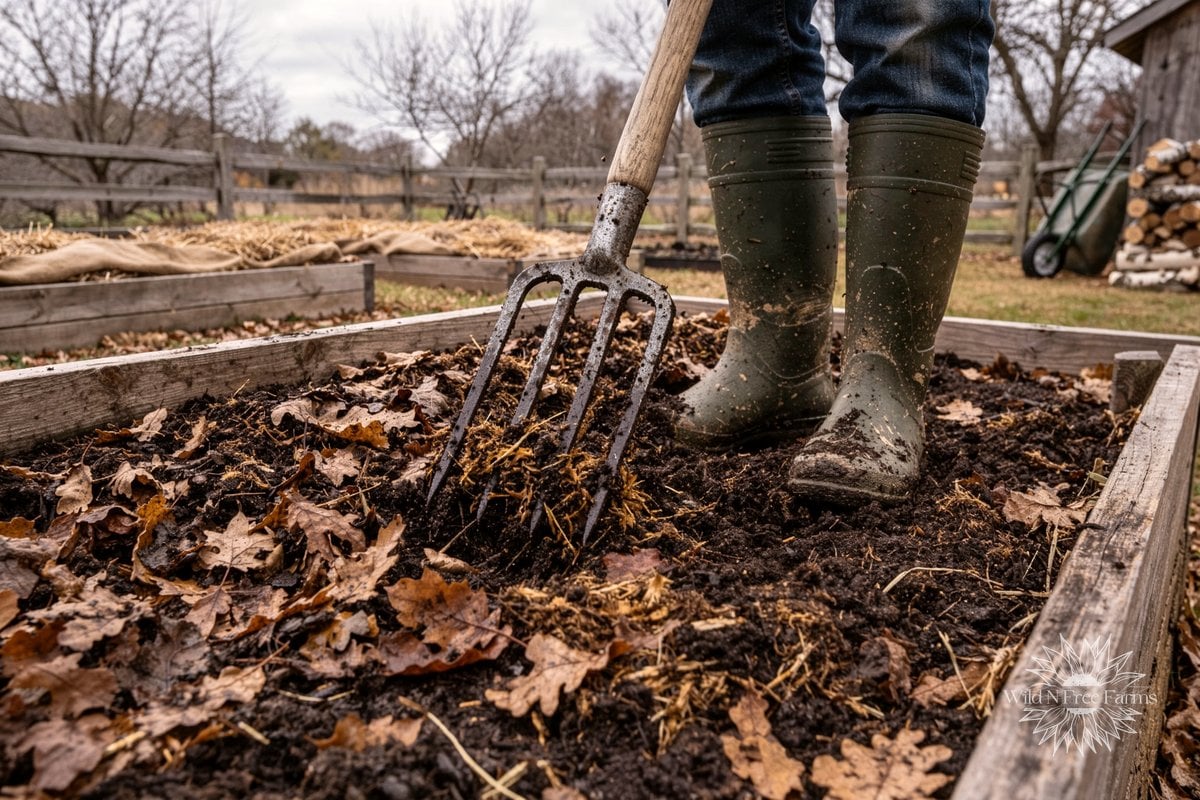
Compost is the single best thing you can add. When you first build a bed, work about 2 inches of compost into the top 6 inches of soil, which is the starting rate Clemson Extension suggests. After that, top-dress with 1 to 3 inches every year and let worms and soil life pull it down for you.
No compost pile yet? Our composting for beginners guide will get you started, and vermicompost is a wonderful option for small spaces.
2. Mulch With Leaves, Straw, or Wood Chips
A layer of mulch protects bare soil from pounding rain and baking sun, keeps moisture in, and slowly breaks down into organic matter. Fall leaves are free and perfect for this. See our post on how to mulch for the best materials and depths.
3. Stop Tilling Once Your Beds Are Built
Tilling breaks up soil crumbs and speeds up how fast organic matter burns off. NC State Extension recommends tilling in compost when a garden is first created, then switching to surface layers in the following years. Learn more in our guide to no-till gardening for beginners.
4. Grow Cover Crops
Cover crops like winter rye, oats, clover, and buckwheat send roots deep into the soil, feed soil life, and add organic matter when they’re cut down. They’re especially helpful for loosening clay. Check out our list of no-till cover crops for raised beds.
5. Keep Off Wet Soil
Walking on or digging wet soil squeezes out the air pockets you’re working so hard to build. Use permanent paths, and wait until a handful of soil crumbles instead of smearing before you work it.
6. Feed the Soil Life
Earthworms, fungi, and bacteria are the real builders of loamy soil. Keep something growing as much of the year as you can, avoid leaving soil bare, and add gentle amendments like compost tea or homemade fertilizers instead of harsh quick fixes.
7. Consider Raised Beds for Tough Spots
If you’re dealing with very heavy clay, rocky ground, or soil that floods, a raised bed lets you start with a loamy mix right away while the soil underneath improves. We love Vego raised garden beds because they’re long-lasting and easy to set up. Fill them with a blend of quality topsoil and compost, and top them off with compost each year.
Fixing Loam Soil Problems by Soil Type
| If Your Soil Is… | What You’ll Notice | What Helps Most |
|---|---|---|
| Sandy | Dries out fast, nutrients wash away | Compost every year, thick mulch, cover crops, more frequent light watering and feeding |
| Clay | Puddles, cracks when dry, slow to warm in spring | Compost, cover crops, raised beds, never working it wet. Avoid adding sand. |
| Silty | Crusts on top, compacts easily | Mulch to protect the surface, compost, gentle watering, permanent paths |
| Already Loamy | Crumbly, drains well, easy to dig | Keep it covered, add compost yearly, skip the tiller |
Have heavy, soggy ground? You’ll find more help in how to fix waterlogged clay soil and planting vegetables in clay soil.
Stay Up To Date
Enter your name and email to subscribe to our weekly newsletter, announements and freebies!
Loam Soil FAQ
What is the best ratio for loam soil?
A classic loam is about 40% sand, 40% silt, and 20% clay. In the garden, soil anywhere close to that range, with plenty of organic matter, will behave like loam.
Is loam the same as topsoil?
Not always. Topsoil just means the top layer of soil, and bagged or bulk topsoil can be sandy, silty, or clay-heavy. If you buy it, ask what the texture is, or do a squeeze test before you fill your beds.
What color is loam soil?
Healthy loam is usually dark brown to nearly black, because of the organic matter in it. Color alone isn’t proof, though. Feel and drainage tell you more.
How long does it take to build loamy soil?
You’ll usually see a difference after one season of compost and mulch, and a real change in two to three years. Soil building is a slow process, but every year gets easier.
What grows best in loam soil?
Almost everything: tomatoes, peppers, beans, squash, root crops, herbs, berries, and flowers. Plants that prefer sharp drainage, like lavender and rosemary, may want a little extra grit or a raised spot.
Build the Soil, and the Garden Follows
Loam soil isn’t something you either have or don’t have. It’s something you build, one layer of compost and one season of cover at a time. Start this fall by tucking your beds in with leaves and compost, and by spring you’ll already feel the difference in your hands.
Sources
- University of Illinois Extension. Soil Basics.
- NC State Extension. Extension Gardener Handbook, Chapter 1: Soils and Plant Nutrients.
- Washington State University Extension. Home Gardener’s Guide to Soils and Fertilizers.
- Clemson Cooperative Extension, Home & Garden Information Center. Soil Conditioning: Establishing a Successful Gardening Foundation.