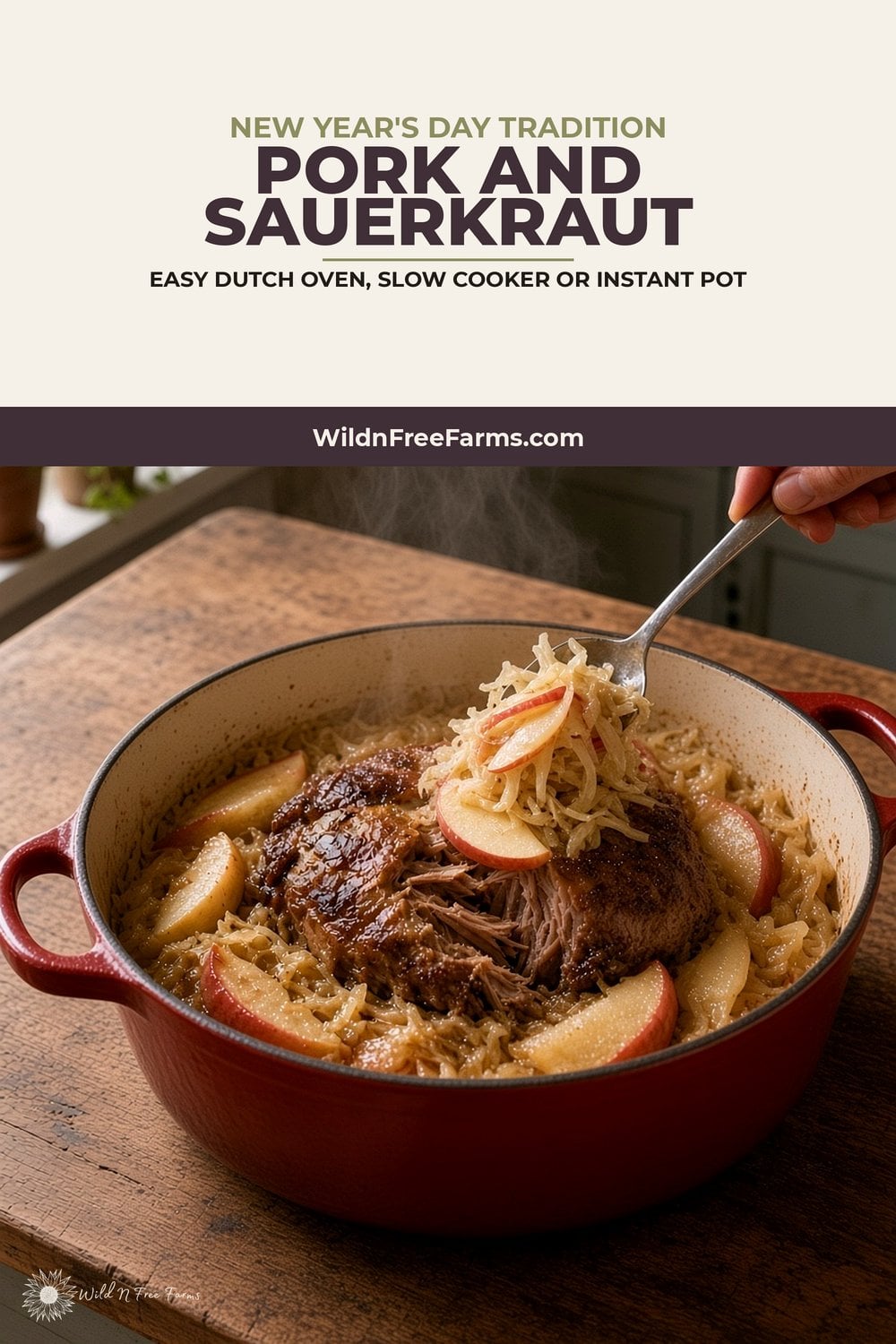
Pork and Sauerkraut for New Year’s: A Lucky Homestead Tradition
Pork and sauerkraut is one of those meals people think you only eat because Grandma said so.
But there’s a reason this humble pot of slow-braised pork and tangy cabbage has shown up on New Year’s Day tables for generations — it’s cheap, it feeds a crowd, it’s made from food you can raise and preserve yourself, and it tastes even better the next day.

Disclaimer
This post contains affiliate links. This means we may earn a commission should you choose to sign up for a program or make a purchase using these links. There is no added cost to you but your purchase through these links helps support our content! Not to worry- I truly believe in and/or use everything I promote! As an Amazon Associate I earn from qualifying purchases.
We also utilize advertisements on many of our articles. This is simply a way to help support all the work we do here at Wild N Free Farms, without adding any extra cost to our readers. Check out our disclaimer and disclosure page for more details.
As someone who believes in practical self-reliance, I love a tradition that starts the year with a full pot and a full pantry. In this post, you’ll learn why pork and sauerkraut is called a “lucky” New Year’s meal, which cut of pork to use, and exactly how to make it tender in a Dutch oven, slow cooker or Instant Pot.
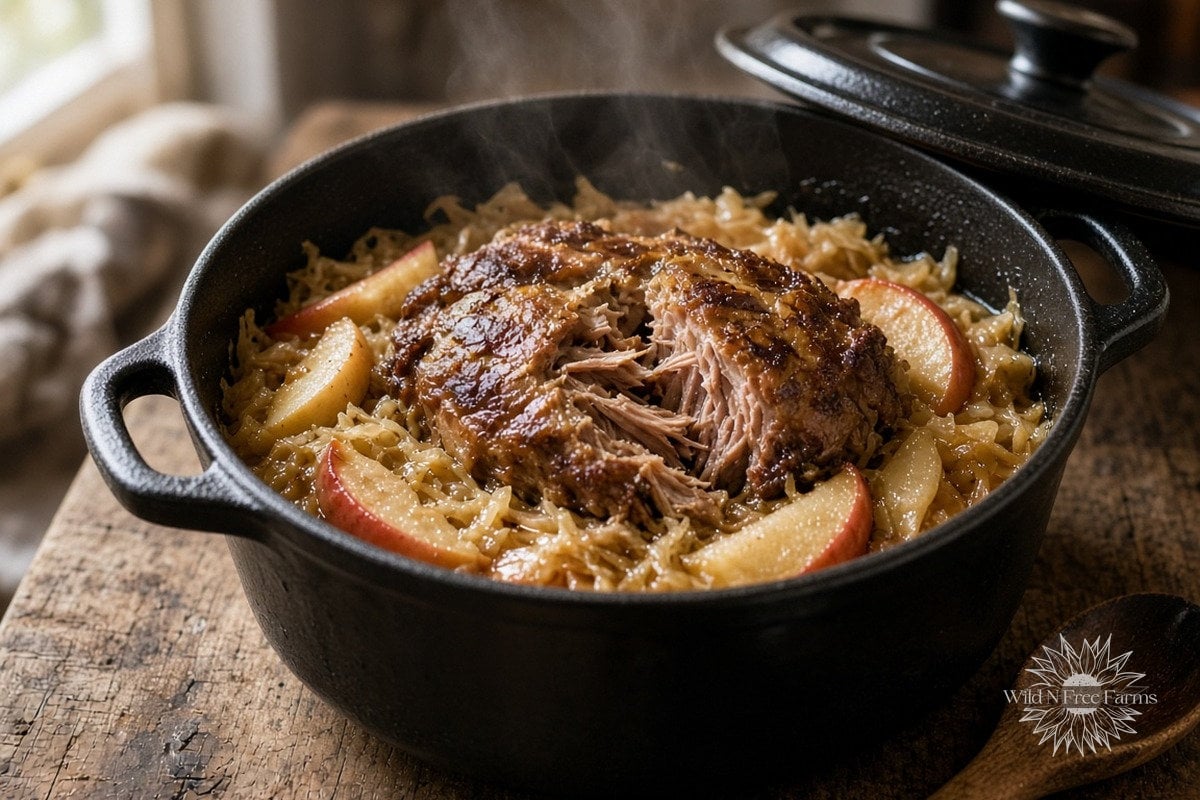
Why Eat Pork and Sauerkraut on New Year’s Day?
The tradition traces back to German immigrants — especially the Pennsylvania Dutch — and it spread across the Midwest and beyond.
The folk wisdom goes like this:
- The Pig Roots Forward: A pig pushes its snout forward to find food, so eating pork is said to move you forward into the new year.
- Chickens Scratch Backward: That’s why many families skip poultry on January 1st — nobody wants to scratch backward all year.
- Long Strands, Long Life: The long shreds of cabbage stand for a long life.
- Green Means Plenty: Cabbage is green like money, so a big pot of kraut is a wish for abundance.
Luck aside, the practical reason is the one I love most.
Hogs were traditionally butchered in late fall when the weather turned cold. Cabbage was harvested and packed into crocks to ferment. By the end of December, both were ready — fresh pork and fully fermented sauerkraut, right when the garden was asleep.
That’s homestead food security in one pot.
The Best Cut of Pork for Pork and Sauerkraut
You can use almost any pork, but the cut changes the texture.
Pork Shoulder (Boston Butt) – Best for Fall-Apart Tender
This is my pick. Shoulder has enough fat and connective tissue to stay juicy through a long braise, and it shreds right into the kraut. Bone-in adds even more flavor.
Pork Loin Roast – Best for Neat Slices
Leaner and quicker. Pull it at 145°F and let it rest so it doesn’t dry out. It slices instead of shreds.
Country-Style Ribs, Chops or Kielbasa – Best for Stretching the Pot
Country-style ribs cook faster than a whole roast. Smoked kielbasa or homemade sausage is a classic add-in that makes a smaller roast feed more people.
- Raising Your Own Pigs? The shoulder and the picnic roast are perfect here. Save the bones for homemade bone broth — you’ll use a cup of it in this recipe.
Got extra broth? Turn it into a mug of bone broth hot chocolate.

Your One Stop For Sourdough

Farm To Table recipes you’ll love!
Want More Homestead Inspired Recipes?
Check out our Recipe Index for delicious creations!
Homemade or Store-Bought Sauerkraut?
Both work.
If you made a crock of kraut this fall, this is the meal it was born for. If you’re buying it, look for refrigerated sauerkraut made with just cabbage and salt — it has a fresher crunch and flavor than shelf-stable cans.
- Want It Milder? Rinse the sauerkraut in a colander and squeeze it out before cooking. Leave it unrinsed if you love the tang.
- About Probiotics: Long cooking kills the live cultures in raw sauerkraut. To keep some of that gut-friendly goodness, spoon a little raw, unheated kraut over each plate right before serving.
- Making Your Own: A fermentation crock with weights makes big batches easy, but a wide-mouth mason jar works for small ones.
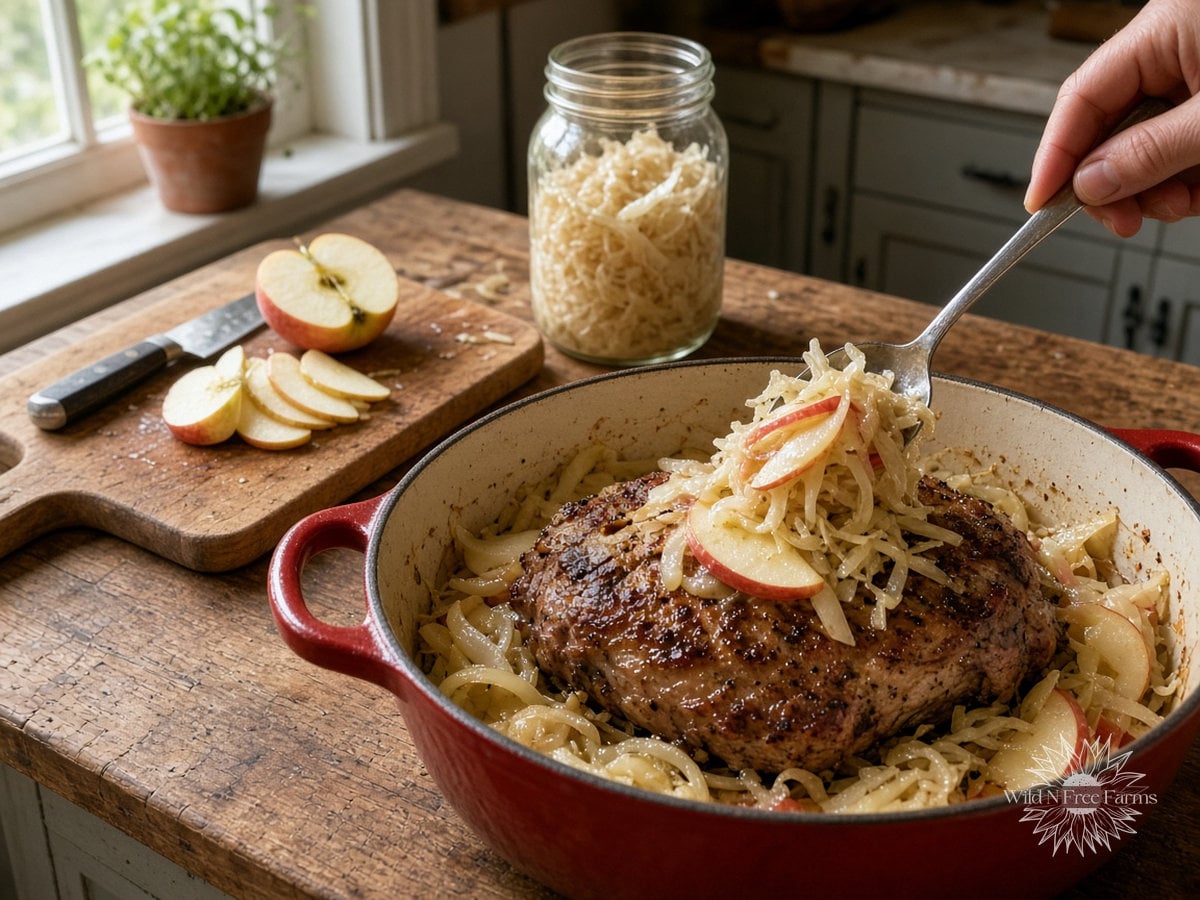
How to Make Pork and Sauerkraut in a Dutch Oven
The full ingredient amounts are in the recipe card below. Here’s the simple rhythm of it.
1. Sear the Pork
Pat the roast dry, season it well, and brown it on all sides in a heavy pot. A good enameled cast iron Dutch oven holds steady heat and goes from stovetop to oven.
2. Build the Flavor Base
Soften sliced onion in the drippings, add garlic, then pour in broth and scrape up every browned bit from the bottom.
3. Add the Kraut and Apples
Stir in the sauerkraut and its juice, sliced apples, a little brown sugar or maple syrup, caraway seeds and a bay leaf. The apples soften the sour edge without making it sweet.
4. Braise Low and Slow
Nestle the pork into the kraut, cover, and bake at 325°F for about 3 to 3½ hours, until the meat pulls apart with a fork.
5. Shred, Stir and Serve
Pull the pork into chunks, fold it back into the sauerkraut, and fish out the bay leaf. Done.
Slow Cooker and Instant Pot Pork and Sauerkraut
- Slow Cooker: Sear the pork first if you can (it’s worth it). Layer half the kraut mixture, the pork, then the rest of the kraut. Cook on LOW 8 hours or HIGH 5–6 hours, until fork-tender.
- Instant Pot: Cut the shoulder into 3–4 large chunks. Sear on Sauté, deglaze well so you don’t get a burn warning, add the kraut mixture on top, and cook on High Pressure 60–75 minutes with a 15-minute natural release.
- Doneness: The USDA safe minimum for whole cuts of pork is 145°F with a 3-minute rest. A shoulder needs to go well past that (around 195–205°F) before it turns tender enough to shred. An instant-read meat thermometer takes the guesswork out.
What to Serve With Pork and Sauerkraut
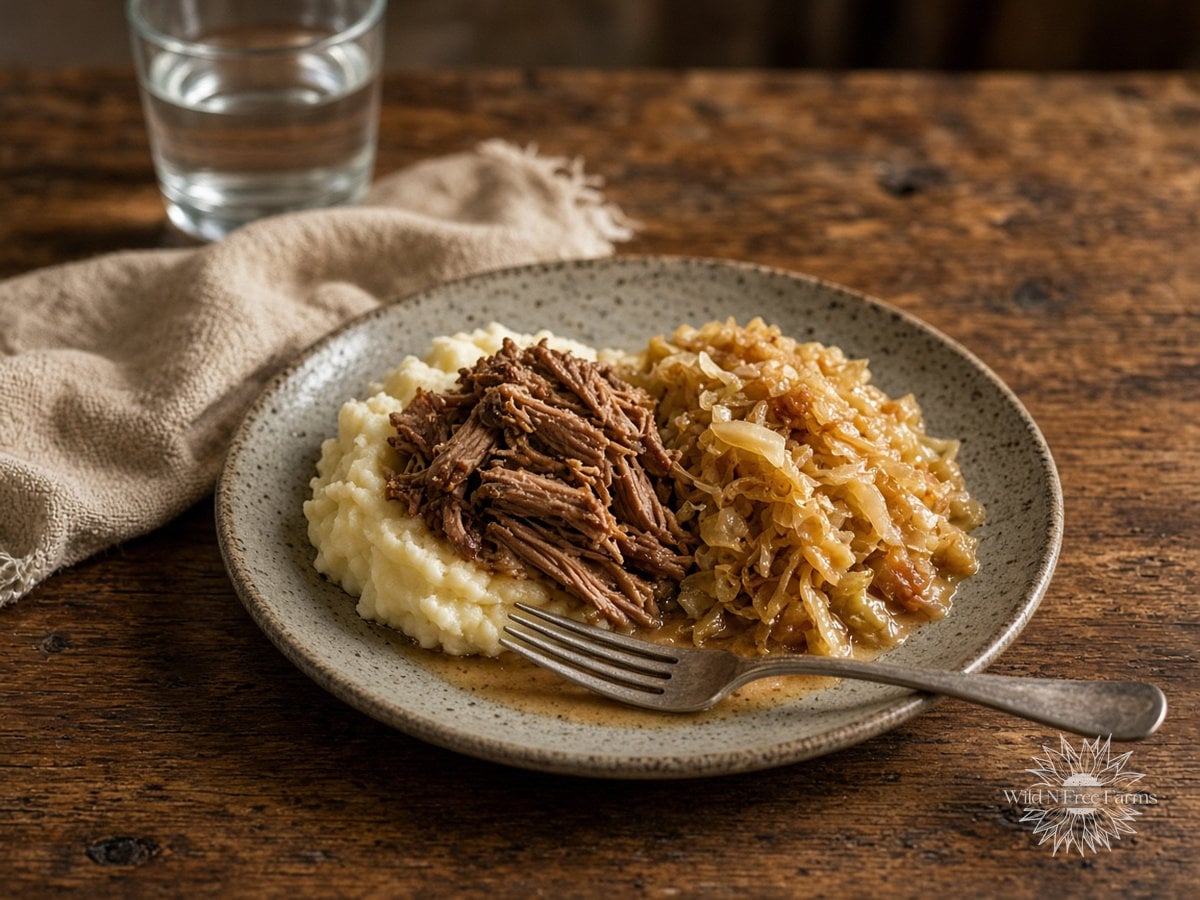
- Mashed Potatoes: The classic. Spoon the pork and kraut right over the top. Homegrown? Here’s how to harvest, cure and store potatoes so you have them all winter.
- Dumplings or Egg Noodles: Buttered and peppered.
- Rye or Sourdough Bread: For soaking up the juices.
- Black-Eyed Peas or Greens: If your family mixes traditions, go ahead and stack the luck.
- Applesauce: A sweet, cool contrast to the tang.
Common Mistakes (and How to Fix Them)
- Tough Pork: It isn’t done yet. Shoulder gets tough before it gets tender — give it another 30–60 minutes, covered.
- Too Sour: Rinse the kraut next time, add another apple, or stir in a spoonful of brown sugar at the end.
- Too Salty: Sauerkraut is already salted, so go light on seasoning the pot itself and taste before adding more.
- Dry Loin: Lean loin overcooks fast. Pull it at 145°F, rest it, and slice it into the hot kraut.
Stay Up To Date
Enter your name and email to subscribe to our weekly newsletter, announements and freebies!
Make-Ahead, Storage and Freezing Tips
- Make It Ahead: This dish is even better on day two. Cook it on New Year’s Eve, chill it, and reheat it while everyone sleeps in.
- Fridge: Refrigerate leftovers within 2 hours. They keep 3–4 days.
- Freezer: Freeze in portions for 2–3 months for the best texture.
- Reheat: Warm covered with a splash of broth until it reaches 165°F.
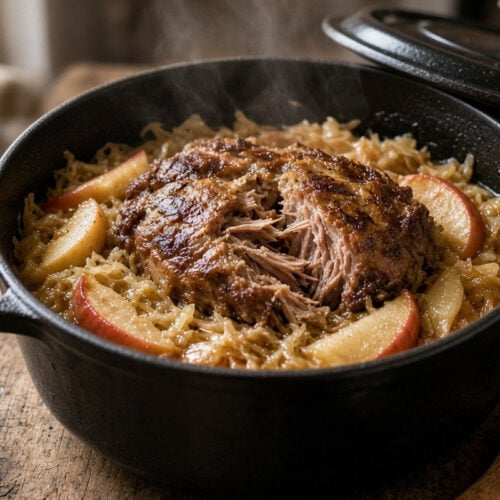
New Year’s Pork and Sauerkraut
Equipment
- 6-quart Dutch oven
- instant-read thermometer
Ingredients
- 3-4 lb pork shoulder Boston butt, bone-in or boneless
- 2 tsp kosher salt
- 1 tsp black pepper
- 1 Tbsp lard or avocado oil
- 1 large yellow onion sliced
- 4 cloves garlic minced
- 1 cup bone broth chicken stock or apple cider
- 2 lb sauerkraut about 4 cups with its juice, homemade or refrigerated
- 2 tart apples Granny Smith or Honeycrisp, cored and sliced
- 1 Tbsp brown sugar or maple syrup optional
- 1 tsp caraway seeds
- 1 bay leaf
- 1 lb smoked kielbasa sliced into 2-inch pieces, optional
Instructions
- Heat the oven to 325°F. Pat the pork dry and season all over with the salt and pepper.
- Heat the lard in a 6-quart Dutch oven over medium-high heat. Sear the pork 4–5 minutes per side until deeply browned, then set it on a plate.
- Lower the heat to medium. Add the onion and cook 5 minutes until soft. Stir in the garlic for 30 seconds.
- Pour in the broth and scrape up all the browned bits from the bottom of the pot.
- Stir in the sauerkraut with its juice, the apples, brown sugar (if using), caraway seeds and bay leaf.
- Nestle the pork into the sauerkraut and spoon some kraut over the top. Cover with the lid.
- Bake 3 to 3½ hours, until the pork is fork-tender and pulls apart easily (about 195–205°F inside). If using kielbasa, tuck it in for the last 45 minutes.
- Rest 10 minutes. Remove the bay leaf and any bone, pull the pork into large chunks, and stir it back into the sauerkraut. Serve hot over mashed potatoes.
Notes
- Slow cooker: Sear first if you can. Layer half the kraut mixture, then the pork, then the remaining kraut. Cook on LOW 8 hours or HIGH 5–6 hours.
- Instant Pot: Cut the pork into 3–4 chunks. Sear on Sauté and deglaze well. Add the kraut mixture on top without stirring. Cook on High Pressure 60–75 minutes, then natural release 15 minutes.
- Pork loin instead: Roast about 1½–2 hours until 145°F, rest 3+ minutes, then slice.
- Milder flavor: Rinse and squeeze the sauerkraut before adding it.
- Keep it probiotic: Cooking kills live cultures. Top each plate with a spoonful of raw, unheated kraut.
- Storage: Refrigerate within 2 hours for up to 3–4 days. Freeze up to 2–3 months. Reheat to 165°F.
- Make ahead: It tastes even better the next day.
Did you make this recipe? Don’t forget to share with me, @wildnfreefarm on Instagram, Pinterest, or Youtube! Tag us with #wildnfreefarms
Pork and Sauerkraut FAQ
Why do people eat pork and sauerkraut on New Year’s Day?
It’s a German and Pennsylvania Dutch tradition. Pigs root forward, so pork is said to move you forward in the new year, and the long strands of cabbage stand for a long life. Practically, it was the food that was ready: fall-butchered pork and freshly fermented kraut.
What cut of pork is best for pork and sauerkraut?
Pork shoulder (Boston butt) is best for tender, shreddable meat. Pork loin works if you’d rather slice it, and kielbasa or country-style ribs are great for stretching the pot.
Should you rinse sauerkraut before cooking it with pork?
Only if you want a milder flavor. Rinsing and squeezing it out tames the sourness and salt. Leave it unrinsed for a tangier, more traditional pot.
How long do you cook pork and sauerkraut?
About 3 to 3½ hours at 325°F in a Dutch oven, 8 hours on low in a slow cooker, or 60–75 minutes at high pressure in an Instant Pot for a 3–4 pound pork shoulder.
Can you make pork and sauerkraut ahead of time?
Yes, and it tastes even better the next day. Cook it a day ahead, refrigerate, and reheat covered until hot (165°F).
Is Pork and Sauerkraut Really Lucky?
Maybe. Maybe not.
But a family gathered around a pot of food they raised, preserved and cooked themselves — that feels like a blessing to me.
Raise it. Preserve it. Share it. That’s how you start the year forward.