Garden Crop Rotation: A Simple 4-Bed Plan for Any Size Vegetable Garden
If your tomatoes struggled with the same problems two summers in a row, or your cabbage patch seems to attract more pests every year, garden crop rotation might be the missing piece. It’s one of the oldest gardening practices around, it costs nothing, and the best time to plan it is right now, while the garden is resting and the seed catalogs are piling up.
In this guide, I’ll explain how crop rotation works, which vegetables belong to the same plant families, how many years to wait before planting a family in the same spot, and a simple 4-bed rotation plan you can copy for a backyard garden, raised beds, or a bigger homestead plot.

Disclaimer
This post contains affiliate links, so we may earn a commission if you sign up or buy through them, at no added cost to you. It helps support our content, and I only share what I truly believe in or use. As an Amazon Associate I earn from qualifying purchases. We also run ads on many articles. See our disclaimer and disclosure page for details.
You don’t need a huge garden or a complicated chart to make this work. You just need to know what you grew where, and a plan for moving things around.
What Is Garden Crop Rotation?
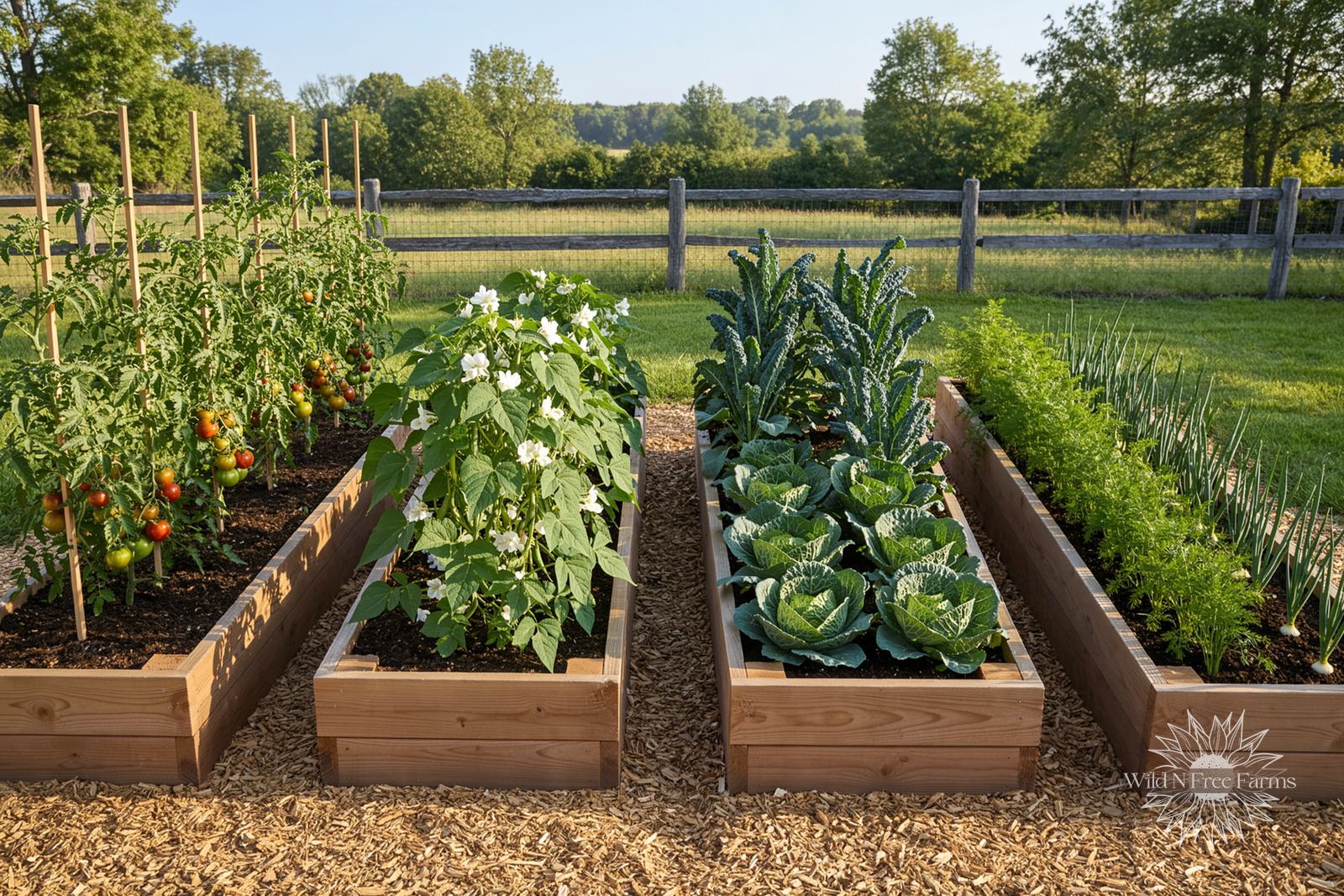
In a home vegetable garden, crop rotation simply means changing where you plant your vegetables each season. University of Wisconsin-Madison Extension calls it one of agriculture’s oldest cultural practices and explains that gardeners use it to reduce insect damage, limit vegetable diseases, and manage soil fertility.
The key is that you rotate plant families, not just individual crops. Vegetables in the same family tend to share the same pests and diseases, so swapping tomatoes for peppers in the same bed doesn’t really count as a rotation.
Why Crop Rotation Matters
When the same crops grow in the same spot year after year, pests and disease organisms that depend on them build up in the soil. Clemson Cooperative Extension lists soil-borne diseases like Southern blight, bacterial wilt, and Sclerotinia stem rot, along with insects such as wireworms, cutworms, and rootworms, and nematodes as problems that build up this way.
- Fewer Pests and Diseases: Rotating takes away the host plant that pests and pathogens need to complete their life cycle, so their numbers stay low.
- More Balanced Soil: Every vegetable takes up different types and amounts of nutrients. Wisconsin Extension notes that rotation evens out nutrient loss and gives the soil time to replenish.
- Healthier, More Productive Plants: NC State Extension says crop rotation reduces the likelihood of nematode, insect, or disease buildup in the soil.
- Better Records and Planning: Planning a rotation makes you keep track of what you grew, which helps with everything from seed orders to spacing.
Healthy soil is the foundation of all of this. If you’re still building yours, our guides to loam soil and hot composting are great places to start.
Stay Up To Date
Enter your name and email to subscribe to our weekly newsletter, announements and freebies!
Know Your Vegetable Plant Families
Before you can rotate, you need to know which vegetables are related. This chart is based on the plant family table from University of Wisconsin-Madison Extension:
| Plant Family | Common Vegetables |
|---|---|
| Nightshade (Solanaceae) | Tomato, pepper, eggplant, potato |
| Pea or Legume (Fabaceae) | Bush beans, pole beans, peas, lima beans, soybeans |
| Mustard or Brassica (Brassicaceae) | Cabbage, broccoli, cauliflower, Brussels sprouts, kale, collards, kohlrabi, radish, turnip, rutabaga, mustard greens |
| Gourd or Squash (Cucurbitaceae) | Cucumber, melon, pumpkin, summer squash, winter squash, watermelon |
| Onion (Alliaceae) | Onion, garlic, leek, chives |
| Carrot (Apiaceae) | Carrot, celery, parsley, parsnip |
| Goosefoot (Chenopodiaceae) | Beet, spinach, Swiss chard |
| Sunflower (Asteraceae) | Lettuce, endive, sunflower |
| Grass (Poaceae) | Sweet corn, popcorn |
| Mallow (Malvaceae) | Okra |
Notice a few surprises: potatoes are in the same family as tomatoes, and radishes and turnips are brassicas just like cabbage. Those are the ones that trip up most gardeners.
How Long Should You Wait Between Rotations?
Most extension services recommend that a plant family return to the same spot no more than once every three to four years. Clemson Extension calls three years the minimum and says a four- or five-year rotation is even better at reducing soil-borne pests, since some pests can wait in the soil for a long time for their host to come back. Washington State University Extension and NC State Extension also recommend a three- to four-year rotation.
Wisconsin Extension admits that this can be hard in a small garden, but adds that even changing plant families from year to year helps manage pests and diseases. So if a full four-year rotation isn’t realistic for you, do what you can.
A Simple 4-Bed Garden Crop Rotation Plan
The easiest way to rotate is to divide your garden into four separate beds or zones and assign each one a group of related crops. Each year, every group moves one bed over. After four years, everything is back where it started.
Here’s a practical way to group the families so each group fills a bed:
- Group 1, Nightshades: Tomatoes, peppers, eggplant, and potatoes
- Group 2, Legumes and Corn: Bush beans, pole beans, peas, and sweet corn
- Group 3, Brassicas and Greens: Cabbage, broccoli, kale, radishes, turnips, lettuce, spinach, and chard
- Group 4, Squash, Roots, and Onions: Cucumbers, squash, pumpkins, melons, carrots, beets, parsnips, onions, and garlic
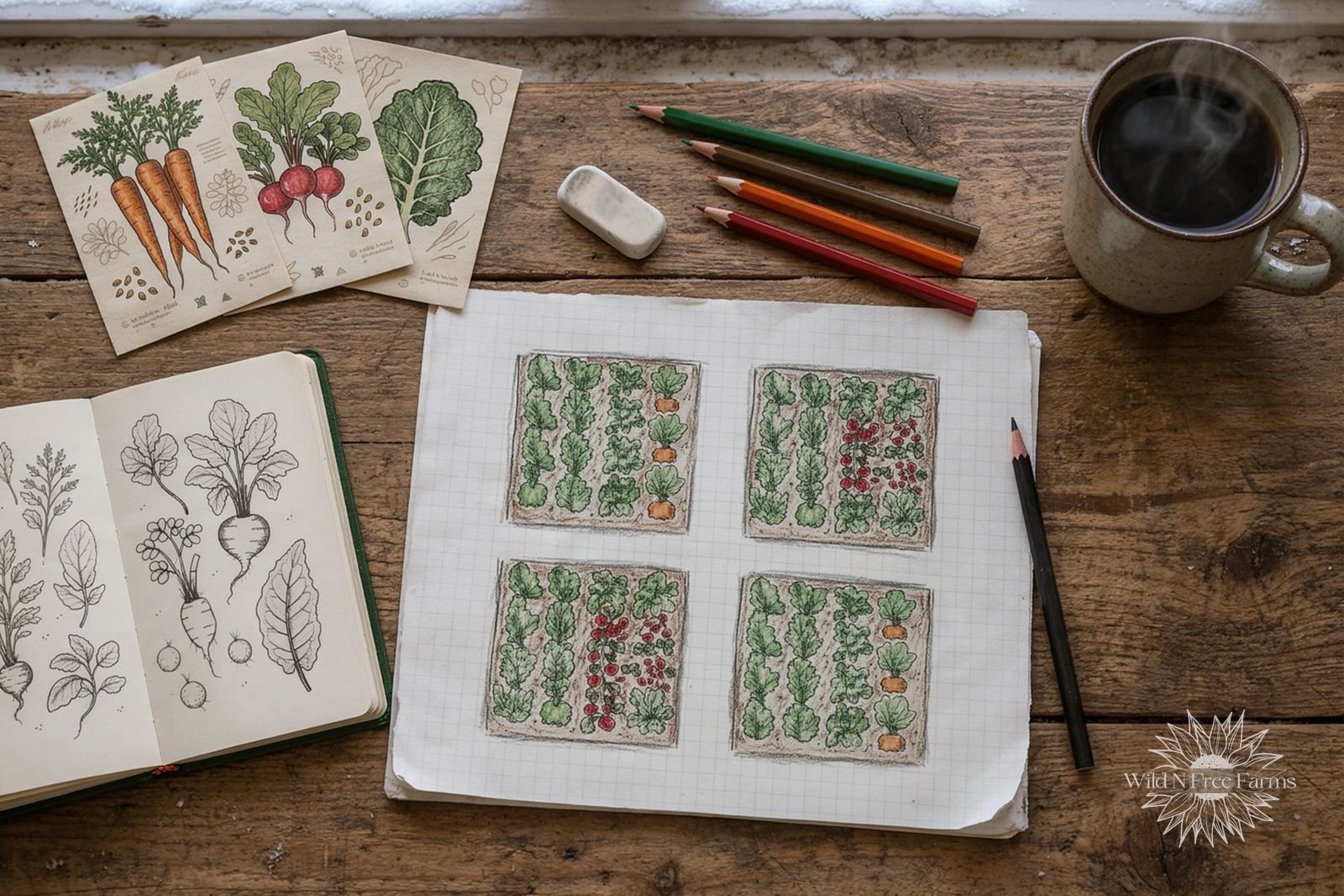
Then move each group one bed forward every year:
| Year | Bed A | Bed B | Bed C | Bed D |
|---|---|---|---|---|
| Year 1 | Nightshades | Legumes and Corn | Brassicas and Greens | Squash, Roots, Onions |
| Year 2 | Squash, Roots, Onions | Nightshades | Legumes and Corn | Brassicas and Greens |
| Year 3 | Brassicas and Greens | Squash, Roots, Onions | Nightshades | Legumes and Corn |
| Year 4 | Legumes and Corn | Brassicas and Greens | Squash, Roots, Onions | Nightshades |
With this plan, no family grows in the same bed more than once every four years. A group can share a bed with other families (like corn and beans), as long as the whole group moves together.
Clemson Extension shares a simple three-year version, too: beans in year one, tomatoes in year two, and sweet corn in year three, before beans come back. It works because beans, tomatoes, and corn are three different plant families. Rotating tomatoes, peppers, and eggplant, on the other hand, isn’t a rotation at all, because all three are nightshades.
What About Perennials?
Asparagus, rhubarb, strawberries, and perennial herbs stay put, so give them their own permanent beds outside your rotation. Garlic is planted in fall and harvested the next summer, so plan its spot a season ahead. Our guide to growing garlic covers timing.
Crop Rotation in Raised Beds and Small Gardens
Separate beds make rotation much more effective. Clemson Extension points out a common flaw: when a single plot is divided into zones but tilled all at once, the soil gets mixed between zones, and nematodes and pathogens move right along with it. Keeping beds separate, and not shoveling soil from one bed to another, protects your rotation.
- Use Raised Beds as Your Zones: Four raised beds are the simplest rotation setup there is. If you’re adding beds this winter, the Vego 9-in-1 modular metal raised garden bed can be set up in several shapes and sizes to fit your space.
- Go No-Till: Skipping the tiller keeps soil in place and protects its structure. Here’s how to start no-till gardening for beginners.
- Work With Fewer Beds: With only two or three beds, rotate the families you grow most (especially nightshades and brassicas) and accept a shorter cycle. Wisconsin Extension says even a yearly change in families helps.
- Add Containers: Growing tomatoes or potatoes in pots with fresh potting mix is an easy way to give a garden bed a year off from those crops.
- Keep a Garden Map: Clemson recommends planning all four years ahead and keeping notes on what you planted, where, when, and any pest problems you saw.
Add Cover Crops to Your Rotation
Crop rotations can be as simple as moving your vegetables each year, or they can include cover crops, sometimes called green manures. Wisconsin Extension explains that cover crops are planted before, after, or in place of a vegetable crop to improve soil fertility and drainage, prevent erosion, and hold nutrients.
They also say that leaving a bed fallow (empty) is usually less helpful than planting a cover crop, since bare soil is more likely to erode, drain poorly, or fill up with weeds. Just remember that cover crops belong to plant families too. Field peas and clovers are legumes, and mustards and radishes are brassicas, so count them in your rotation.
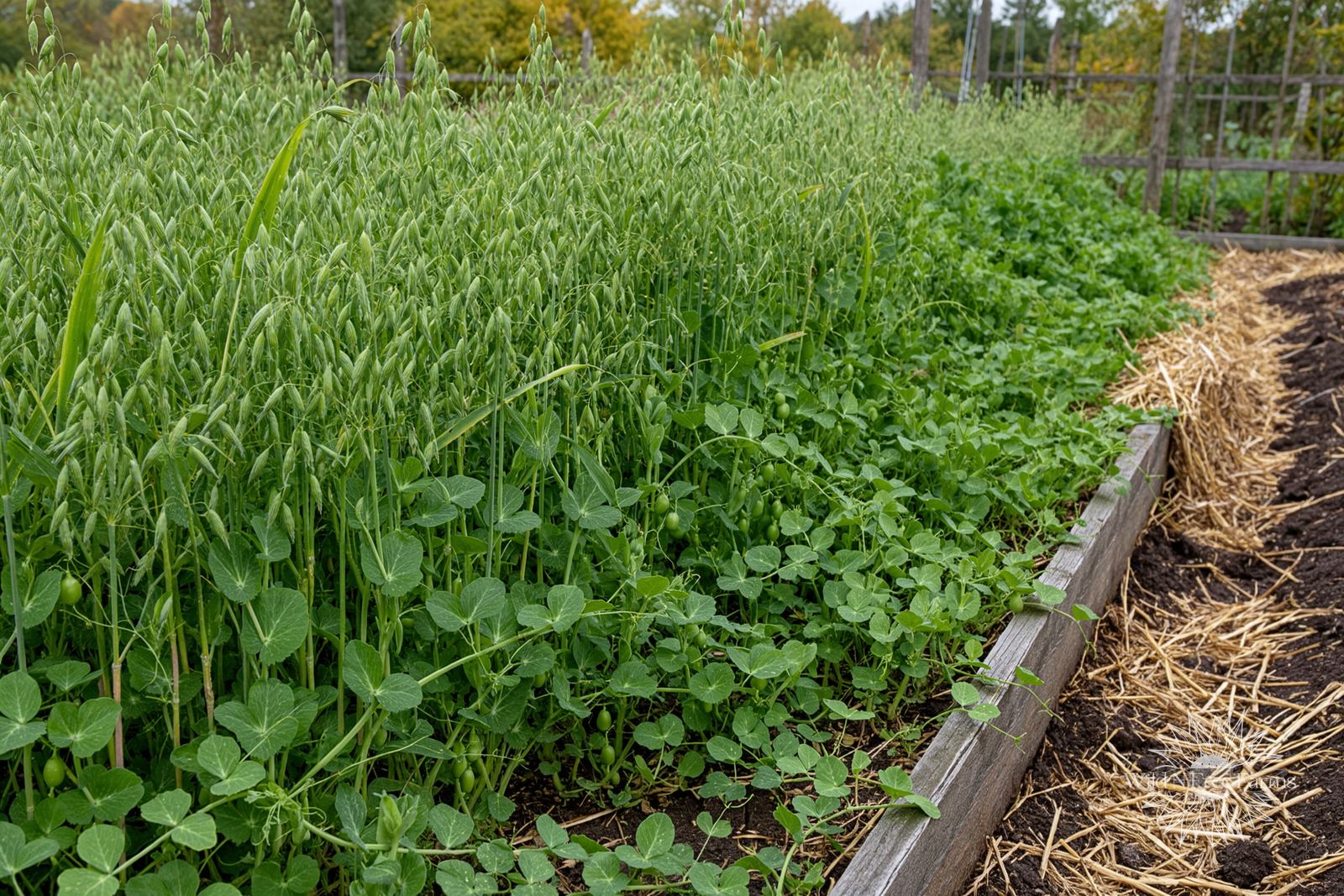
A simple oats and peas mix is an easy cover crop to start with. This oats and peas cover crop seed mix from True Leaf Market is a good fit for a bed coming out of a heavy summer crop.
The Limits of Crop Rotation
Rotation is a powerful tool, but it isn’t perfect. Clemson Extension notes that some pests and diseases attack plants in several families. Southern blight, for example, has been reported on more than 500 plant species, including tomatoes, collards, strawberries, and carrots. If you’re fighting a problem like that, look up its other host plants and choose rotation crops it can’t infect, like sweet corn.
Rotation works best alongside other good habits: healthy soil, good spacing and airflow, removing diseased plants, and choosing resistant varieties when you can. Planting helpful neighbors helps too. See our guides to potato companion plants and the best companion plants for cucumbers.
How to Make Your Crop Rotation Plan This Winter
- Draw Your Garden: Sketch your beds or zones on paper and label each one.
- Write Down What Grew Where Last Year: Even a rough memory is a good start.
- List What You Want to Grow: Not sure how much? Our guides on how many plants per person and how much garden space a family actually needs can help.
- Sort Your Crops by Family: Use the plant family chart above.
- Assign Groups to Beds: Make sure no group lands where its family grew last year.
- Plan Four Years Ahead: Fill in the rotation table so future you knows exactly what goes where.
- Keep Notes All Season: Record planting dates, harvests, and any pests or diseases.
Planning your rotation now also tells you exactly which seeds to start indoors and when. If you’re getting ready for spring, our guide to starting a homestead garden walks through the rest of the plan.
Introducing my new ebook
Seed Starting For Success
Discover the secrets of a stress free seed starting adventure
Grow strong, healthy seedlings without the guesswork. You get the full ebook plus a seed starting schedule, a when-to-start-indoors list, and an indoor vs. direct sowing guide.

Garden Crop Rotation FAQ
Do I really need to rotate crops in a small garden?
It helps, even if you can’t do a full four-year cycle. Changing plant families in each spot from year to year still reduces pest and disease buildup.
Can I plant tomatoes where peppers were last year?
It’s best not to. Tomatoes, peppers, eggplant, and potatoes are all nightshades and share many of the same pests and diseases.
How many years should I rotate crops?
Aim for at least three years before a plant family returns to the same spot. Four or five years is even better.
Does crop rotation work in raised beds?
Yes, and raised beds make it easier, since each bed is already a separate zone. Just avoid moving soil between beds.
Do cover crops count in a rotation?
Yes. Cover crops belong to plant families too, so plan around them the same way you would a vegetable crop.
Start Your Rotation This Season
Garden crop rotation doesn’t have to be complicated. Learn your plant families, split your garden into beds, move each group one spot every year, and keep a simple map. A few minutes with a pencil this winter can mean fewer pests, healthier soil, and bigger harvests for years to come.
Sources
- University of Wisconsin-Madison Extension. Using Crop Rotation in the Home Vegetable Garden (XHT1210).
- Clemson Cooperative Extension, Home & Garden Information Center. Crop Rotation.
- NC State Extension. Vegetable Gardening: A Beginner’s Guide.
- Washington State University Extension, Yakima County. Crop Rotation.