Frankincense and Myrrh Oil Uses: The Biblical Oils at Home
For most of us, frankincense and myrrh are just two strange words from the Christmas story — gifts the wise men carried to a baby in Bethlehem.
But they were never just symbols. They’re real tree resins that people have burned, blended and treasured for thousands of years — and today, frankincense and myrrh oil uses are as practical as a calm, Christmas-scented home.

Disclaimer
This post contains affiliate links. This means we may earn a commission should you choose to sign up for a program or make a purchase using these links. There is no added cost to you but your purchase through these links helps support our content! Not to worry- I truly believe in and/or use everything I promote! As an Amazon Associate I earn from qualifying purchases.
We also utilize advertisements on many of our articles. This is simply a way to help support all the work we do here at Wild N Free Farms, without adding any extra cost to our readers. Check out our disclaimer and disclosure page for more details.
As someone who believes in practical self-reliance, I love learning the “why” behind the things we keep in our homes. In this post, you’ll learn what frankincense and myrrh actually are, where they appear in the Bible, how to use the oils safely, and a few simple blends to make this season.
Not medical advice: This post is for educational purposes only. It is not meant to diagnose, treat, cure or prevent any disease. Please talk with your doctor or a qualified healthcare provider before using essential oils, especially if you are pregnant, nursing, taking medication or have a health condition, or before using them with children.
What Are Frankincense and Myrrh?
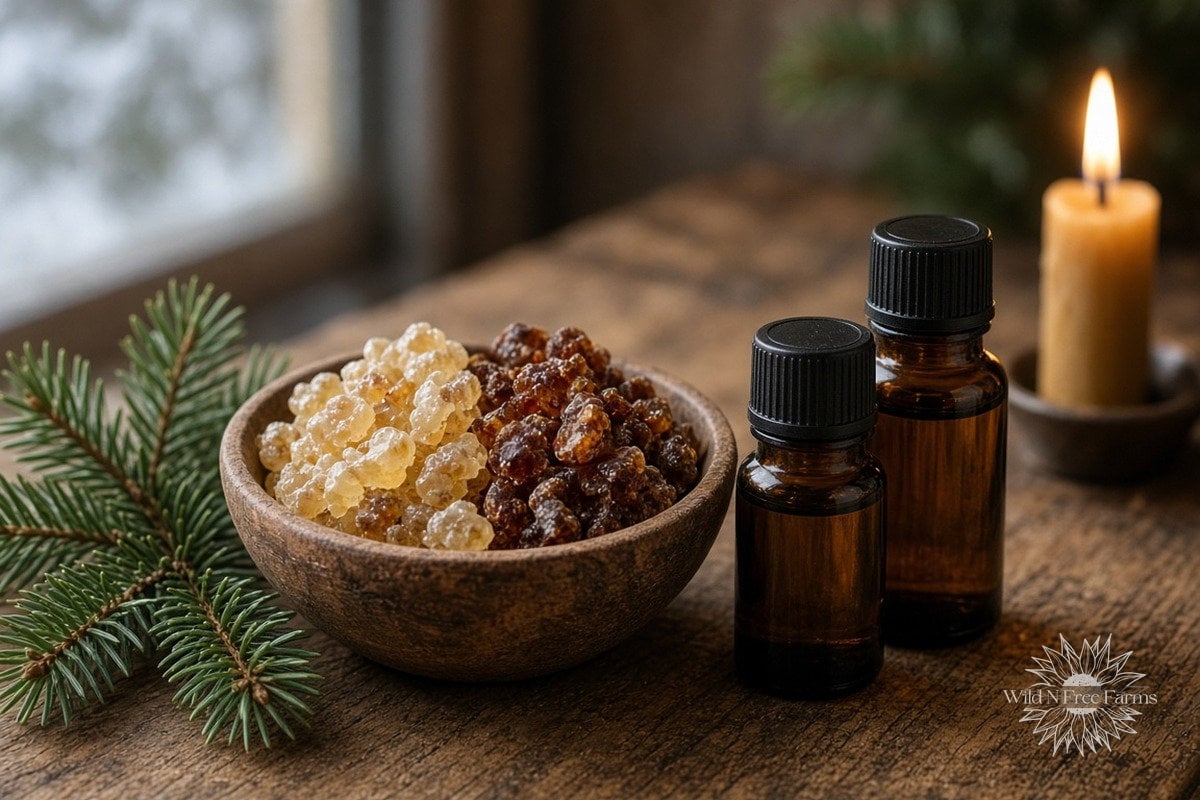
Both are resins — the sap that hardens on a tree’s bark after it’s cut. Harvesters gather the dried “tears,” and they can be burned as incense or steam-distilled into essential oil.
- Frankincense: Comes from Boswellia trees (such as Boswellia sacra, B. carterii, B. serrata and B. papyrifera) that grow in the Arabian Peninsula, the Horn of Africa and India. Its scent is bright, piney and lemony.
- Myrrh: Comes mostly from Commiphora myrrha, a thorny shrub-like tree from the same dry regions. Its scent is warm, earthy, smoky and a little bitter.
In the ancient world, they were worth a fortune. They traveled the incense trade routes by camel and were prized for worship, perfume and burial.
Frankincense and Myrrh in the Bible
These two resins show up again and again in Scripture — not only at Christmas.
- The Wise Men’s Gifts: “They presented unto him gifts; gold, and frankincense, and myrrh.” (Matthew 2:11)
- The Holy Anointing Oil: Pure myrrh was the first ingredient God gave Moses for the anointing oil. (Exodus 30:22–25)
- The Holy Incense: Pure frankincense was part of the incense burned before the Lord. (Exodus 30:34–36)
- Queen Esther’s Preparation: Six months with oil of myrrh. (Esther 2:12)
- At the Cross and the Tomb: Jesus was offered wine mingled with myrrh, and Nicodemus brought about a hundred pounds of myrrh and aloes for His burial. (Mark 15:23; John 19:39–40)
Christians have long read the three gifts as a picture of who Jesus is: gold for a King, frankincense for worship of God, and myrrh pointing ahead to His death and burial.
A gift for His birth that already whispered of the cross. That gets me every Christmas.
Frankincense vs. Myrrh: How They Differ
| Frankincense | Myrrh | |
|---|---|---|
| Tree | Boswellia species | Commiphora myrrha |
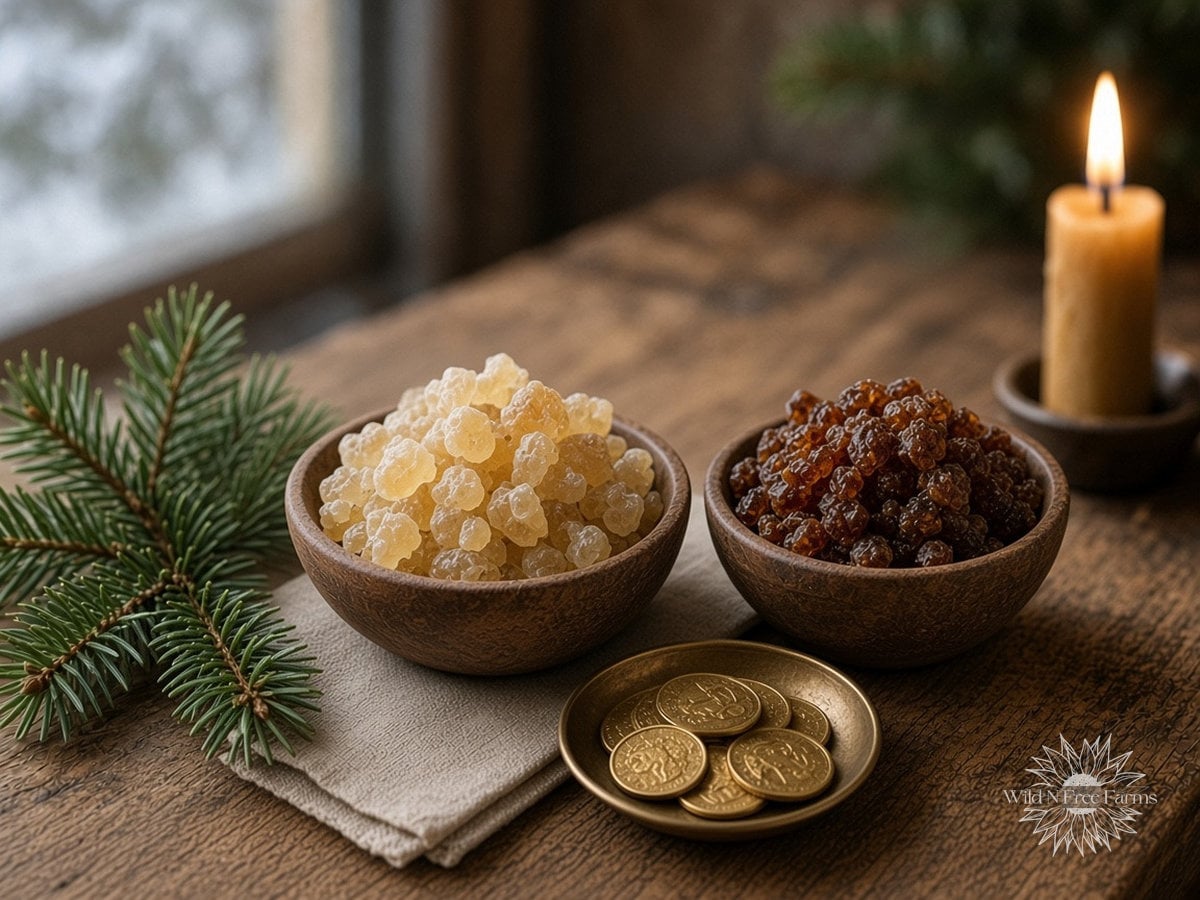
| Resin Color | Pale yellow to milky white | Reddish brown |
| Scent | Fresh, piney, citrusy | Warm, earthy, smoky, bittersweet |
| Oil Texture | Thin, pours easily | Thick, can be sticky and slow to drip |
| Blends Well With | Orange, lavender, cedarwood | Frankincense, sweet orange, clove |
Our Favorite source for
Quality Essential Oils


Frankincense and Myrrh Oil Uses at Home
Here’s how to enjoy these oils the way people have for centuries — for their scent, for skin care and for quiet moments.
1. Diffuse for a Calm, Christmas-Scented Home
This is the easiest place to start. Add a few drops to a essential oil diffuser like the Simply Earth Misty Diffuser and run it for 30–60 minutes at a time in a well-ventilated room. The warm, resinous scent feels like Christmas Eve.
2. Add Them to Skin-Care Oils and Balms
Both resins have a long tradition in skin care and perfume. Always dilute them in a carrier oil like fractionated coconut oil, jojoba or sweet almond oil. A drop or two also makes a lovely addition to a homemade salve — try it in our Homemade Comfrey Salve base.
3. Create a Quiet Space for Prayer and Rest
Frankincense has been part of worship for thousands of years. Many families diffuse it during Advent devotions, Scripture reading or a slow evening wind-down. Pair it with the ideas in our Natural Remedies for Improved Sleep for a calmer bedtime routine.
4. Burn the Resin the Old-Fashioned Way
You don’t need oil at all. Place a few frankincense and myrrh resin tears on a lit charcoal disk in a heat-safe dish of sand. Open a window, keep it away from kids and pets, and never leave it unattended.
5. Make Handmade Christmas Gifts
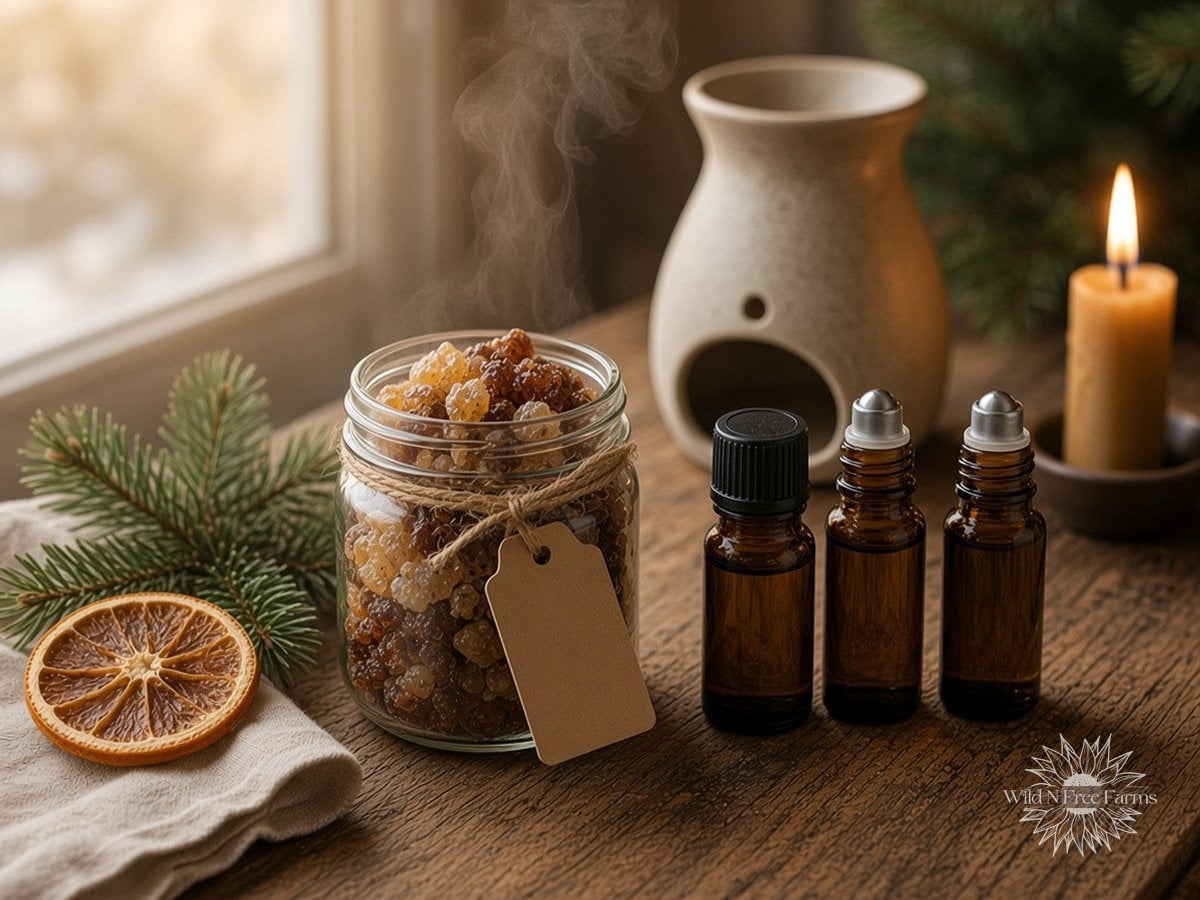
A “Wise Men” roller bottle or a jar of resin with a printed Scripture tag is a meaningful, low-cost gift. The blend is below.
Where I get my oils: Simply Earth is my go-to essential oil brand. Grab their Frankincense Essential Oil and Myrrh Essential Oil to make these blends at home!
Simple Frankincense and Myrrh Blends
Christmas Morning Diffuser Blend
- Frankincense: 3 drops (shop frankincense oil)
- Myrrh: 2 drops (shop myrrh oil)
- Sweet Orange: 2 drops
Add to your diffuser with water according to its directions.
“Wise Men” Roller Blend (About 2%)
- Frankincense: 2 drops
- Myrrh: 2 drops
- Carrier Oil: Fill a 10 mL glass roll-on bottle
Cap, roll between your palms to mix, and label it. Roll a little on your wrists for the scent. Patch test first.

Lemon Ginger Elixir For Immune Support

Comfrey Salve and Lotion Provides Instant First-Aid Healing
Want To Cut Out More Toxins In Your Life?
Check out our Natural Remedy Index loaded with recipes designed to provide you true health! From beauty products, teas, lotions, first-aid, and so much more! This index will help you live a more natural, free life!
Safety and Precautions
Essential oils are highly concentrated. A little goes a long way, and “natural” doesn’t mean risk-free.
- Always Dilute: Most adult skin blends fall between 1% and 5%, according to the National Association for Holistic Aromatherapy. Around 1–2% (6–12 drops per ounce of carrier oil) is a gentle place to start.
- Patch Test: Try a small amount on your inner arm and wait 24 hours before using it more widely.
- Skip Damaged Skin: Don’t apply oils to broken, irritated or inflamed skin.
- Don’t Swallow Them: Do not take essential oils internally unless a qualified professional directs you to.
- Pregnancy and Nursing: Many aromatherapy references advise avoiding myrrh during pregnancy. Talk with your doctor or midwife before using either oil.
- Children: Kids need much weaker blends (NAHA lists 0.5–2.5%). Ask your pediatrician first, and keep bottles out of reach.
- Pets: Cats are especially sensitive to essential oils. Diffuse in a ventilated room and make sure animals can leave.
- Medications and Health Conditions: Check with your healthcare provider before use.
- Freshness: Store oils in dark glass, tightly capped, away from heat. Old, oxidized oils are more likely to irritate skin.
Stay Up To Date
Enter your name and email to subscribe to our weekly newsletter, announements and freebies!
How to Choose Quality Frankincense and Myrrh Oil
- Latin Name on the Label: Look for the species (for example, Boswellia sacra or Commiphora myrrha), not just “frankincense.”
- Country of Origin and Testing: Good companies list where it came from and share GC/MS test results.
- “Fragrance Oil” Is Not Essential Oil: Skip anything labeled fragrance or perfume oil.
- Buy Thoughtfully: Wild frankincense trees are under pressure. A 2019 study in Nature Sustainability found many Boswellia populations aren’t regenerating and projected frankincense production could be halved in 20 years. Choose brands that talk about sustainable harvesting — and use every drop with care.
Want to try more oils without guessing? The Simply Earth Monthly Recipe Box sends you a few full-size essential oils each month plus simple DIY recipes to use them — it’s an easy, budget-friendly way to build your home apothecary. Use code WILDFARMSFREE at checkout!
Frankincense and Myrrh FAQ
What are frankincense and myrrh oil used for?
Today, they’re mostly used in diffusers for their warm, resinous scent, in diluted skin-care oils and balms, in natural perfumes, and during prayer or quiet time. Historically, they were used as incense, in perfume and anointing oil, and for burial.
Can you mix frankincense and myrrh essential oils together?
Yes. They’re a classic pairing — frankincense brightens myrrh’s earthy depth. Try equal drops in a diffuser, or 2 drops of each in a 10 mL roller bottle of carrier oil.
Can you put frankincense oil directly on your skin?
It’s best not to. Dilute it in a carrier oil first (about 1–2% for everyday adult use) and patch test before using it more widely.
Why did the wise men bring frankincense and myrrh?
They were among the most precious goods of the ancient world, fit for a king. Christians have long seen meaning in them: gold for His kingship, frankincense for His divinity and worship, and myrrh pointing to His death and burial.
Can you ingest frankincense or myrrh oil?
Not without guidance from a qualified healthcare professional. Essential oils are very concentrated, and aromatherapy organizations like NAHA do not support casual internal use.
Why Frankincense and Myrrh Still Belong in Our Homes
They’re not trendy. They’re ancient.
Two humble tree resins that were good enough to lay before a King — and simple enough to fill your kitchen with the scent of Christmas tonight.
Use them gently. Use them with gratitude. And remember the gift behind the gifts.
Sources
- National Association for Holistic Aromatherapy (NAHA). Safety.
- Bongers, F. et al. (2019). Frankincense in peril. Nature Sustainability.
- The Holy Bible, King James Version, via BibleGateway: Matthew 2:11; Exodus 30:22–25, 34–36; Esther 2:12; Mark 15:23; John 19:39–40.